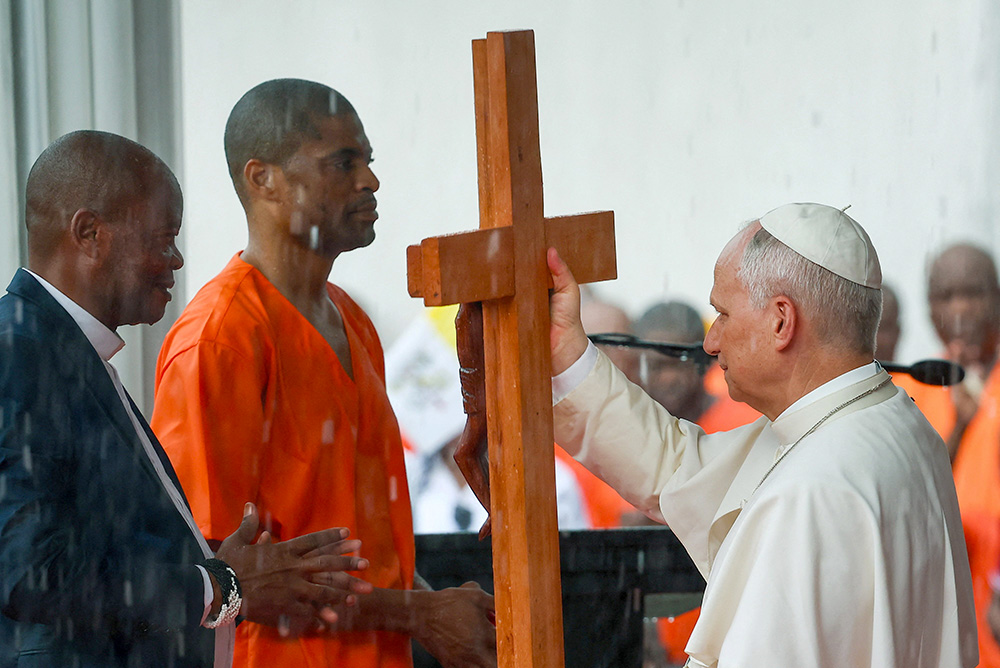
Pope Leo XIV receives a cross from an inmate during the pontiff's visit to Bata prison in Equatorial Guinea, April 22, 2026. (OSV News/Reuters/Guglielmo Mangiapane)

Join the Conversation
Send your thoughts to Letters to the Editor. Learn more
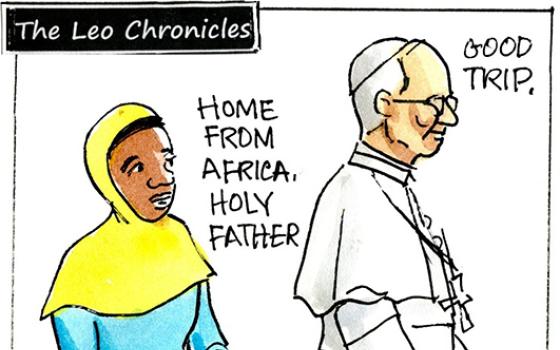
Pope Leo XIV is back at the Vatican after a busy 11-day trip, visiting four countries in Africa. The pastoral visits, and the press conferences on the plane between stops, gave us new insights into how the pope sees his role in the world and in the church.
First, many people were concerned that the four countries Leo visited — Algeria, Cameroon, Angola and Equatorial Guinea — all possess governments that have been criticized as authoritarian. The government of Equatorial Guinea actually has an agreement with the Trump administration to take in deportees in exchange for cash.
Leo got his message through, engaging the civil authorities but challenging the societies as a whole to greater justice. He went to the port city of Bata to visit with the inmates at one of Equatorial Guinea's most notorious prisons.
"You are not alone. Your families love you and are waiting for you. Many people outside these walls are praying for you," Leo told the inmates, speaking in Spanish. "If any of you fear being abandoned by everyone, know that God will never abandon you, and that the church will stand by your side."
Papal visits to prisons are always among the most poignant. Almost no one in our society imitates the Lord Jesus who announced in the Gospel of Luke that his ministry included preaching liberty to captives. Except our clergy.
Advertisement
Asked about visiting authoritarian regimes at the final press conference, Leo said, "We are actually trying to find a way to apply the Gospel to concrete situations so that the lives of people can be improved. We don't always make great proclamations, criticizing, judging or condemning, but there's an awful lot of work that goes on behind the scenes to promote justice, to promote humanitarian causes, to look for at times situations where there may be political prisoners and finding ways for them to be freed."
We knew Leo was not flashy, that he does not possess his predecessor's flair for the dramatic idiom, the grand gesture, the flavorful metaphor. He is from Chicago, not Argentina. But his visit to the prison, and his words about the church's ongoing work for justice, indicated that his heart, like Francis' — and Benedict XVI's, and John Paul II's and Paul VI's, and John XXIII's — is with the imprisoned, and that the Gospel reaches to these truly marginalized, incarcerated persons.
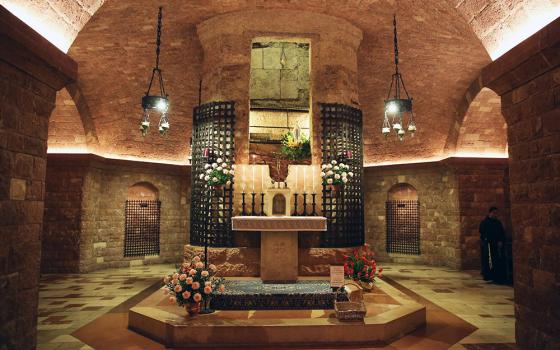
Second, as expected, Leo's Augustinian roots were on display at several points in the trip, most obviously when he visited Algeria where St Augustine lived and served as a bishop. His Augustinian framing also shone in his speech to the students and faculty at the Catholic University of Central Africa:
No society, in fact, can flourish unless it is grounded in upright consciences, formed in the truth. In this sense, the motto of your university — "In the service of truth and justice" — reminds you that the human conscience, understood as the inner sanctuary where men and women discover themselves drawn by the voice of God, is the very ground upon which just and stable foundations for every society must be laid. To form consciences that are free and endowed with a holy restlessness is a necessary condition for the Christian faith to appear as a fully human proposal.
This profound understanding of a "holy restlessness" is the most countercultural intuition of the great saint, and his papal follower. We Americans like things complete and tidy. If there is a problem, we want a solution. We Catholics want to know what is expected of us, what the rules are. But on this side of the abyss, the Christian is always going to be restless, at least if he is honest with himself and others.
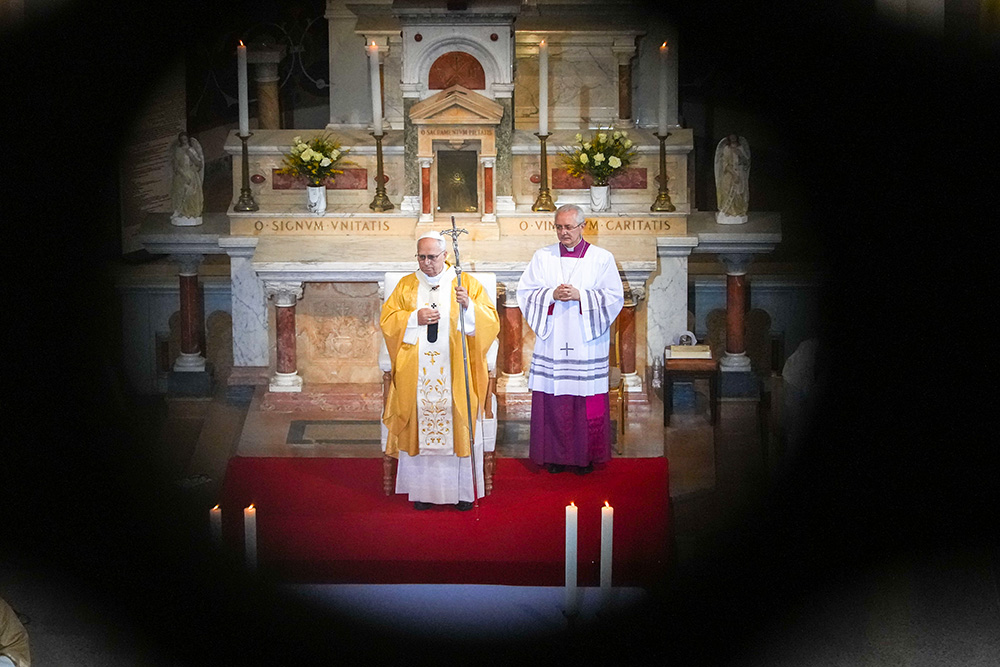
Pope Leo XIV celebrates Mass at the Basilica of St. Augustine in Annaba, Algeria, April 14, 2026. (CNS/Lola Gomez)
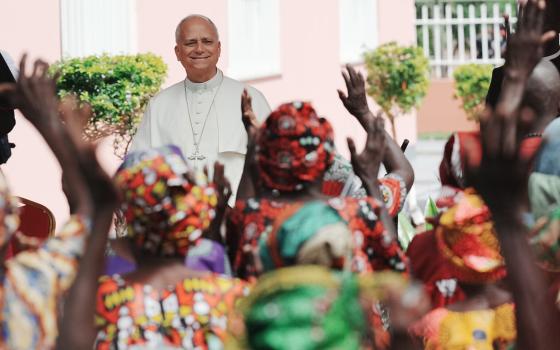
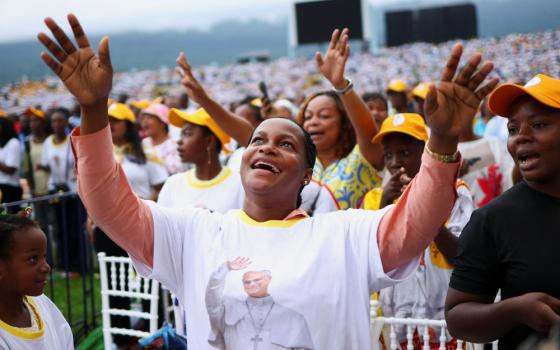
The third part of the trip that revealed Leo to the world, and not just to Africa, was the renewed missionary vigor that emerged from his interaction with the crowds and the different groups of people. As my colleague Justin McClellan noted, "Pope Leo XIV was itching to return to the Global South after spending most of the last year largely confined to Rome for 2025 Jubilee events." His missionary experience in Peru was the love of his life, and in Africa we witnessed the pope's joy in proclaiming the Gospel and in witnessing the reception the Gospel receives.
Rome is magnificent, but it no longer carries the energy of a new church. The U.S. church that formed the pope when he was young is of more recent vintage, but it, too, lacks the vibrancy of a young church. In the mountains of rural Peru and in the plains of Africa, the pope is most at home. At the final Mass of his pilgrimage, the pope said, "I leave Africa with an immeasurable treasure of faith, hope and charity: a great treasure consisting of stories, faces and testimonies, both joyful and sorrowful, which will greatly enrich my life and ministry as the successor of Peter."
These three aspects of Leo's pontificate that the Africa trip highlighted demonstrate the ways he is like his predecessor and not like him, too. Leo is his own man, and there is not a whiff of any desire to pretend he is someone different from who he is.
Like Francis, he is drawn to the peripheries and especially to the poor. He is invigorated by the youthful church of Africa, but his Augustinian lens brings different insights from the Ignatian perspectives Francis brought to his talks. In his soft-spoken, deliberate manner, he is furthering the vision of the 1962-65 Second Vatican Council, but in his own way and with his own gifts. The response of the people shows that the Catholic faithful love the successor of Peter, whether he is from Krakow or Bavaria, from Argentina or Chicago. At a time of cultural upheaval, how blest we are to have a pope who reminds us not only of our moral obligations but of what it means to be human.