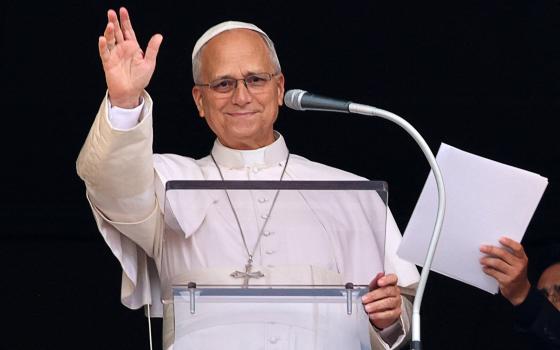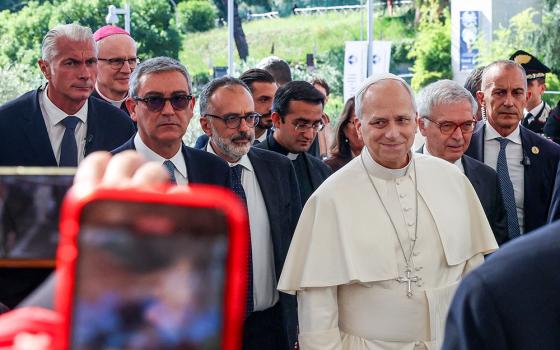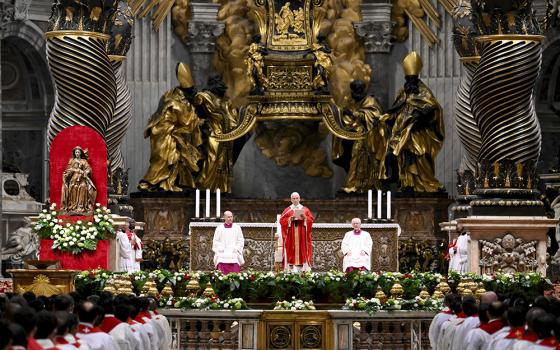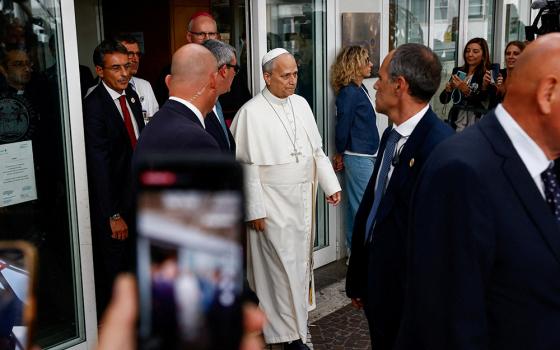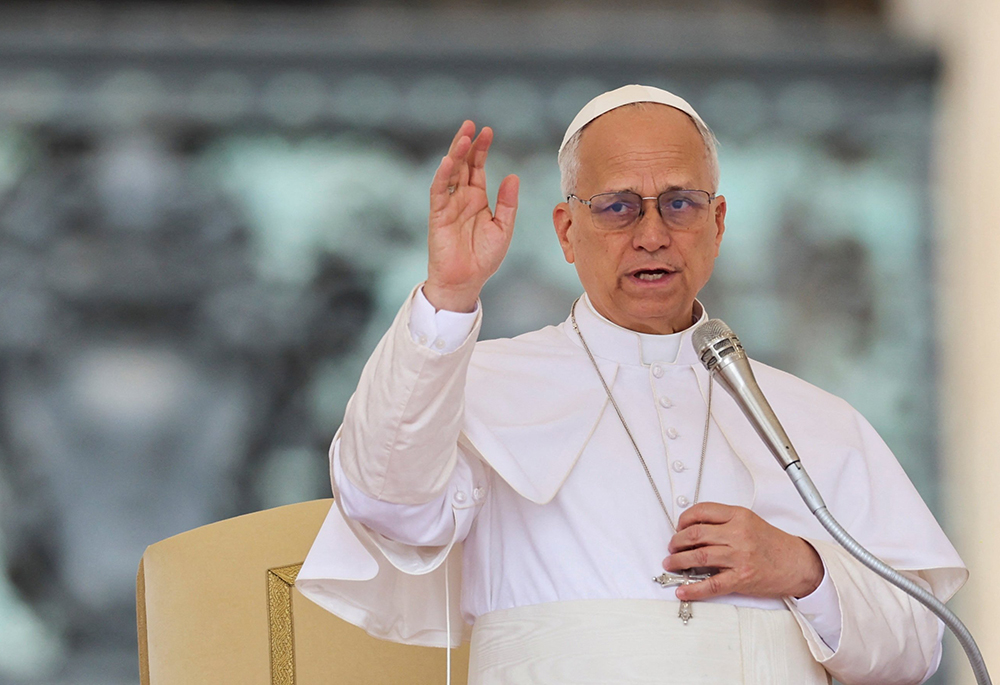
Pope Leo XIV gestures as he leads his weekly general audience in St. Peter's Square at the Vatican May 13, 2026. (OSV News/Reuters/Vincenzo Livieri)

Join the Conversation
Send your thoughts to Letters to the Editor. Learn more
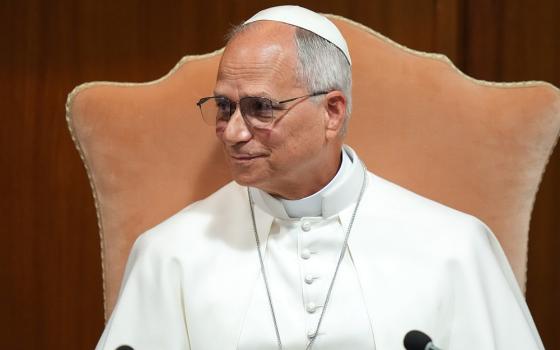
Pope Leo XIV warned that the use of new technology in modern warfare risks plunging humanity into a "spiral of annihilation" and condemned increased investment in weapons worldwide before students and academics.
"What is happening in Ukraine, in Gaza and the Palestinian territories, in Lebanon and in Iran describes the inhuman evolution of the relationship between war and new technologies," the pope said during a visit to the Sapienza University of Rome on May 14, urging vigilance over AI systems "so that they do not remove responsibility from human choices and do not worsen the tragic nature of conflicts."
"Study, research and investments should go in the opposite direction," he said. "They should be a radical 'yes' to life, yes to innocent life, yes to young life, yes to the life of peoples who cry out for peace and justice."
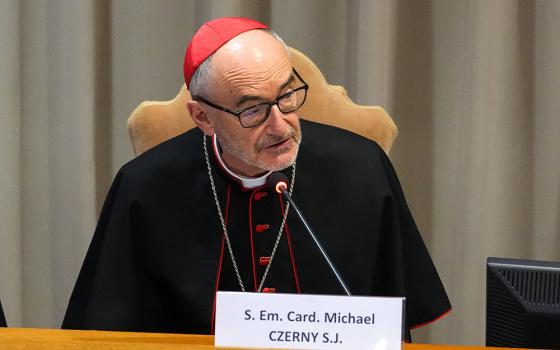
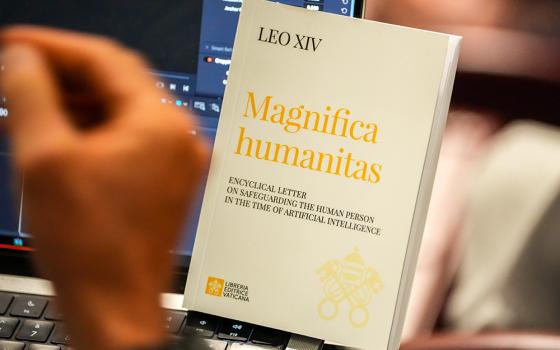
The pope's comments came just before he is expected to release his first encyclical — a major teaching document — on the ethical questions artificial intelligence poses for humanity.
Among those who greeted the pope after his speech were four Palestinian students brought to study at the university through an agreement among Sapienza, the Diocese of Rome and the Community of Sant'Egidio.
But Leo's two-hour pastoral visit to the Rome university began with a visit to its chapel, where the pope stopped in a moment of silent prayer.
Advertisement
It marked the first papal visit to Sapienza since St. John Paul II traveled to the campus on the opposite side of Rome from the Vatican in 1991.The university, founded by Pope Boniface VIII in 1303 and later incorporated into the Italian state, had invited Pope Benedict XVI to open its academic year in 2008, but the pope declined the invitation following protests by professors and students who cited comments the pope previously made as a cardinal over the church's treatment of Italian astronomer Galileo Galilei.
More than 18 years later, Leo, speaking in the university's main lecture hall, used the platform to decry the "enormous" growth in military spending worldwide and particularly in Europe, where defense spending grew by 14% in 2025.
"Let us not call 'defense' a rearmament that increases tensions and insecurity, drains investments in education and health, contradicts trust in diplomacy and enriches elites who care nothing for the common good," he said.
Young people are 'not an algorithm'
Addressing the students gathered in the auditorium, Leo noted how many young people are suffering as a result of the "extortion of expectations and the pressure to perform" present in modern society.
The idea that young people must remain trapped in their suffering, however, "is the pervasive lie of a distorted system which reduces people to numbers, aggravating competitiveness and abandoning us to spirals of anxiety," he said.
"This very spiritual malaise of many young people reminds us that we are not the sum of what we have, nor matter randomly assembled in a mute cosmos," the pope said. "We are a desire, not an algorithm."
Leo also underscored concerns over climate change, lamenting how despite "good intentions and some efforts in that direction, the situation does not seem to have improved."
In that regard, the pope urged students "not to give in to resignation, but instead to transform restlessness into prophecy."
"Today, precisely the implosion of a possessive and consumerist paradigm clears the field for the new thing that is already sprouting: study, cultivate, safeguard justice!" he said.
The National Catholic Reporter's Rome Bureau is made possible in part by the generosity of Joan and Bob McGrath.