Pilgrims gather around the tomb of Pope Francis along the side of the Basilica of St. Mary Major in Rome. (NCR photo/Justin McLellan)

Join the Conversation
Send your thoughts to Letters to the Editor. Learn more
If you sit on the left-hand side of the nave during Sunday morning Mass at the Basilica of St. Mary Major, you will likely miss the homily.
Instead, you will have a front-row seat to the theater of pilgrims slowly wandering toward a cordoned-off area along the basilica's western wall, only to be met by a well-dressed usher rushing toward them while harshly whispering under his breath, "No photo!"
Since Pope Francis was buried in the basilica April 26, 2025, St. Mary Major has been transformed from an already prominent Roman church into one of the city's major pilgrimage sites for admirers of the late pope, Catholic and not.
Outside the grand basilica a line of tourists snakes along the side of the church. Once inside, the throngs pause briefly to observe the basilica's gilded ceiling, ancient mosaics and marble chapels before gravitating toward the pack of pilgrims huddled around the plain white niche where Francis' tomb rests.
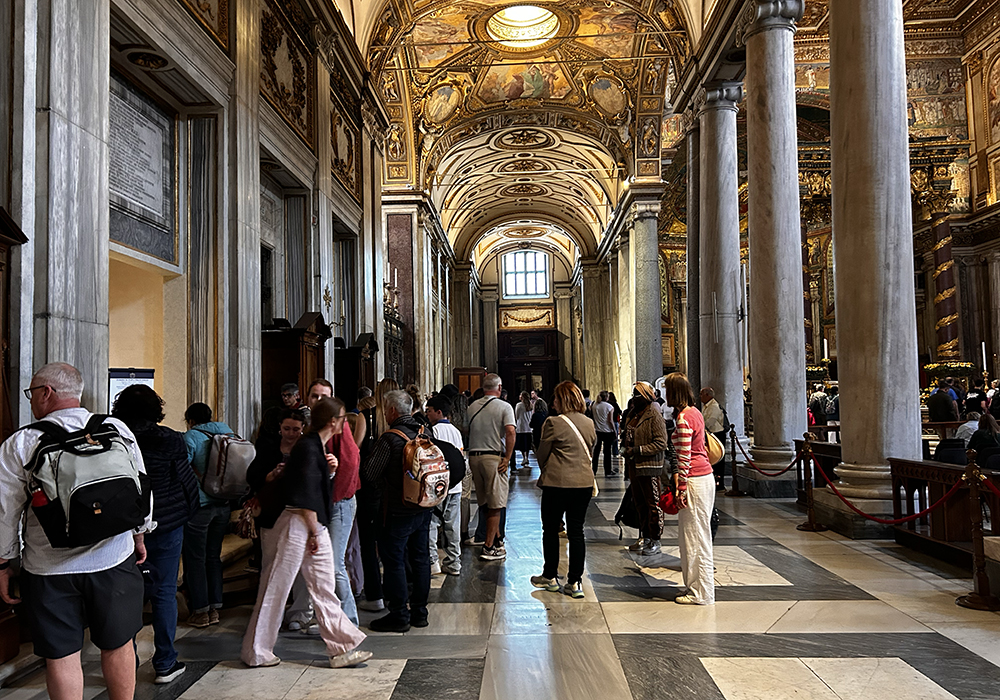
Pilgrims gather around the tomb of Pope Francis along the side of the Basilica of St. Mary Major in Rome. (NCR photo/Justin McLellan)
The crowds have become part of the basilica's daily rhythm. Since Francis' remains were placed there, "the numbers doubled," Cardinal Rolandas Makrickas, archpriest of the basilica, told National Catholic Reporter. He estimated that the basilica now receives between 10,000 and 15,000 visitors each day.
That sharp increase is also tied to the 2025 Jubilee Year, which brought a record estimated 33.5 million pilgrims to Rome, as well as the papal transition that drew many visitors to the Vatican to see the new pope.
Yet Francis' tomb has given the basilica new visibility on the already-cluttered map of Rome.
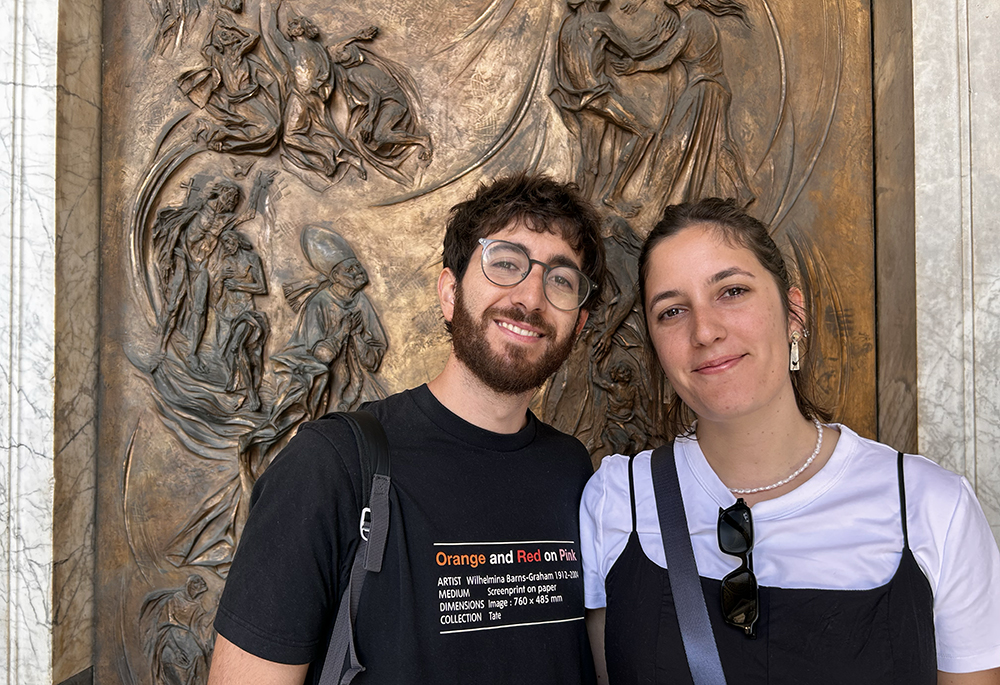
Argentine pilgrims Mateo, left, and Valentina, right, pose for a photo outside the Basilica of St. Mary Major in Rome. (NCR photo/Justin McLellan)
Valentina, visiting from Argentina, said the tomb was the reason she came to St. Mary Major during her three-day trip to Rome.
"I am not practicing [Catholic], but I found it very moving to come here," she told NCR after visiting the basilica with her partner. "I was surprised by what I felt here, of course he is from our country, but there was also a very special energy."
"We bought a rosary," she added shyly with a laugh. "It's our first rosary."
Beyond tourists, the basilica has also hosted a stream of dignitaries who have stopped to pay their respects to the late pope.
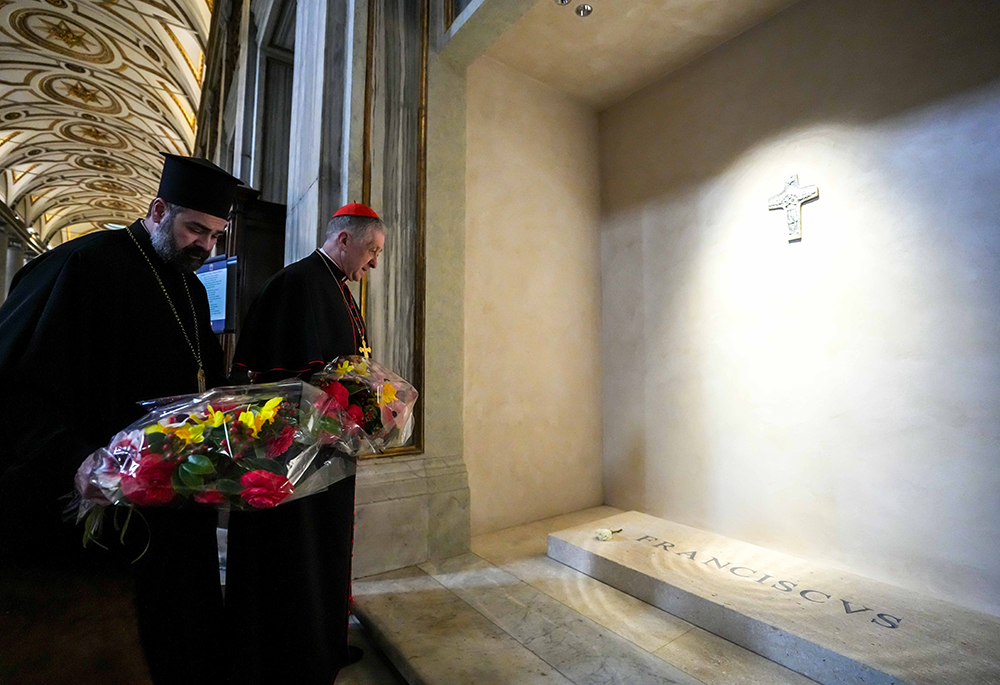
Greek Orthodox Metropolitan Nathanael of Chicago and Cardinal Blase J. Cupich of Chicago bring flowers to the tomb of Pope Francis in the Basilica of St. Mary Major in Rome, March 2, 2026. They were taking part in an ecumenical pilgrimage together to celebrate the 1,700th anniversary of the Council of Nicaea. (CNS/Lola Gomez)
Spain's King Felipe VI and Queen Letizia visited the tomb when attending a ceremony at the basilica in March. Cardinal Blase Cupich of Chicago also made a point of stopping there during an ecumenical pilgrimage to Rome with Greek Orthodox Metropolitan Nathanael of Chicago.
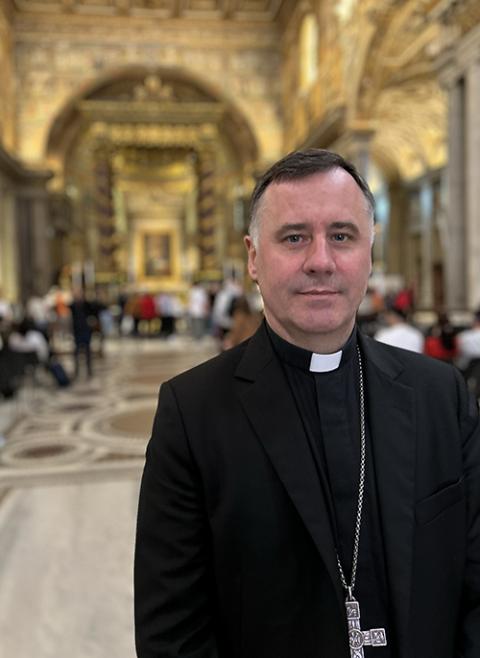
Cardinal Rolandas Makrickas, archpriest of the Basilica of St. Mary Major, poses for a photo in the nave of the basilica in Rome. (NCR photo/Justin McLellan)
The pull of the pope's tomb is a testament to his popularity, but also to his spiritual depths, Makrickas said.
"His decision to be buried here and not in the Vatican shows his liberty and his deep spirituality," said the cardinal, who helped Francis prepare arrangements for his tomb.
Francis' choice to be buried at St. Mary Major made him the first pope to be buried outside the Vatican since the remains of Pope Leo XIII were transferred to the Basilica of St. John Lateran in 1926, and the first pope buried in St. Mary Major since Pope Clement IX, who died in 1669.
The cardinal said the idea first arose in 2022, as another tomb was being prepared for a former archpriest of the basilica. Given Francis' deep attachment to St. Mary Major, Makrickas asked whether the pope had ever considered being buried there himself.
Francis had said he would always stop at the basilica to pray when he was in Rome as a cardinal. As pope, he prayed before the Marian icon "Salus Populi Romani" ("health of the Roman people") before and after his international trips and during significant moments of his pontificate, including to pray for an end to the COVID-19 pandemic in 2020. In all, he visited the basilica 126 times as pope.
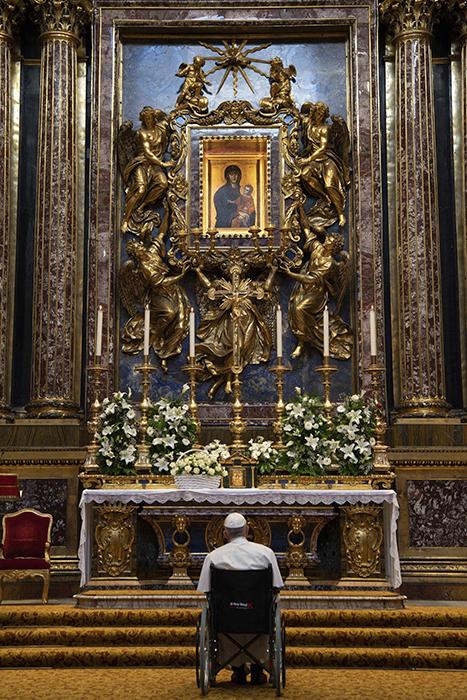
Pope Francis prays in front of the Marian icon "Salus Populi Romani" during a visit to pray the rosary at the Basilica of St. Mary Major in Rome May 31, 2022. (CNS/Vatican Media)
But when Makrickas first raised the possibility of preparing Francis' tomb there, he said the pope initially told him no, "because popes are buried in St. Peter's Basilica."
A week later, however, Makrickas was called to the Vatican, and Francis said the Virgin Mary had told him to "prepare your tomb."
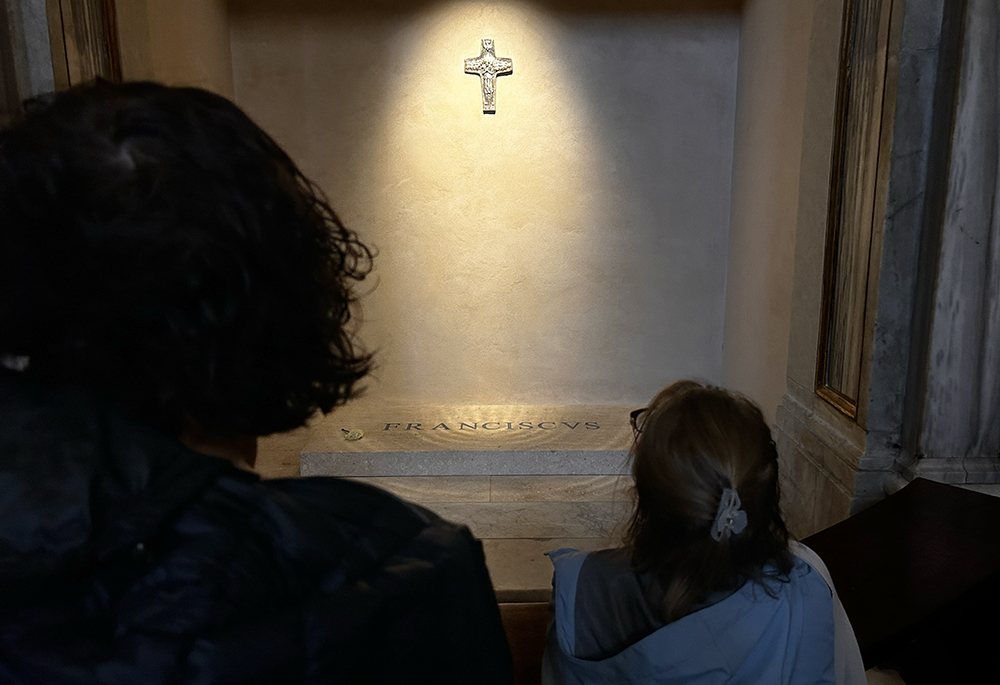
Francis' tomb, made of plain white marble from the northern Italian region of Liguria where his grandparents were from, now rests in a niche between the chapel that houses the Marian icon and an altar dedicated to St. Francis of Assisi.
Makrickas said the pope told him the tomb should not be placed inside the Marian chapel "because people had to come and visit Mary and pray in the chapel to Mary."
"My resting place should be simple and close to Mary," the cardinal recalled Francis telling him.
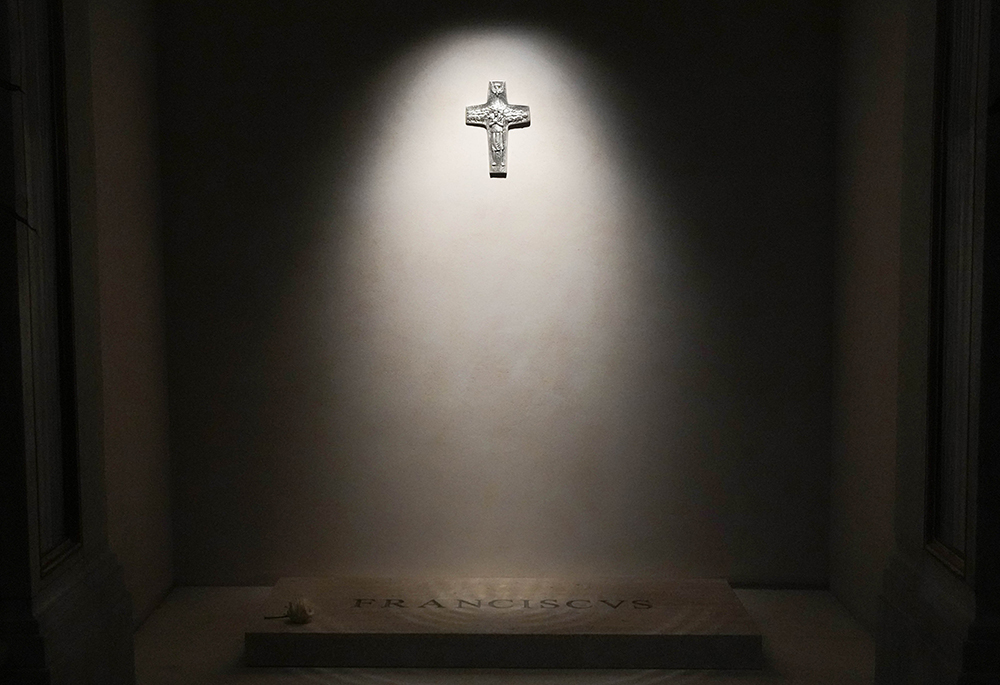
A light shines on a replica of Pope Francis' pectoral cross above his tomb in the side aisle of Rome's Basilica of St. Mary Major early April 27, 2025. (CNS/Lola Gomez)
Today, the tomb bears only the inscription "Franciscus" and a reproduction of the late pope's pectoral cross depicting Jesus as the good shepherd. Its austerity stands in sharp contrast to the basilica around it, whose ceiling is traditionally said to have been gilded with the first gold brought to Europe from the Americas.
Now, the basilica is known not only for its ancient mosaics and relics, but also for the steady stream of ordinary pilgrims who make their way each day to Francis' tomb.
"We see that people are coming to see the tomb to pray, but after, they want to go and pray in the chapel of 'Salus Populi Romani' where he [Francis] prayed so many times," Makrickas said. "I think this is a great legacy which he left for the future, that we have to first of all trust God, pray and make our decisions."
Advertisement
The National Catholic Reporter's Rome Bureau is made possible in part by the generosity of Joan and Bob McGrath.