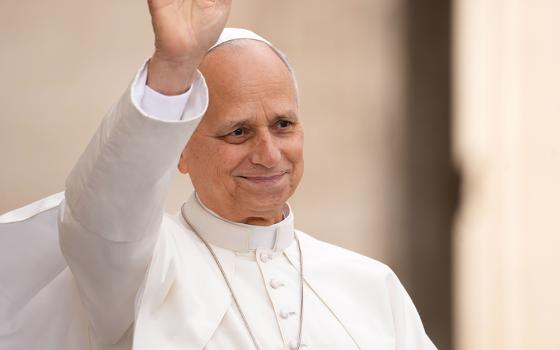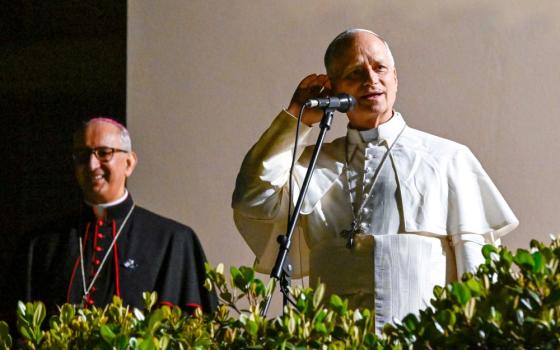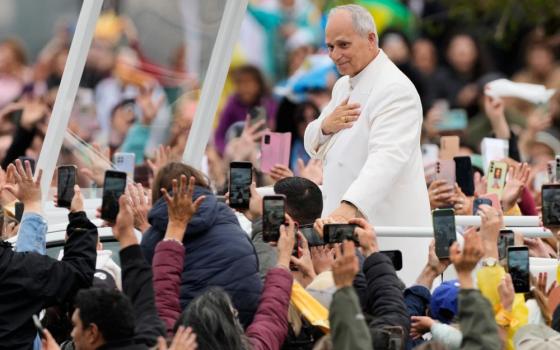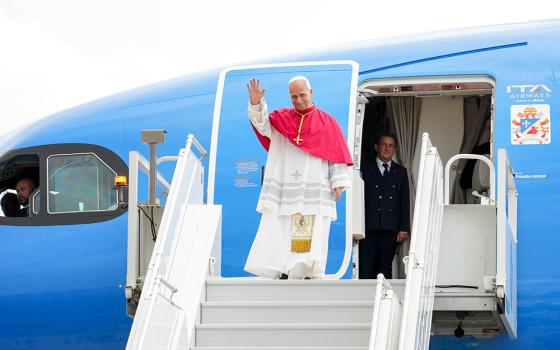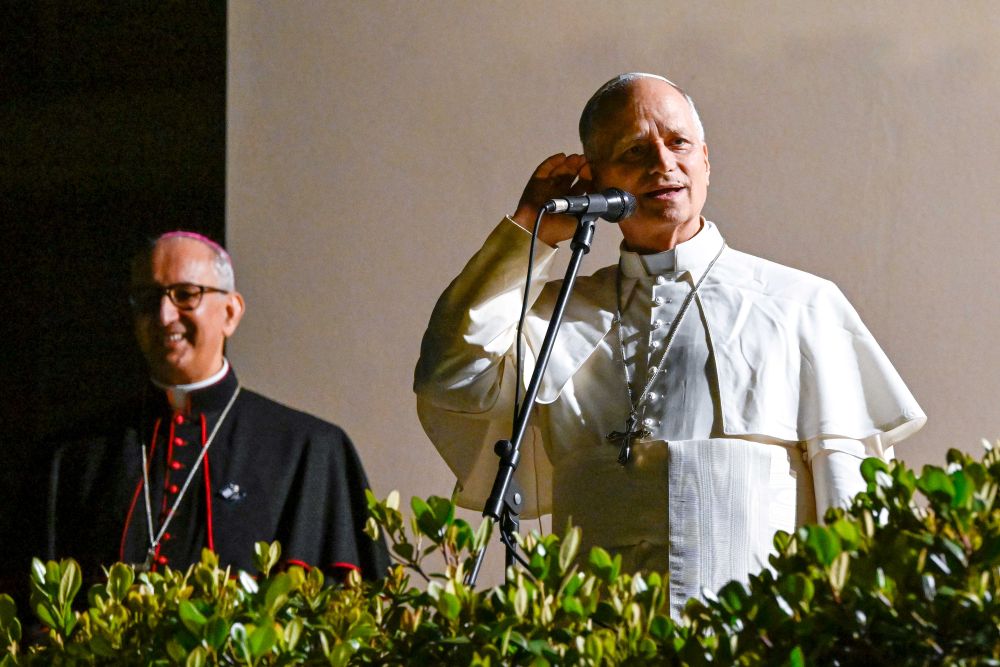
Pope Leo XIV speaks to people gathered outside the apostolic nunciature in Montevideo, Uruguay, Nov. 6, 2026, at the end of the first day of his apostolic journey to Uruguay, Argentina and Peru. (CNS/Vatican Media)

Join the Conversation
Send your thoughts to Letters to the Editor. Learn more
Pope Leo XIV's historic decision to vote in the U.S. midterm elections — a first for a sitting pope — was met with both praise and criticism, but it also raised questions about how the pope understands his identity before visiting Peru, the other country where he holds citizenship.
After the Chicago Sun-Times broke the news that Leo, born Robert Francis Prevost, had requested a mail-in ballot to vote in his native Illinois for the Nov. 3 midterm elections, the Vatican issued a confirmation that he had submitted his mail-in ballot in Chicago and said that the pope "expresses his belief in the right and the duty of citizens to participate in democratic processes."
That statement marked the first documented case of a sitting pope voting in elections in a country where he holds citizenship and opened a public debate over whether the leader of the Catholic Church should engage in political elections.
The Vatican also stated that "during his years of residence in Peru he exercised his right to vote whenever he was eligible to do so." Prevost became a naturalized citizen of Peru, in addition to maintaining his American citizenship, shortly after becoming bishop of the northern city of Chiclayo in 2014, and resided in the country until he was called to Rome to lead the Vatican's office for selecting bishops in 2023 and made a cardinal.
But the Vatican's statement did not clarify whether he had voted in the April 2026 elections that eventually elected the new Peruvian President Keiko Fujimori, who Leo will meet when he touches down in Lima on Nov. 11 to begin his weeklong visit to the country.
It wasn't until his 14½-hour flight from Rome to Montevideo on Nov. 6 that he told reporters that he did not vote in those elections "because it's not possible, but I would have — it's a good thing [to vote]."
Leo did not explain why it was not possible for him to vote in the Peruvian elections from Rome, where more than 10,000 Peruvian citizens reside. He renewed his Peruvian ID since becoming pope, needed to vote in Peruvian elections, and was present in Rome on election day April 12; Peru does not use mail-in ballots and he would have had to go to a Peruvian consulate in Rome to vote in person.
Voting is mandatory in Peru for citizens ages 18-70. At 71, Leo is exempt from this requirement, but his comments on the obligation of citizens to participate in democratic processes raise the question of why he did not seek to vote in Peru's presidential election.
Asked by journalists on his flight to Uruguay about the significance of his decision to vote on, he replied that he was "proud to be an American and to exercise the right" to vote.
His decision also underscores the distinction he sees between the papal office and his personal identity, one that has been broached by previous popes but not asserted quite as fully as Leo.
Pope Benedict XVI wrote a series of theological studies on the life of Jesus as Joseph Ratzinger while pope, publishing them among his personal works and not as papal magisterium, and Pope Francis had his Argentine passport renewed shortly after becoming pope.
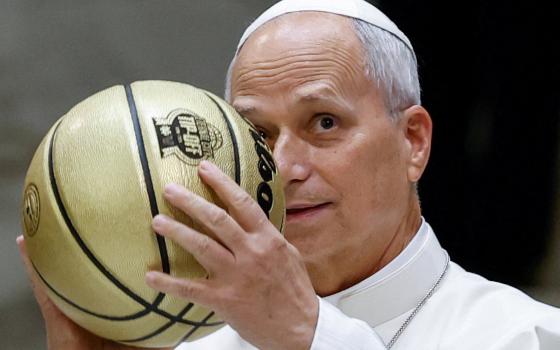
Leo has highlighted the difference he sees between his office and personal identity in other, more light-hearted occasions: When meeting with delegations from Villanova University, his alma mater, and the University of Notre Dame before the schools were due to play each other in basketball, he said that while the pope doesn't take sides in sporting competitions, "Prevost has another opinion."
Even with such a distinction, the Vatican's confirmation of the pope's vote, and his expression of the duty of citizens to participate in democratic processes, puts papal backing on an action taken by Robert Prevost.
Whether or not such a distinction is justified is a new question brought about by the novelty of Leo's decision to vote. That he is the first pope to hold dual citizenship in the modern sense (excluding Vatican City citizenship) adds another wrinkle, since he would be expected to carry out his civic duty to both nations.
Days before Leo will be received in Peru on Nov. 11, a country which claims him as their own just as the United States does, the question rises as to whether Robert Prevost understands himself to be as Peruvian as he is perceived. At least regarding his own voting record, the man who occupies the papacy seems to draw a distinction between his citizenships.
The National Catholic Reporter's Rome Bureau is made possible in part by the generosity of Joan and Bob McGrath.
Advertisement