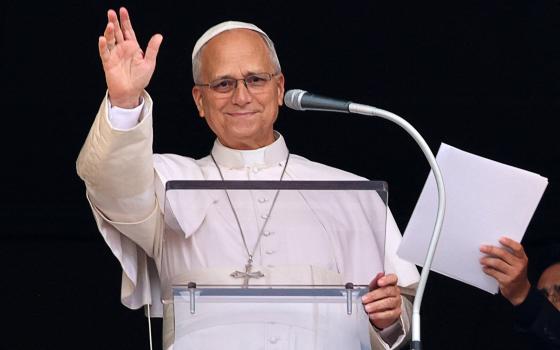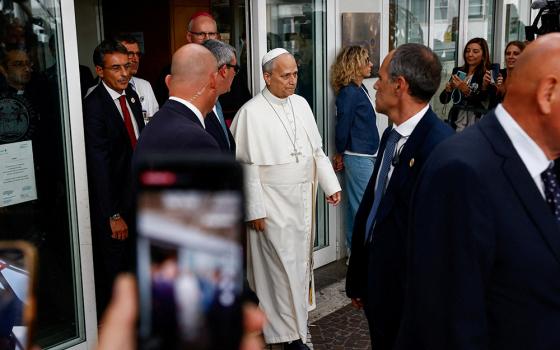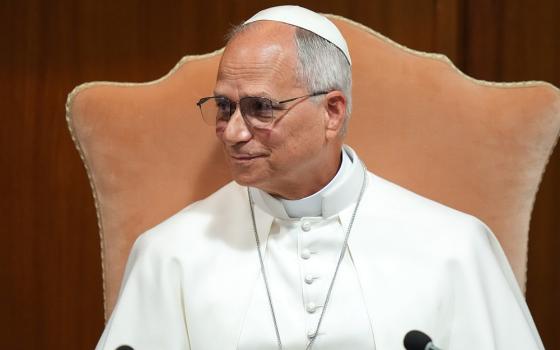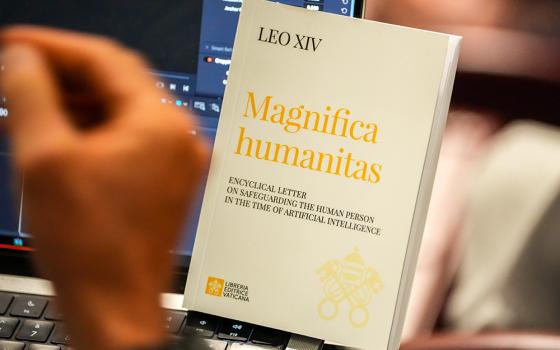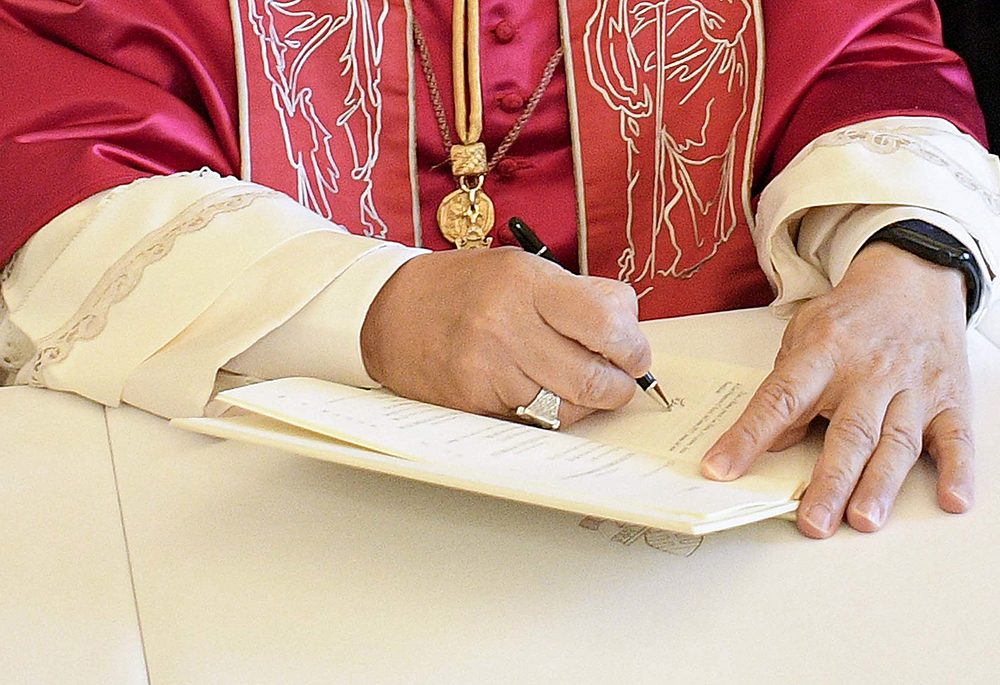
Pope Leo XIV signs his first apostolic exhortation, Dilexi Te ("I Have Loved You"), in the library of the Apostolic Palace at the Vatican Oct. 4, 2025, the feast of St. Francis of Assisi. His first encyclical, Magnifica Humanitas, will be published May 25, 2026, addressing artificial intelligence and the protection of human dignity, the Vatican announced May 18, 2026. (OSV News/Vatican Media/CPP)

Join the Conversation
Send your thoughts to Letters to the Editor. Learn more
Pope Leo XIV will personally present his first major teaching document on the ethical challenges posed by artificial intelligence alongside the co-founder of Anthropic, the AI research company recently thrust into a public clash with the Trump administration over the use of its models in military and surveillance contexts.
The encyclical, titled Magnifica Humanitas ("Magnificent Humanity"), will center on "the protection of the human person in the age of artificial intelligence" and will be presented May 25 by the pope as well as Curial cardinals and theologians, the Vatican announced Monday.
Leo's decision to take part in the launch of his own encyclical is atypical and highlights his desire to position the Vatican's voice as a leading moral authority on the development and application of AI.
To that end, among those joining him will be Christopher Olah, a co-founder of Anthropic, the developer of Claude, one of the world's most widely used AI chatbot models.
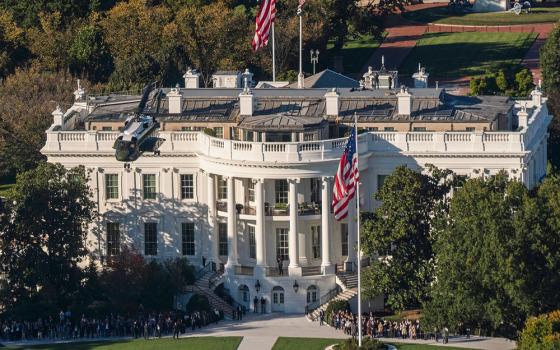
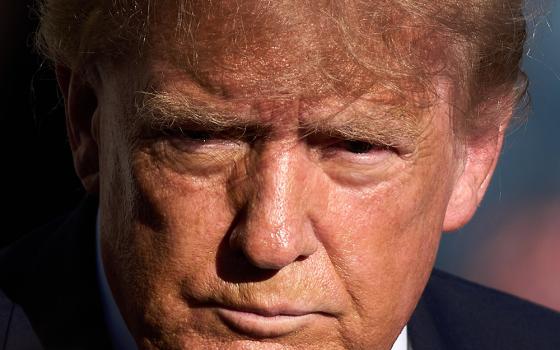
Anthropic, which is financially backed by Amazon, came into the sights of the Trump administration when it refused to loosen safeguards preventing its AI models from being used for lethal autonomous warfare without human oversight or for mass surveillance.
The Pentagon, in turn, labeled Anthropic as a supply chain risk — the first time such a designation was applied to a U.S. company — blocking its work with government contractors on projects with the U.S. military. OpenAI, the parent company of ChatGPT, quickly signed a contract with the Defense Department in Anthropic's absence.
Among the others presenting the encyclical with Leo are:
- Cardinal Víctor Manuel Fernández, prefect of the Dicastery for the Doctrine of the Faith;
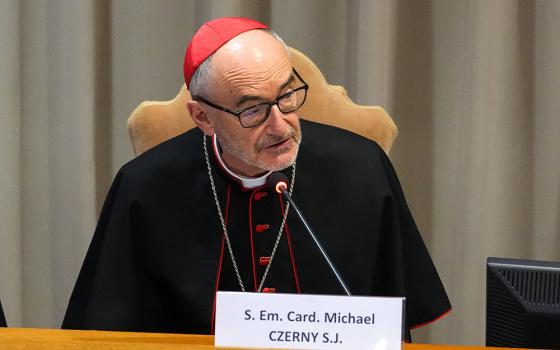
- Cardinal Michael Czerny, prefect of the Dicastery for Promoting Integral Human Development;
- Anna Rowlands, professor of Catholic social thought and practice at Durham University, England;
- Léocadie Lushombo, professor of theological ethics at Santa Clara University in California and a lay consecrated member of the Teresian Association.
Cardinal Pietro Parolin, Vatican secretary of state, was also scheduled to deliver concluding remarks before the pope will speak and give a final blessing.
Advertisement
The encyclical, the most weighty form of Leo's magisterial teaching since his election last May, comes as the Vatican continues to set its sights on addressing the ethical challenges posed by artificial intelligence.
Over the weekend (May 16), the Vatican announced the creation of a study group on AI working across various dicasteries to exchange information on projects related to artificial intelligence "including policies on its use within the Holy See."
The Vatican said that Leo had signed the new encyclical on May 15, 135 years to the day since the pope's namesake, Pope Leo XIII, signed the landmark encyclical Rerum Novarum ("Of New Things") on the rights of workers and social upheaval amid the industrial revolution.
Leo has likened the rise of artificial intelligence to the epochal transformation brought about by industrialization, presenting AI not merely as a technological development but as one of the defining moral tests of the modern age.
The National Catholic Reporter's Rome Bureau is made possible in part by the generosity of Joan and Bob McGrath.