Actors Emily Blunt and Josh O'Connor in 'Disclosure Day.' (RNS/Universal Pictures and Amblin Entertainment/Niko Tavernise)

Religion News Service
Join the Conversation
Send your thoughts to Letters to the Editor. Learn more
Roughly a third of the way into Steven Spielberg’s new blockbuster film "Disclosure Day," which focuses on the theoretical release of evidence documenting the existence of alien life, a conversation between the two main characters takes a sudden turn toward the spiritual.
One of the characters, who is Catholic, begins fretting over what the release of such information would mean for religious people, worrying many will "stop believing in God." People who believe in "superior beings," she says, will balk at news of "actual" superior beings — namely, technologically advanced aliens.
"People can’t handle both," she concludes.
Her implicit question is left hanging, like a flying saucer hovering over the horizon, for most of the film: If intelligent life were to be discovered beyond Earth, would it shatter religious traditions?
But for all the profound implications of intelligent extraterrestrial life, experts say the possibility is far less bracing for many religious practitioners across the globe. In fact, scholars argue many major faith groups have not only been thinking about the prospect of aliens for some time, some have even outlined extensive theological answers to the question of extraterrestrial life.
"That question is packed with drama, but it doesn’t correspond to the lived realities of people," said Diana Pasulka, a religious studies professor at University of North Carolina Wilmington and author of the book American Cosmic: UFOs, Religion, Technology.
Pasulka, who has also published a book focused on Catholic theology and history, noted that despite the framing of Spielberg’s film, Catholics in particular have long been interested in extraterrestrial life. What’s more, she noted that multiple heads of the Vatican observatory have openly discussed the prospect of intelligent life elsewhere in the universe, with one saying he would baptize an alien "if she asks."
When it comes to Catholics, she argued, aliens are simply "not a problem for them."

Diana Pasulka on a podcast in 2025. (RNS video screen grab)
Paul Gutjahr, a professor at Indiana University Bloomington and author of the forthcoming book Faith in Space: American Religious Belief in Extraterrestrial Life, said the situation is similar for other religious traditions. He noted that in the early 1700s, prominent Puritan clergyman Cotton Mather was already opining about life on other worlds. Mather, Gutjahr explained, believed that God was "so capacious, so big" that life elsewhere was seemingly inevitable.
There was also a surge of discourse about aliens in the 20th century, particularly during the space race. In the 1960s, at least one rabbi wrote an extensive academic article on the topic, pointing to Jewish texts some argue have long pointed to the existence of other worlds.
Pasulka said religion also often comes up when she interviews people who claim to have seen Unidentified Flying Objects, or UFOs, also known as or UAPs.
"I’ve met Orthodox Jewish people who had those experiences, and they’re fascinated by the public conversation, but it doesn’t shake their faith," she said.
Pasulka added that many religious people interpret the prospect of aliens through their own religious beliefs. She said that includes Muslims she has met who say they have encountered UFOs, some of whom have described their experiences by referencing jinn — supernatural beings in Islam.
Others have claimed that UFOs may be evidence of demons or "preternatural" beings such as angels, Pasulka said. It’s a belief that has garnered attention in recent months, with Vice President JD Vance referencing the idea in a March interview. But it has also proven controversial: on June 3, Catholic authorities announced the removal of an exorcist from his post in the Archdiocese of Washington, with church leaders justifying the move by citing the monsignor’s claim that UFOs are demons. Cardinal Robert McElroy, who oversees the archdiocese, said such statements "gravely undermine" church teachings.
"That belief has been around since the early twentieth century," Pasulka said, referring to the association of UFOs with demons.
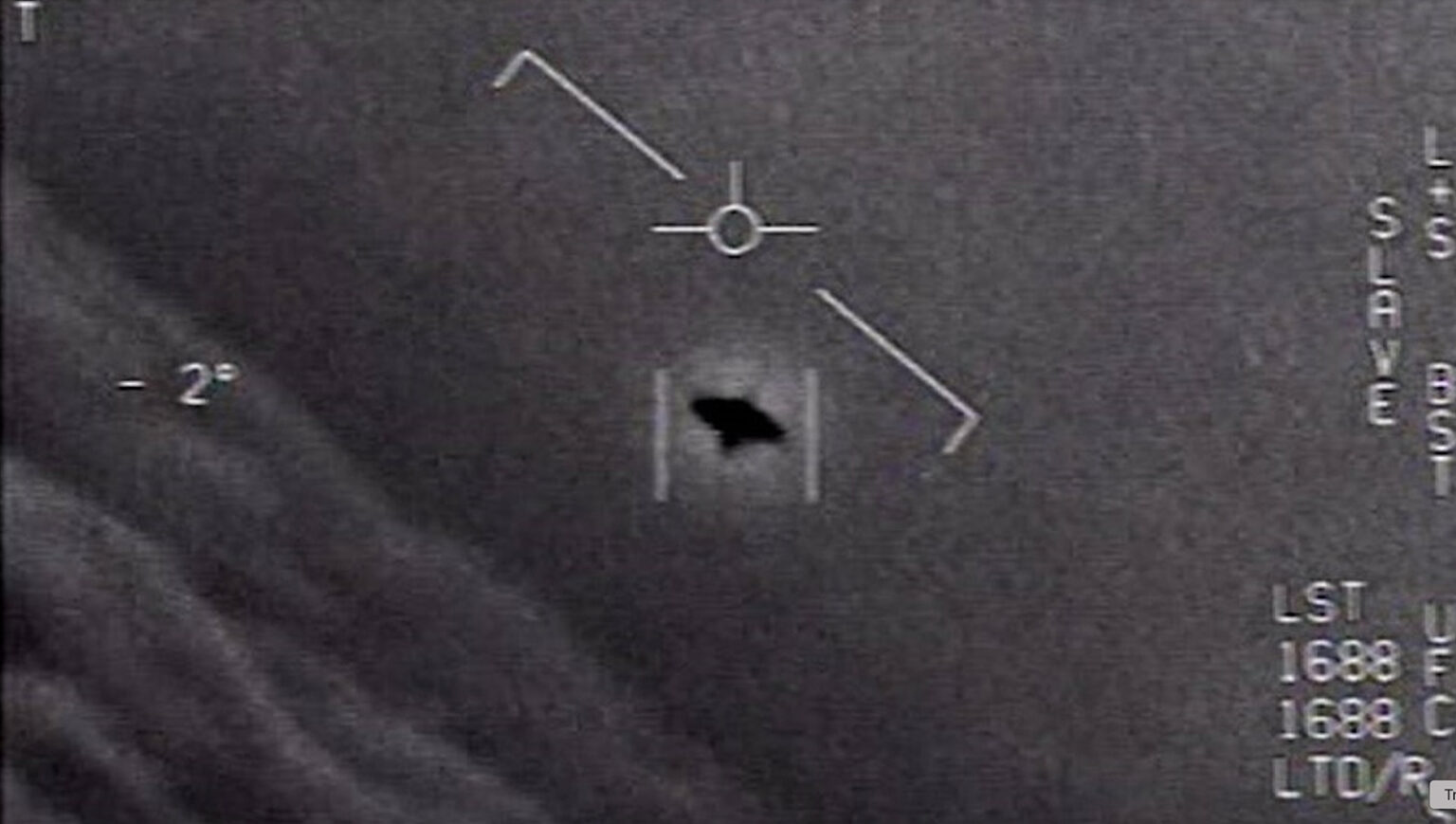
Military pilots have encountered unidentified aerial phenomena (UAP). (RNS/Image courtesy DOD/U.S. Navy)
But while the spectrum of views about religion and aliens is wide, belief in their existence is fairly common among religious Americans. A 2021 Pew Research poll found that while religious people in the U.S. are less likely than others to believe intelligent aliens exist on other planets, most Protestants and Catholics still said their best guess is that intelligent life is out there.
Among the groups polled, the only outlier was white evangelicals, with only around 40% assuming intelligent life exists.
Debate over aliens can be especially intense within Christianity, as one of the big questions surrounding the prospect of intelligent life on other planets is what that revelation means for Jesus Christ. Christians typically see Jesus as having died for the forgiveness of human sins, which raises a question: If aliens are real, did Jesus die for their sins too? Or do aliens have their own alien version of Jesus who dies for their sins?
By at least the 1880s, some Christian groups already had their answers. Gutjahr noted that Ellen G. White, the co-founder of the Seventh-day Adventist tradition, wrote extensively about alien life at the time, including the question of what it means for salvation.

Paul Gutjahr. (RNS/Photo courtesy of Indiana University)
"One of her takes was the Earth is the only fallen planet," said Gutjahr, referring to the Christian concept of humanity being sinful. "There is life elsewhere, but none of it fell — only Earth, so Earth was the only planet Jesus needed to die on to redeem humanity."
According to White, Gutjahr said, the result is that life elsewhere in the universe observes Earth as a sort of "giant amphitheater" to witness "God’s saving action." He added: "We become like a visual aid to the entire universe that you know about God’s mercy."
As for Spielberg’s film, it ultimately showcases a more multifaceted vision for what the existence of aliens would mean for religion than its early lines would suggest. Gutjahr found that unsurprising: He recalled that when he first started his book on religion and aliens, he expected documented moments of religious discourse regarding the prospect of aliens to be few and far between.
But as he began researching, he said, he was suddenly overwhelmed by the sheer volume of examples.
"It turns out that the whole freaking world has thought about life on other planets," Gutjahr said, laughing.
Advertisement