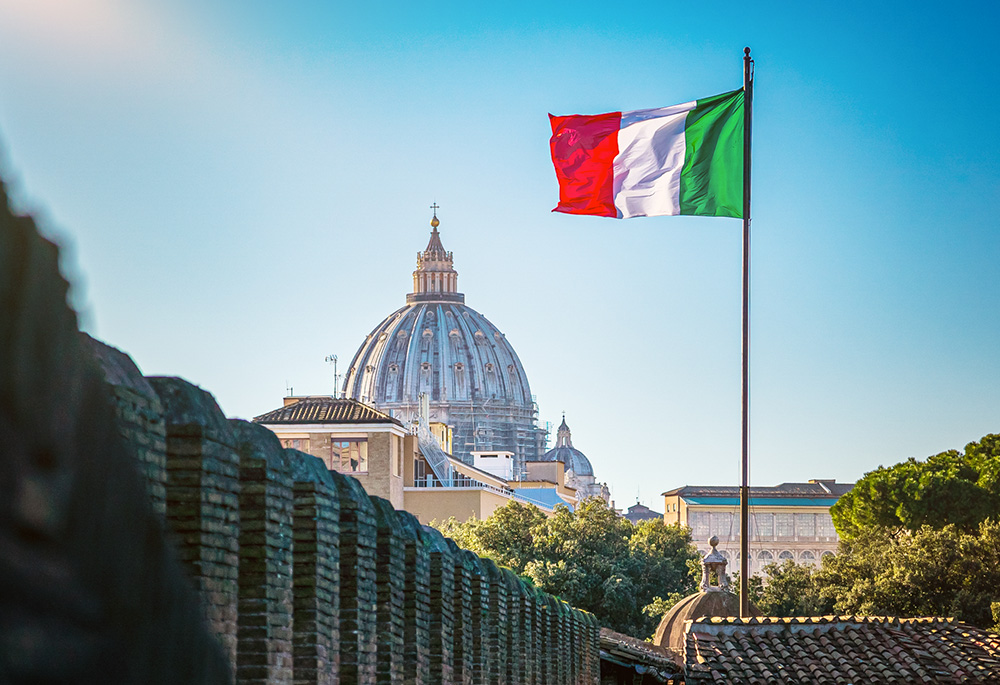
An Italian flag flies in Rome, with the dome of St. Peter's Basilica at the Vatican seen in the background. (Dreamstime/Vchalup)

by Christopher White
Former Vatican Correspondent (2021-2025)
Join the Conversation
Send your thoughts to Letters to the Editor. Learn more
Early on during the Francis papacy, I sat at dinner with a cardinal and listened to him vent his frustration at the Vatican's sclerotic bureaucracy and resistance to change. Pope Francis had been elected to reform the institution and even then there were signs that this would be no easy task, that the system was too entrenched. "What would it take for things to change?" the cardinal was asked.
"Heads on pikes lining the Tiber," he replied without pause.
Things in Rome may appear one way to outsiders, but — like the city itself — dig a little bit and get to know the right players, and a different reality emerges. A riveting new book offers a glimpse behind the curtain, unveiling the people, places and processes that make Italy tick.
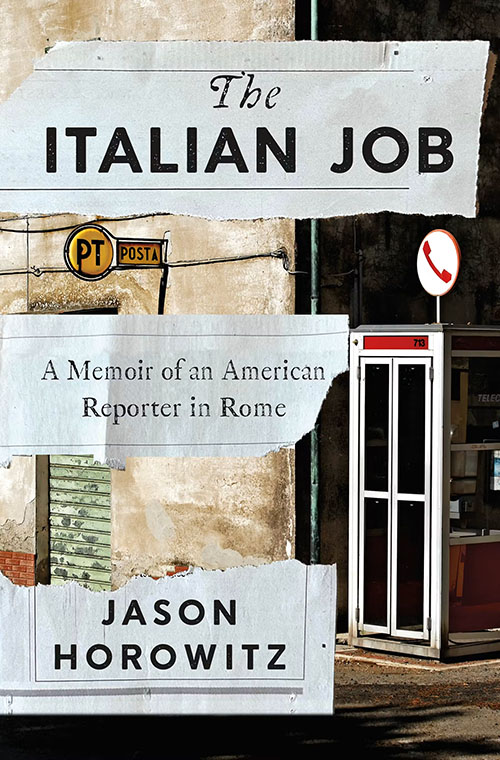
The cardinal's memorable quip came to mind reading Jason Horowitz's new memoir, The Italian Job, chronicling nearly a quarter-century of living and reporting on Italy.
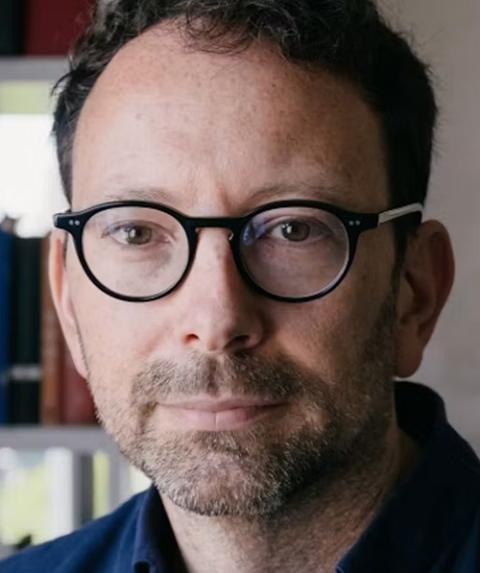
Jason Horowitz (Courtesy of Macmillan Publishers/Samuel Aranda)
For nearly a decade, Horowitz — who is a friend and former colleague from my time as the National Catholic Reporter's Vatican correspondent — served as the New York Times' Rome bureau chief. He brilliantly covered all the complexities of life in a country where organizational personnel changes are almost impossible to make, where the word "accountability" doesn't even really exist in Italian and where new laws are made in order to circumvent existing laws.
"A country known for its history of enormous creativity was now risk averse, conservative, and frankly a little uninspiring," writes Horowitz explaining the paralysis and dysfunction that often seems to plague the country today. The same could be said for the Vatican's institutional culture, as that cardinal lamented over a decade ago.
While Horowitz's chronicles of life in il bel paese isn't Vatican-centric, it conveniently serves as a guide to understanding why Vatican reform remains a perennial challenge in a country where tradition reigns supreme and innovation often feels like a relic of the past.
When Pope Benedict XVI became the first pontiff to voluntarily resign in 600 years, he did so at a moment of crisis. Financial mismanagement and clerical abuse scandals had burdened his papacy and he admitted he lacked the strength to govern. Enter Francis, who was elected in 2013 riding what was widely considered a reform mandate.
Twelve years later, the reform he delivered wasn't overwhelmingly bureaucratic in nature, but rather shifting the perception of the church in the world around it. Now, hopes remain high that the Chicago-born Pope Leo XIV can introduce some American-style management to what at its core is still an Italian institution — for better and for worse.
Horowitz was on the ground for all of the highs and lows of the Francis papacy and he writes comedically but without condescension about it all. The Italian Job is a love letter to Italy but not because of la dolce vita. That would sell the country short. It's because this Jewish kid from Queens, New York, took seriously the wisdom that Pope John Paul II would often repeat to seminarians: "Imparare Roma" — learn Rome.
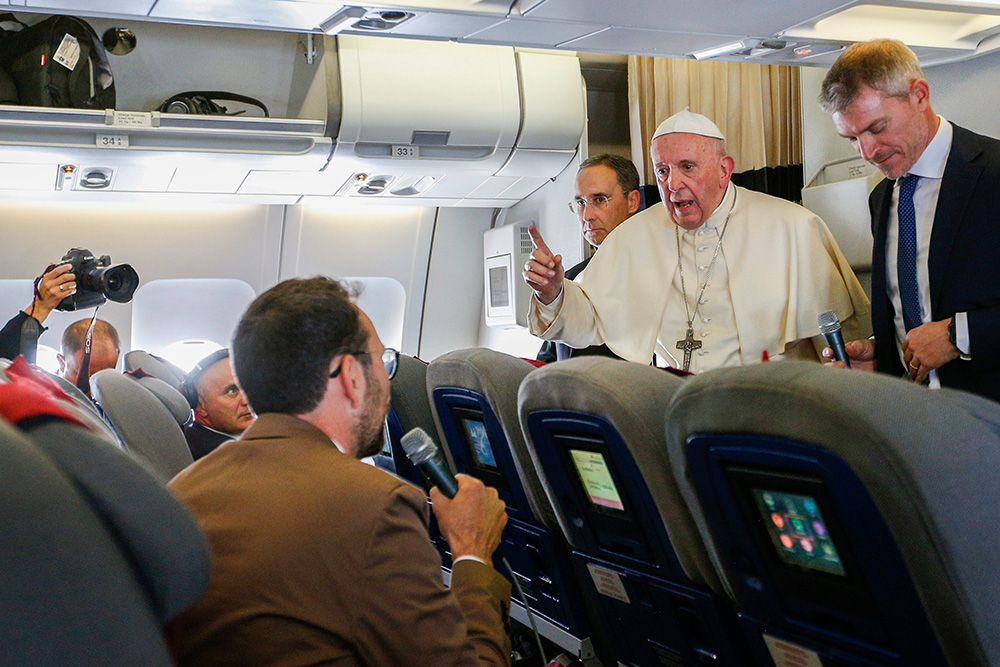
Pope Francis speaks with Jason Horowitz of The New York Times aboard the papal flight from Antananarivo, Madagascar, to Rome Sept. 10, 2019. (CNS/Paul Haring)
The book is chock-full of amusing tales of Horowitz sipping spritzes with Italian Prime Minister Giorgia Meloni, the "bunga bunga" parties that defined the Berlusconi era, and jet-setting around Europe with Steve Bannon, who helped galvanize the resistance to Francis among traditionalists (including with the support of some of the pope's own cardinals).
More sobering are Horowitz's accounts of floodwaters threatening Venice; the early days of the COVID-19 pandemic, where the health crisis first began in Europe; and his attempts to understand Italy's plummeting fertility rates and rapidly aging population and what this demographic winter might mean for its future. If Italy is a country that often feels stuck in the past, for Horowitz it's also a land that allowed him to see into the future, giving him a glimpse into the rise of right-wing populism, immigration debates and climate change.
Especially moving is when Horowitz takes off his reporter's cap and writes personally about the illness of and eventual death of his father and the personal toll that a foreign correspondent endures trying to build a home in one's adopted country while being separated from one's own.
He then puts that cap back on by trading correspondence with Francis about aging and mortality, visiting Sardinia's "blue zone" with a high population of centenarian residents, and talking to the former head of the Vatican's Pontifical Academy of Life, Archbishop Vincenzo Paglia, who makes a convincing case that limits, including death, help to provide meaning to one's life.
The archbishop laments to Horowitz that much of the world seems to have lost a sense of intergenerational solidarity, but Rome, Paglia observed, challenges that trend.
That reality is put on full display in a chapter where Horowitz takes readers along on his journeys on the papal plane traveling around the world with an increasingly elderly and vulnerable Francis.
Advertisement
Once, on a trip to Cyprus that took place during Hanukkah, Horowitz had the entire press corps laughing when he gave a confused Francis gelt and a dreidel — and encouraged him to take up a game with the cardinals.
There's also a humorous account of Horowitz getting berated by a Vatican press officer after he failed to board a bus in conflict-ridden South Sudan because he'd gotten caught up in a conversation with a local warlord.
(What's not included in the book — because Horowitz is a mensch and wouldn't want to heap praise on himself — is how that evening, after the events of the day had concluded and some of us Vatican reporters were relaxing on the hotel rooftop, he sent over a round of beers to our handlers to make amends for earlier in the day and toast their efforts to keep us safe.)
At a recent book launch event at New York's Rizzoli Bookstore, Horowitz recalled some of these adventures and told his New York Times colleague Maggie Haberman that Francis was similar to former U.S. President Bill Clinton in that being around people is what gave them both energy and purpose.
For Francis, he continued, there was special attention to the peripheries — marginalized, suffering and overlooked people — and these international travels brought this into special focus.
"You can't help but be changed by that," Horowitz told the crowd.
As he said that, I thought back to that South Sudan rooftop where Francis had brought the world's media to the world's youngest country to spotlight efforts to preserve a fragile peace after a bloody civil war.
Who wouldn't want to raise a glass to such an effort?