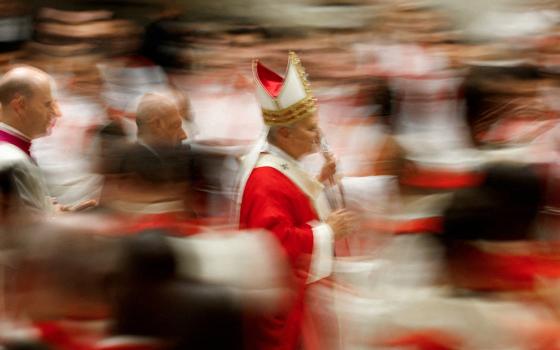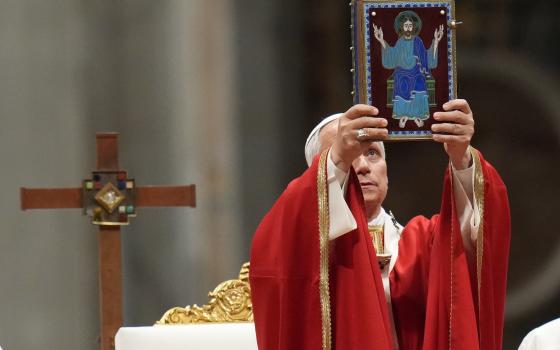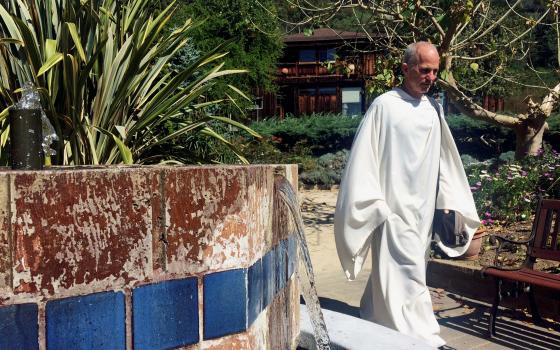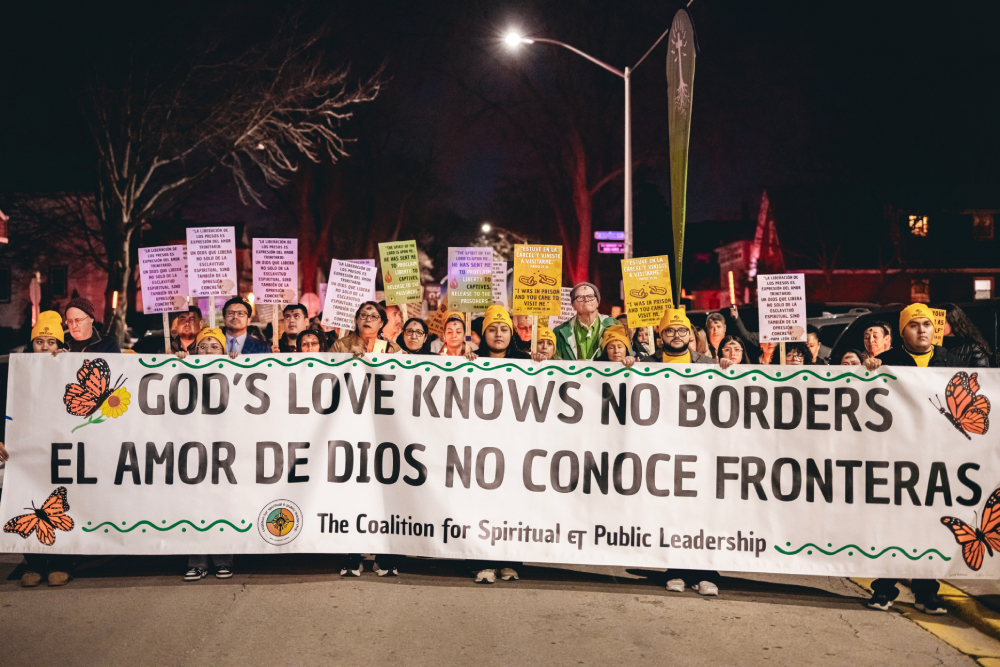
A procession in solidarity with ICE immigrant detainees organized by the Coalition for Spiritual and Public Leadership in Chicago on Ash Wednesday, Feb. 2026. (Courtesy of Coalition for Spiritual and Public Leadership/Bryan Sebastian)

Join the Conversation
Send your thoughts to Letters to the Editor. Learn more
Under a court-ordered agreement reached between a Chicago-based group of religious leaders and federal immigration officials, faith leaders have been given daily access to the Immigration and Customs Enforcement processing center just outside Chicago to provide pastoral care to immigrant detainees.
The agreement, which took effect on May 14, permits one coordinated visit per day by up to five approved clergy members or volunteers during designated time windows and establishes protocols governing religious services, security procedures and access to detainees.
The arrangement, which remains in effect while federal litigation continues, allows pastoral teams to provide spiritual care, prayer and approved sacramental ministry, including rites associated with specific religious observances.
The agreement also requires ICE personnel to notify detainees that pastoral services are available. Approved religious materials may be brought into the facility following security review, while visits themselves must occur within the center's guidelines. Daily pastoral visits began May 15, ending a nearly 10-month organizing campaign and legal effort led by the coalition and faith leaders who argued that detainees at the Broadview center should receive access to religious care.
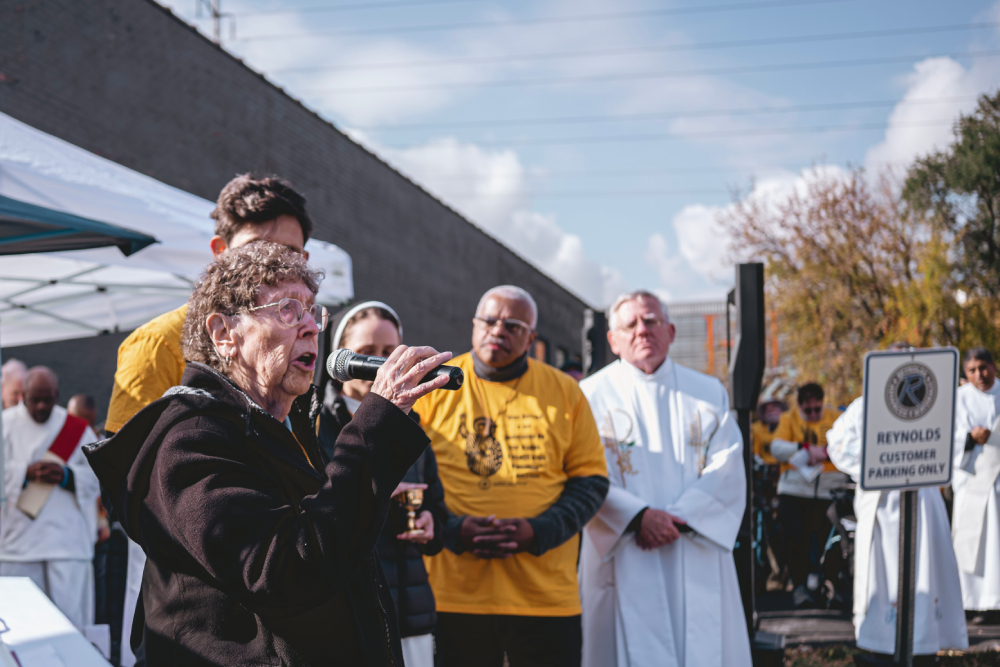
Late Mercy Sr. JoAnn Persch speaking outside the ICE Broadview detention center at an event organized by the Coalition for Spiritual and Public Leadership in Chicago, Nov. 2025. (Courtesy of Coalition for Spiritual and Public Leadership/Bryan Sebastian)
For those involved in the campaign, the agreement represents both a practical change and a symbolic development.
"It's a victory. We're extremely happy," said Jesuit Fr. Daniel Hartnett, who has been participating in the ministry effort for the detainees. "What we're doing is actually very legal, but we had to struggle to get the law implemented."
Hartnett, a jail chaplain in Chicago, said he has entered Broadview approximately four times since the agreement took effect. Because clergy and volunteers rotate responsibilities, he said teams have quickly formed to maintain a daily presence.
Michael N. Okinczyc-Cruz, CEO of the Coalition for Spiritual and Public Leadership, said immigrant members themselves played a central role in shaping the campaign to allow religious leaders access.
"This movement has been led by immigrants from the very beginning," he told the National Catholic Reporter. He said immigrant organizers helped lead religious processions and coordinate public Masses and demonstrations.
"At a time where they have an abundance of reasons to live in fear and to live in the shadows, we witness their faith, their courage, their persistence," he said.
Okinczyc-Cruz also pointed to ongoing efforts of religious leaders to make this access, particularly the Mercy sisters JoAnn Persch and Pat Murphy. The two died last year, but their weekly presence outside the facility over 10 years was "the building block" to current immigrant advocacy work for broader access there. Since visits began at Broadview under the new protocols, clergy members said they have encountered detainees facing a wide range of emotional circumstances.
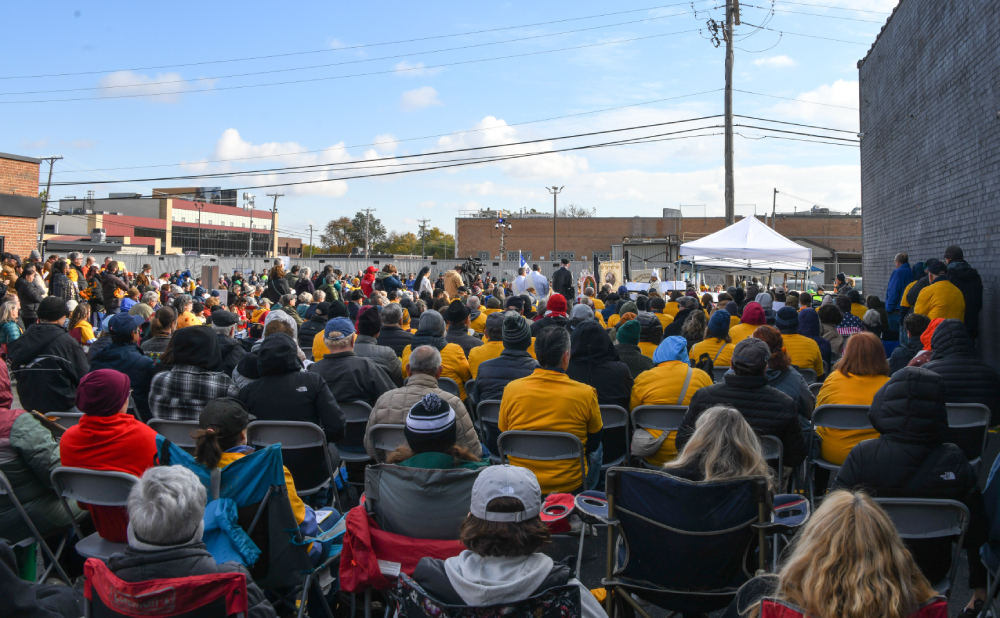
Participants at All Saints Day People's Mass organized by the Coalition for Spiritual and Public Leadership outside the Broadview ICE detention center in Chicago, Nov. 2025. (Courtesy of Coalition for Spiritual and Public Leadership/Bryan Sebastian)
Scalabrinian Fr. Leandro Fossá, who said he has visited repeatedly in recent weeks, said he has seen individuals transferred from other facilities as well as people detained locally.
"I've seen people that are brought in and they have the opportunity to call their families, and then they are removed to another facility," he said.
He also described meeting people detained while attending immigration-related appointments.
"We saw people that were picked up here in town going to court," he said. "These people were respecting their due process."
Fossá said many of those he met appeared uncertain about why they had been detained.
"I see people who don't understand exactly what is going on," he said. "They don't know the reasons why they were picked up, but they know that they have respected what the court has asked them to do."
Clarentian Fr. Paul Keller described similar impressions.
"The situation there is one of shock and confusion," Keller said.
He said the individuals he encountered did not fit the simplified public narratives about immigration detention.
"These are some of the people who make the country great," he said. "These are people who are coming and contributing and keeping their families together and working hard."
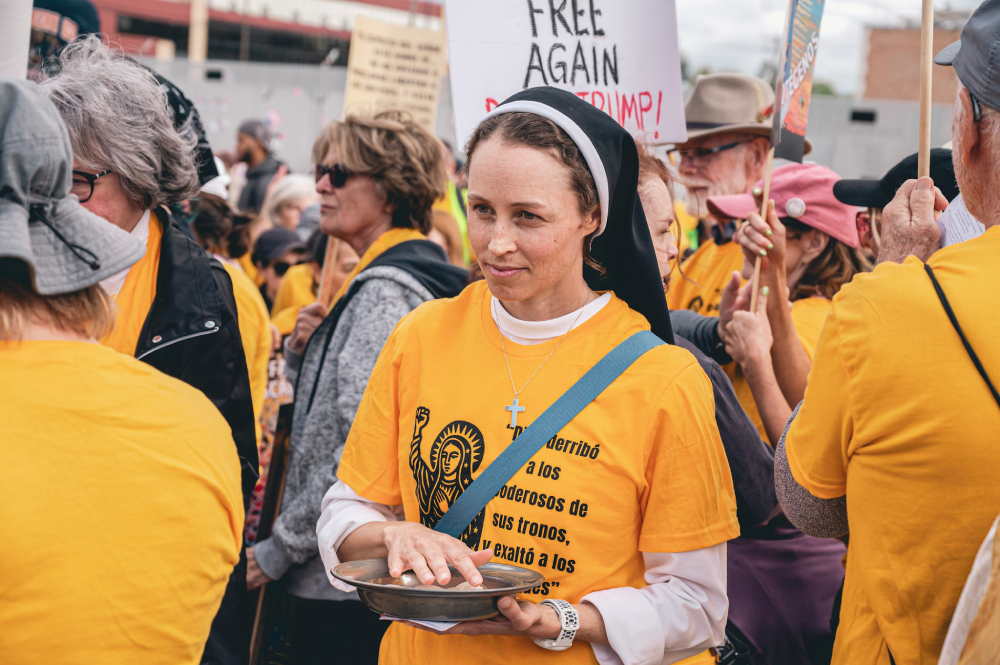
Dominican Sr. Cristin Tomy, a clergy member of the Coalition for Spiritual and Public Leadership, during a Eucharistic Procession in solidarity with ICE immigrant detainees, Oct. 2025. (Courtesy of Coalition for Spiritual and Public Leadership/Bryan Sebastian)
The new agreement permits approved sacramental ministry and religious services, and clergy members said those visits have included prayer, Communion, confession and anointing.
Keller recalled one recent gathering involving 11 men in a communal prayer service and reflection, followed by a blessing, and the opportunity for confession. After the larger group departed, he said, clergy spent additional time with a young man from Guatemala.
"He teared up and began crying during the prayer service," Keller said. "A feeling of being dead, kind of emotionally, spiritually dead, and feeling that that prayer brought him to life again."
Hartnett said he observed changes during the visits themselves. In earlier encounters before the agreement, he said detainees were frequently restrained with hand and ankle shackles. He said clergy later requested modifications during pastoral sessions, which were later granted.
He described recent meetings where participants could sit together and introduce themselves.
"You could see the tension kind of disappearing slightly from the people," he said.
Although many remained visibly worried, he said the atmosphere often changed during the sessions. "The fear in their faces turned into a kind of a smile," he said.
Advertisement
For Fossá, the most important aspect of the visits has not necessarily been religious ritual itself. He described one particularly difficult encounter involving distressed detainees who had been unexpectedly held at the center. "It took us two hours to calm them down," he said.
Some worried about families depending on them, while others struggled with uncertainty about what would happen next, he said.
"They don't need answers," Fossá said. "They need to be listened to."
The agreement will remain in place while the federal litigation continues, with the court requesting an update later in early July.
Felician Sr. Jeremy Midura, a board member of the coalition and part of the group visiting the ICE detainees, said the agreement is a move in a positive direction recognizing the immigrants' right to receive care.
"We are simply human beings meeting another flesh and blood human being, and individuals in detention must be treated with human dignity," she said.