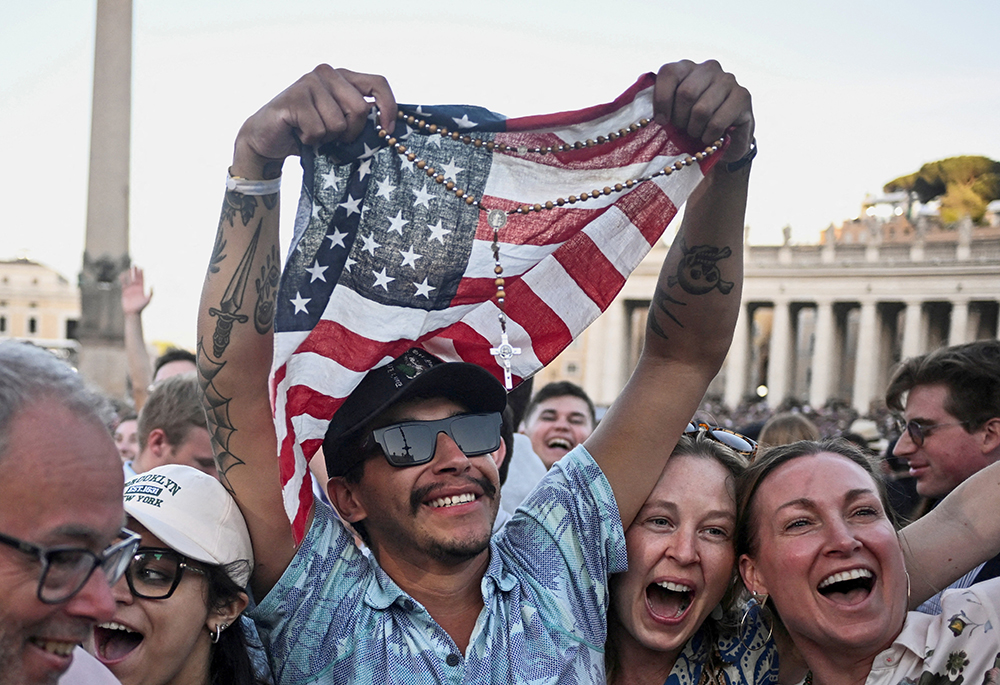
A man holding a rosary and U.S. flag reacts as Cardinal Robert Francis Prevost, who has chosen the papal name Leo XIV, appears on the central balcony of St. Peter's Basilica at the Vatican May 8, 2025, following his election during the conclave. (OSV News/Reuters/Dylan Martinez)
by Michael J. O'Loughlin
NCR executive editor
Join the Conversation
Send your thoughts to Letters to the Editor. Learn more
One of the benefits of being a credentialed reporter in Rome during big Vatican events is the opportunity to skip the lines and climb the steep winding steps to the top of the colonnade surrounding St. Peter's Square. Up there, journalists watch the events unfold, unobstructed, high above the massive crowds gathered below. During the papal conclave last year, I skipped this perk and instead joined the throngs of people in the square, another Catholic eager to witness history.
Pilgrims patiently waiting waved flags from all around the world, including a few stars and stripes, and once white smoke emerged, news about the identity of the new pope felt agonizingly slow. A voice spoke in Latin, but the audio was scratchy and soft and it wasn't entirely clear who had been elected.
I thought I heard "Prevost," whose name I had remembered due to a tip from former NCR Vatican correspondent and author of Pope Leo XIV, Christopher White. I turned to my husband and said, "It's the American," more of a question than an answer. The people standing shoulder to shoulder next to us heard me, and within a couple of seconds, I spotted an elderly Italian woman a little ways away exclaim, "Americano!" then roll her eyes, look upward and cross herself.
The three main Italian newspapers all lead with the same headline the next day: "Il Papa Americano!", capturing both the excitement and bewilderment of having a U.S.-born pontiff, Pope Leo XIV, sitting on the throne of St. Peter. That it's taken nearly a year to gain some insight to this question is perhaps not all that surprising, given how conditioned Catholics had become to believe the conventional wisdom that an American would never be elected pope.
In the run up to the two conclaves held in 1978, it was taken for granted that an Italian would be elected pope and the eight American cardinals weren't even a blip on the radar as possibilities.
Going into the August conclave that year, Albino Luciani, elected on the fourth ballot as Pope John Paul I, was included in a roundup by the Associated Press, one of 9 Italians of a list of 14, on which also appeared cardinals from England, Austria, Benin, Argentina and Brazil.
When cardinals convened again in October following John Paul I's death just 33 days after his election, the AP reported that the five leading candidates were all Italians, even though the conclave marked the first time in church history that non-Italian cardinals held the majority. The Polish-born Cardinal Karol Wojtyla was elected, ending Italy's centuries-long grip on the papacy.
As cardinals gathered in 2005 to elect John Paul II's successor, Pope Benedict XVI, geography was less of an issue in the prediction game, but Vatican watchers were adamant that an American would not be elected anytime soon.
Several U.S. cardinals suggested to Washington Post reporters that the U.S. was too powerful for an American pope. A theologian at Bellarmine University in Kentucky told The Courier-Journal that a U.S.-born pope would not "be as free to critique" America as a pope born elsewhere.
One church observer told Cox News Service in 2005 that a pope from a superpower like the United States "would send a very troubling message" while another predicted that European, African and Asian cardinals would band together to block the election of a U.S. pope because America was seen as a "rogue, imperial nation."
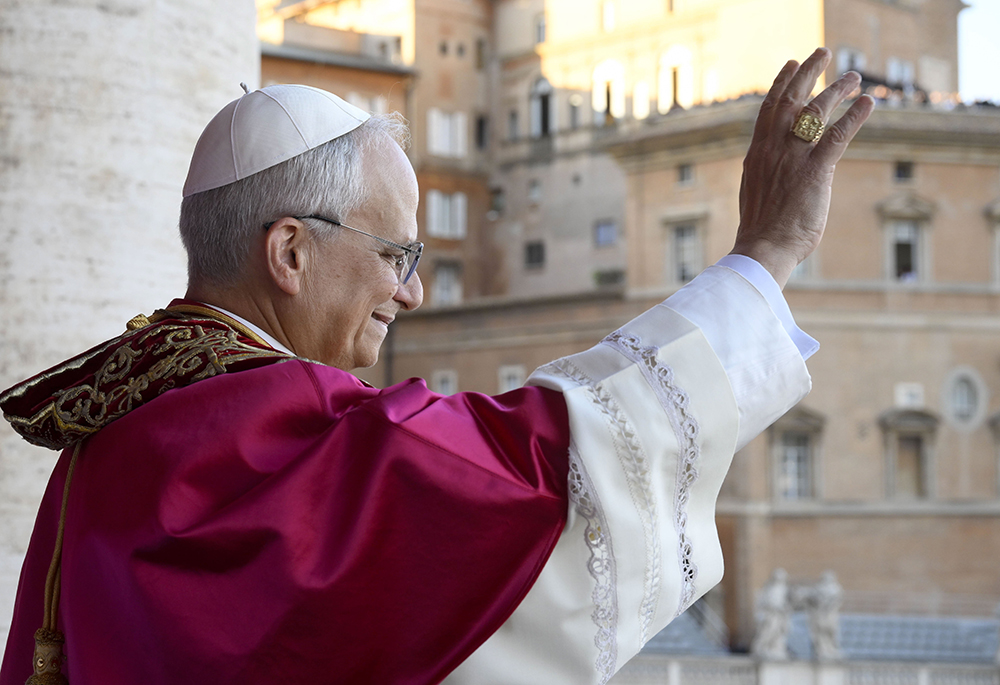
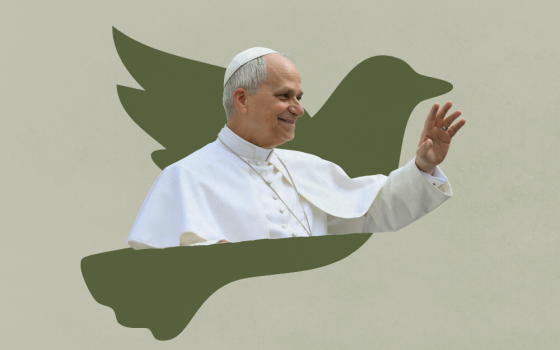
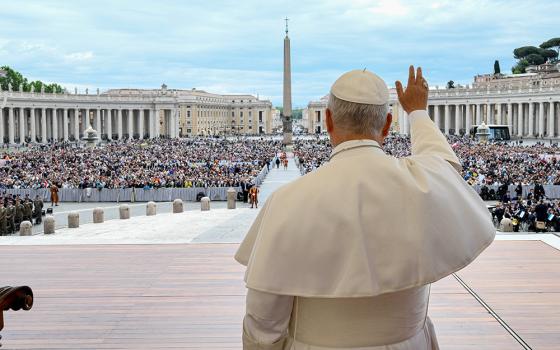
Pope Leo XIV, the former Cardinal Robert F. Prevost, waves to the crowds in St. Peter's Square at the Vatican after his election as pope May 8, 2025. (CNS/Vatican Media)
A roundup of interviews with papal electors in The Independent in 2005 by Vatican expert Gerard O'Connell put it like this: "Nationality is no longer a problem for the electors, although most exclude a pope from the United States" while legendary NCR Vatican reporter John L. Allen Jr. told The Star-Ledger that "the Vatican prizes its diplomatic independence too much (to have a) 'superpower pope.' "
George Weigel, biographer of John Paul II, told the AP in 2005 that a U.S. pope wouldn't happen.
"The economic, political and military power of the United States leads to resentments, and that's part of the human dynamic," he said, calling the chance of a U.S. pope "virtually impossible."
Fr. Richard John Neuhaus, founder of First Things, told the AP that a U.S.-born pope "would give not only the appearance, but perhaps the substance, of increasing what is perceived by many as the inordinate hegemony of American power." Jesuit Fr. Thomas Reese, then at America magazine, noted that "the church always tried to keep (the papacy) out of the hands of the superpower" of the day.
Benedict XVI resigned in 2013, leading to a conclave in March and the view that an American could not be elected still held sway — though cracks appeared.
The Los Angeles Times included two U.S. cardinals as footnotes in a long profile of the men who might be elected pope, but the article said that their election was "unlikely," as prelates "may shy away from the idea of a head of the global church hailing from the world's remaining superpower."
The AP added, "Conventional wisdom holds that no one from the United States could be elected pope, that the superpower has more than enough worldly influence without an American in the seat of St. Peter." But because of Benedict's resignation, the story continued, "church analysts are wondering whether old assumptions still apply."
Longtime Vatican watcher John Thavis told the Pittsburgh Post-Gazette, "The idea of an American pope was essentially taboo until now."
Writing for The Daily Telegraph, Nick Squires perhaps captured the changing mood best.
"The traditional view within the Vatican has always been that it would be wrong — even dangerous — to have a Pope who comes from the United States because it already wields quite enough temporal power around the globe," he wrote. "... But with a perception that US hegemony is diminishing amid one of the most open papal elections for decades, that orthodoxy could be turned on its head."
It wasn't, at least not yet. Cardinal Jorge Bergoglio of Argentina was elected. The two American names being bandied about in 2013 were Boston's Cardinal Sean O'Malley and New York's Cardinal Timothy Dolan, who said on his radio show following Benedict's resignation, "One wonders if the former boundaries seem not to have any more credibility." (According to reporting from O'Connell's 2019 book The Election of Pope Francis, O'Malley topped out at 10 votes on the first ballot.)
Last year, ahead of the 2025 conclave, the view that the next pope would not hail from the United States remained, even if some journalists included Cardinal Robert Prevost on their shortlists, with NCR's White calling him "worthy of serious consideration."
But another analysis published in NCR stated, "seeing an American dressed in white emerging from the Sistine Chapel would be against all odds" while the news outlet Axios profiled Prevost as a possibility but concluded, "All eyes are on the Vatican but don't hold your breath on the new pope being from Chicago or even the U.S."
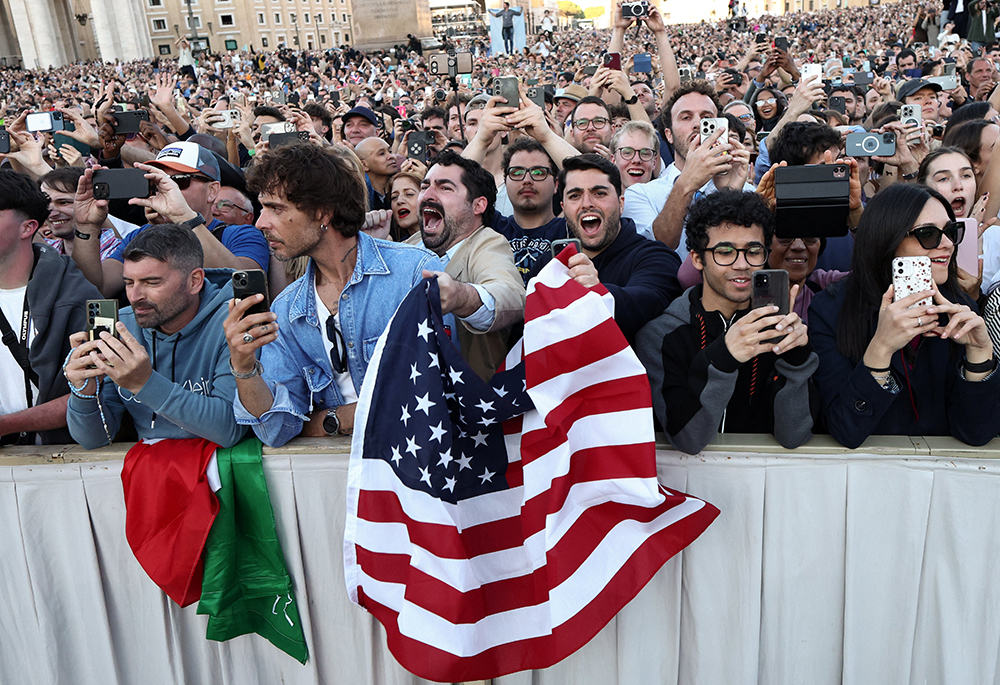
Men wave a U.S. flag as Cardinal Robert Francis Prevost, who had chosen the papal name Leo XIV, appears on the central balcony of St. Peter's Basilica at the Vatican May 8, 2025, following his election during the conclave. (OSV News/Reuters/Eloisa Lopez)
Thavis, who suggested the taboo against a U.S.-born pope might have waned in 2005, told Newsday about the possibility in 2025, "I don't think the world of the church is ready for an American pope."
Jesuit Fr. James Bretzke told USA Today that America's place in the world almost certainly ruled out a U.S. pope: "America's image in the world simply is too powerful — and to be blunt, ugly."
Even Prevost himself didn't think an American would be elected pope, according to reporting from CNN's Christopher Lamb, author of American Hope. "I am sleeping well," Prevost wrote to a friend ahead of the conclave, "relying on the belief that there will never be an American pope."
In terms of how cardinals got over their worries about electing an American, Prevost living most of his adult life in Peru and Italy made him "less American" than the other Americans, and reports suggest he was a compromise candidate. Plus, U.S. power just isn't what it used to be, according to some observers. Bishop Robert Barron told CBS News about a conversation he once had with Cardinal Francis George, the late archbishop of Chicago, whom he said predicted, " 'Look, until America goes into political decline, there won't be an American pope.' "
Advertisement
Have the old concerns about an American pope come to pass and what does it mean to have a pope from the United States?
The U.S. is still the world's undisputed superpower, but China is gaining ground, and many observers see America as an empire in decline. Fears that an American pope would consort with an American president to advance U.S. interests certainly appear to be unrealistic during this administration, with Leo emerging as one of the most high-profile American critics of Trump administration policies. Any worries that global Catholics might not accept a pope from the United States because of our nation's foreign wars appear to be unfounded given Leo's warm reception in Europe and Africa.
Mostly, having an American pope so far seems to be something of a novelty — at least for Americans. It means having a pope who speaks Midwestern-accented English, something that still prompts a double take from time to time, and it means knowing perhaps a little too much about a pope's siblings.
It means the pope cannot be easily dismissed by those who dislike where he stands on controversial issues, because he has a deep grasp of the nuances of America's politics and culture wars, and it also means defaulting to the unfortunate American trait of thinking every utterance by a global figure must be about us. It means having an American on the world stage who preaches peace, who chooses his words intentionally and who appears eager to transcend the divisive rhetoric we've become so accustomed to here at home.
Finally, it means possibility. An institution that sometimes can feel stuck and archaic, can still surprise and embrace new realities. An idea that was once seen as improbable has materialized, offering Catholics a meaningful chance to imagine a new future for their church and their world.