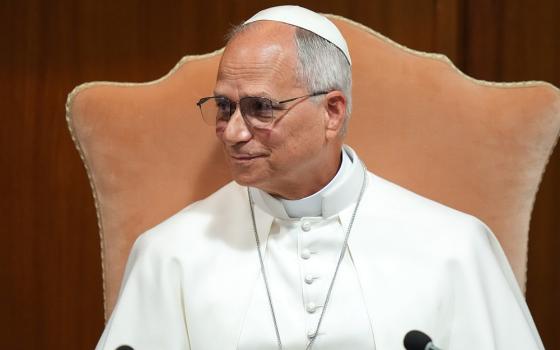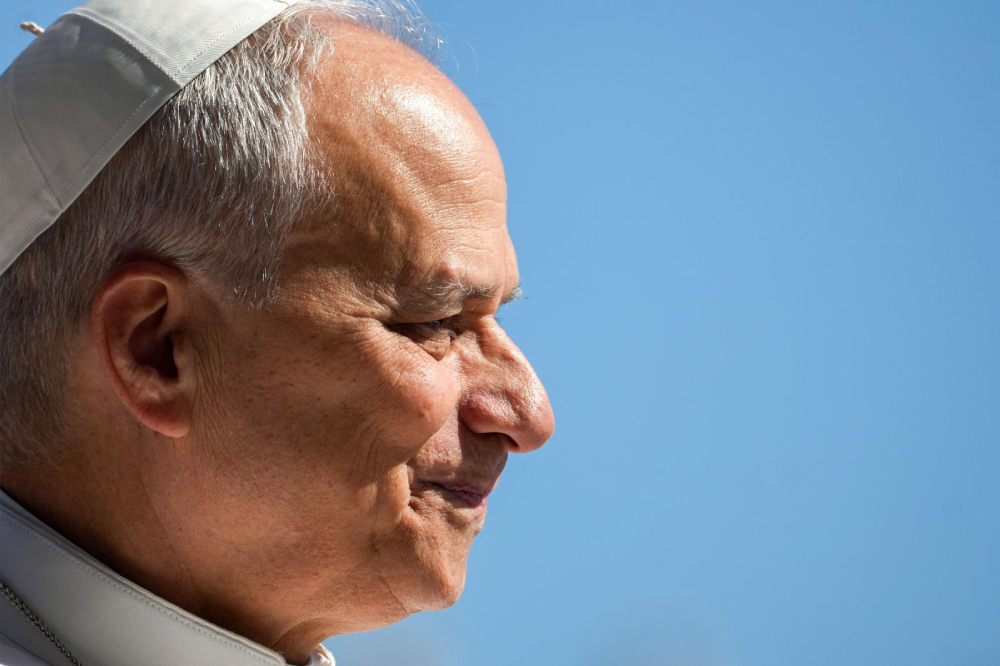
Pope Leo XIV smiles as he greets visitors and pilgrims from the popemobile while riding around St. Peter’s Square at the Vatican before his weekly general audience May 20, 2026. (CNS/Lola Gomez)

by Brian Fraga
Staff Reporter
Join the Conversation
Send your thoughts to Letters to the Editor. Learn more
As Pope Leo XIV prepares to issue an encyclical on protecting the human person in the age of artificial intelligence, Catholic labor historians see parallels between now and 1891, when Pope Leo XIII signed his landmark encyclical Rerum Novarum ("Of New Things"). Just as industrialization in the late 19th century changed working conditions and presented unprecedented opportunities and challenges for civilization, AI in the early 21st century has the potential to revolutionize modern life.
"There is a need that Pope Leo is seeing," Fr. Clete Kiley, a longtime labor priest who serves as the chaplain of the Chicago Federation of Labor, told the National Catholic Reporter. "This is a time to reaffirm values, to ensure that we don't lose values and sight of the fundamental dignity of people in the face of technology."
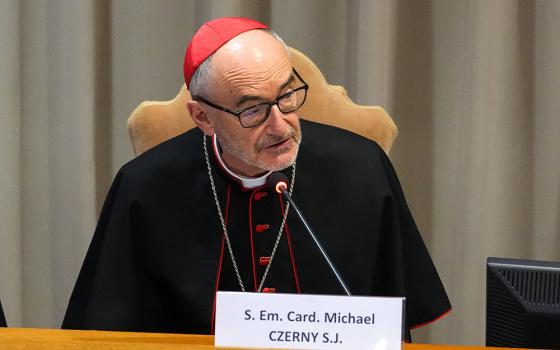
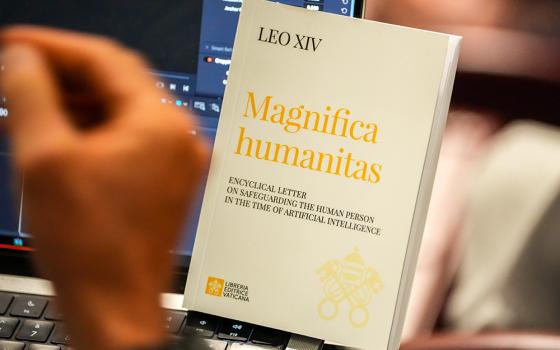
The new encyclical, titled Magnifica Humanitas ("Magnificent Humanity"), will be presented May 25 by Leo as well as Curial cardinals and theologians, the Vatican announced on May 18. The pope signed the encyclical on May 15, 135 years to the day since the pope's namesake signed Rerum Novarum.
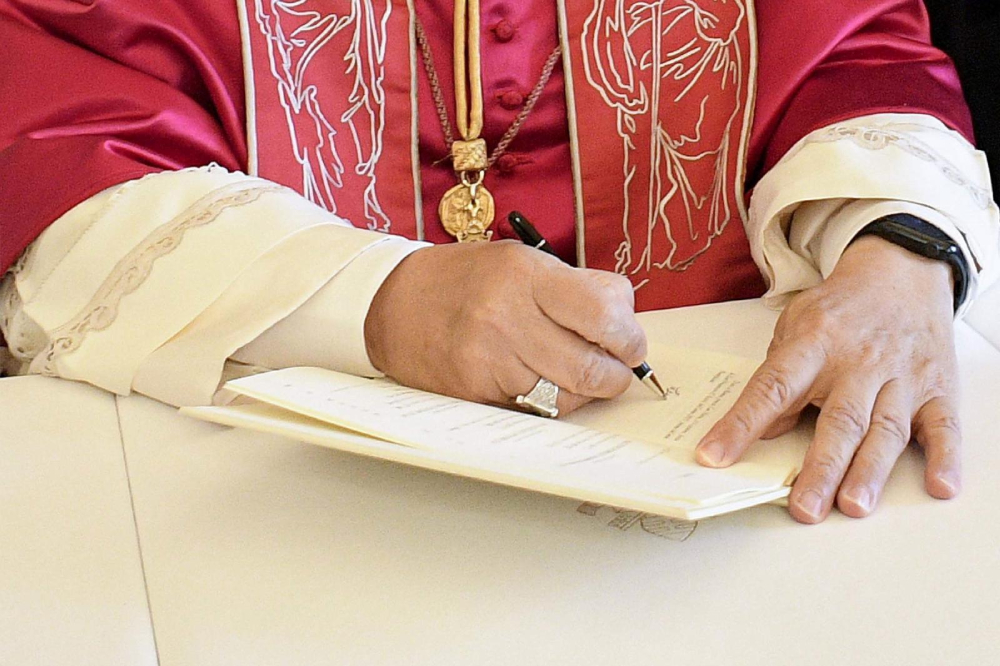
Pope Leo XIV signs his first apostolic exhortation, "Dilexi Te," in the library of the Apostolic Palace at the Vatican Oct. 4, 2025, the feast of St. Francis of Assisi. His first encyclical, "Magnifica Humanitas," will be published May 25, 2026, addressing artificial intelligence and the protection of human dignity, the Vatican announced May 18, 2026. (OSV News/Vatican Media/CPP)
The former Cardinal Robert Prevost took the name Leo upon his election to the papacy in May 2025 to signal continuity with his 19th century predecessor, whose landmark encyclical set the foundation for the church's social teaching tradition.
"Leo XIII was really dealing with industrialization and the expansion of the extracting industry, such as mining, " Kiley said. "The nature of work and of industry had changed, but adjustments had not been made for the protection of workers within that."
Jesuit Br. Ken Homan, a Catholic labor historian at Saint Louis University, told NCR he sees similarities between what was happening amid industrialization in the 1890s and the advent of AI today.
"One is the severe levels of inequality we see in the world," Homan said. "Both are historical moments for the disparity between the haves and the have-nots, and the disparities between individuals, between countries and between communities."
Homan said industry leaders who drove the industrial revolution in the 19th century promised that the resulting economic and social changes would eradicate inequality.
"That's a lot of the same language that folks around AI have been using as well," Homan said. "I think there's a real danger in that, in part because it's putting faith in technology that people are supposed to be doing."
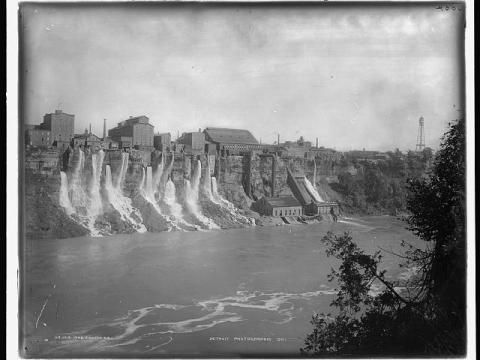
"The Factories," 1880-1890. (Library of Congress/Detroit Publishing Co./Public domain)
Joseph McCartin, a history professor at Georgetown University who also serves as the executive director of Georgetown's Kalmanovitz Initiative for Labor and the Working Poor, told NCR that he sees "enormous parallels" between the current moment and the era in which Leo XIII wrote his encyclical.
"The parallels involve the changing nature of the world economy in both periods, how globalization was working, the changing impact of technology in redistributing wealth upward, and the tensions that were growing around immigration and migration that were the outcomes of these industrial changes," McCartin said.
Political movements that resulted from those economic forces, Martin noted, prompted the popes to respond in their respective eras.
"In the late 19th century, Leo XIII was responding to the growth of socialism and the threat that he saw socialism posing to Catholic teaching," McCartin said. "One of the things he was determined to do was to place the church in the position of not aligning itself with the elites but rather playing a mediating role to produce a society that was good for all, in which the common good was central."
"Currently," McCartin added, "I would say that it's not socialism that Leo XIV needs to respond to, but it's rather the emergence of nationalisms of various kinds that also pose a great danger."
Leo XIV has likened the rise of artificial intelligence to the earlier epochal transformation, and he has discussed AI as a moral test for the modern age as much as it is a technological development. The pope has warned that the emerging technology must not replace human intelligence, judgement or relationships, and that humanity must protect human dignity.

(Unsplash/Solen Feyissa)
"What I think would be on Leo's mind for the encyclical is that there are these new ways of going about the world that not only alter the economy and the way things work, but also our social interactions with each other," Homan said. "I think Leo sees a real need to step in, to engage, to have this conversation."
"I think this is a good time for an encyclical, an appropriate time, not unlike in 1891," Kiley said.
In Rerum Novarum, Leo XIII presented a vision where the church responded to the social upheavals caused by capitalism and industrialization, which helped spawn competing movements and ideologies such as socialism and communism.
Presenting a vivid depiction of the plight of 19th century urban poor workers, Rerum Novarum condemned laissez-faire capitalism while prescribing a series of remedies such as the articulation of a right of workers to form labor unions for the purpose of collective bargaining.
The encyclical also emphasized human dignity as an inviolable principle. The industrialization of the 19th century posed threats to the human dignity of workers who were vulnerable to exploitation.
"I think if you look at today," Kiley said, "one of the things that's occurring is there is this new use of AI. It can help workers, but it can also have unexpected consequences and it can cost people their jobs."
Advertisement
Kiley noted the example of how artificial intelligence has impacted the hospitality industry, noting that some hotels now use kiosks instead of front desk assistants to check people in and provide room keys.
"The nature of the hospitality industry is changing," said Kiley, who also highlighted the example of how banquet servers in Las Vegas developed an app with the cooperation of their employer to arrange their work schedules in a manner that benefited them.
"There are some examples of AI helping working people, but they have to take charge of it," Kiley said. "Its true value lies in making life better for workers. Some AI technology is really helpful, but it can be abused, and it probably will be."