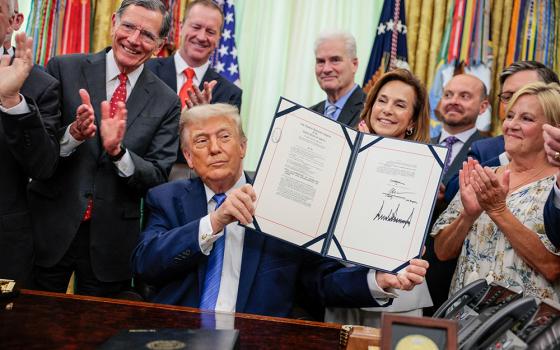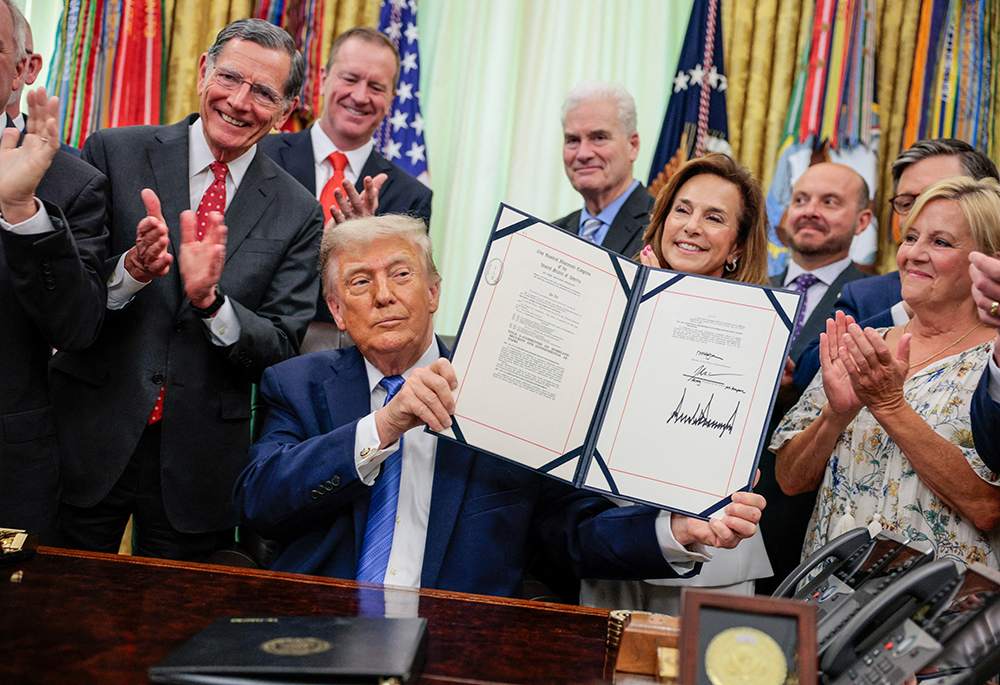
U.S. President Donald Trump signs the Secure America Act, which provides another $70 billion for immigration enforcement, in the Oval Office at the White House in Washington June 10, 2026. (OSV News/Reuters/Evan Vucci)

Join the Conversation
Send your thoughts to Letters to the Editor. Learn more
For more than 20 years, Rogelio Lagunas has built a life in Iowa. Originally from Campeche, Mexico, he works as a factory supervisor, worships at Immaculate Conception Catholic Church in Cedar Rapids, and is raising his three American-born children. His youngest daughter, 8, has a disability that requires extensive care.
In February, his life nearly unraveled.
Lagunas, who has been navigating an immigration legal process since 2018, received notice that his application to remain in the United States had been denied. He was instructed to attend his annual check-in with U.S. Immigration and Customs Enforcement officials and prepared for detention and deportation.
Rather than face ICE alone, he contacted Escucha Mi Voz, an immigrant-led organization in Iowa. When more than 300 organized supporters gathered outside his appointment, Lagunas was not detained and received another year to remain in the country.
Since then, he has accompanied other immigrants to ICE appointments, turning his own experience into advocacy. He believes the crackdown is also changing how Hispanic Catholics view President Donald Trump and the Republican Party in his own swing district ahead of the Nov. 3 midterm elections.
"I know a lot of them that voted for Trump, and they changed their mind completely," he said. As the midterm elections approach, NCR spoke to Catholics and advocates about how Trump's aggressive immigration enforcement is creating political tensions within a Catholic electorate already divided over his presidency. For Catholics, Hispanics especially, deportations are affecting relatives, neighbors and fellow parishioners.
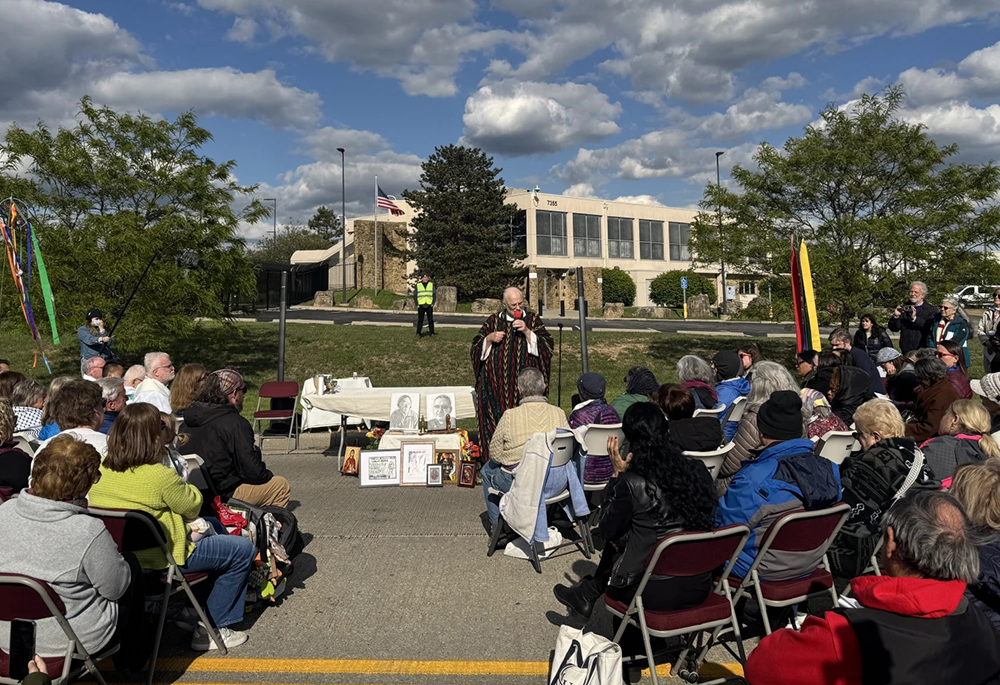
Fr. Jim Farrell celebrates a public Mass in front of the ICE processing facility in Indianapolis on May 2, 2026. (Courtesy of WFYI/Samantha Horton)
A widening divide among Catholics
Laurie Carafone, executive director of the Catholic social justice organization Network Lobby for Catholic Social Justice, said recent polling illustrates the growing divide between white and Hispanic Catholics.
According to Nov. 2025 Pew Research Center findings, 70% of Latino Catholics disapprove of the administration's handling of immigration (Pew uses the terms Hispanic and Latino interchangeably), while according to another March 2026 Public Religion Research Institute (PRRI) survey, 53% of white Catholics view Trump's immigration policies favorably, compared with just 19% of Hispanic Catholics.
According to a December 2024 postelection survey by PRRI, 43% of Hispanic Catholic voters supported Donald Trump, compared with 55% who backed Kamala Harris. By contrast, 59% of white Catholic voters supported Trump.
The numbers suggest potential political vulnerabilities for Republicans, particularly in districts with substantial Latino populations. But Carafone cautioned against assuming that dissatisfaction will automatically produce an electoral realignment.
"We always have to take polling with a grain of salt, because it's contingent on who is participating in the polling, who is answering the calls," she said. Economic concerns remain paramount, even among undecided Catholic voters. Immigration, however, increasingly intersects with household finances, as enforcement operations leave people afraid to work or even leave their homes.
For some Hispanic Catholics, Carafone argued, the disappointment also stems from a perceived gap between Trump's campaign promises to prioritize violent criminals and the broader reach of his administration's enforcement operations.
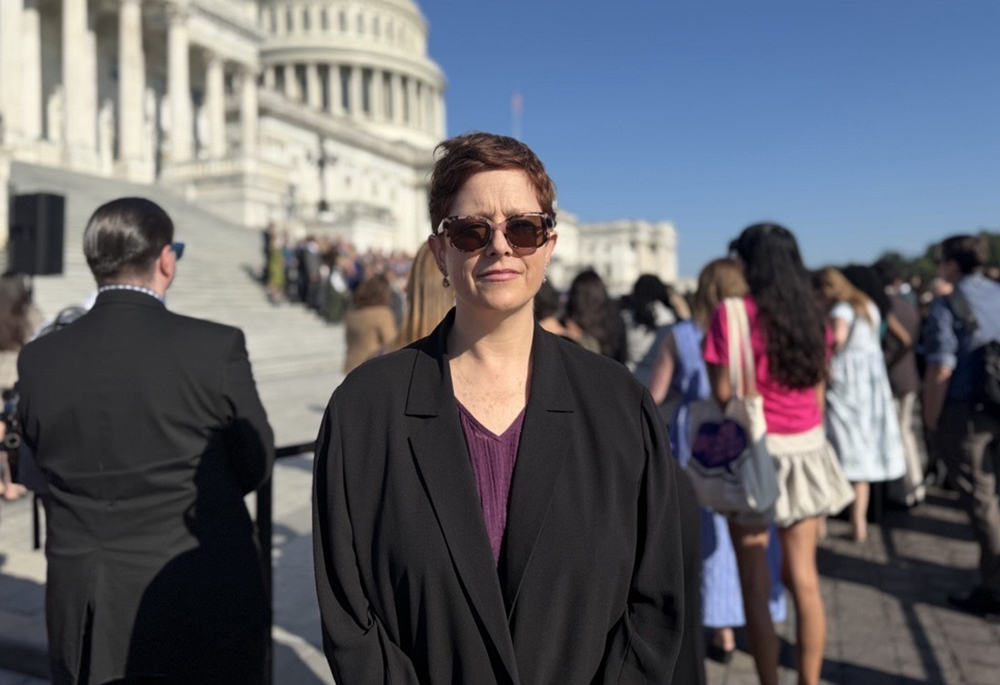
Laurie Carafone, executive director of the Catholic social justice organization Network Lobby (Courtesy of Network)
From economic hopes to political regret
Lagunas has watched that disappointment develop among Hispanic acquaintances in Iowa who supported Trump in 2024.
At a Mexican restaurant where he previously worked, he remembers coworkers explaining their votes through economic concerns, hoping Trump would bring down the cost of food, gasoline and other necessities.
"They thought Trump is gonna do something about it, but instead, they know that Trump is deporting people and is giving us a hard time," he said.
Some now avoid discussing their previous support for the president. "They are embarrassed to say, 'We did vote for Trump,' " Lagunas said.
Advertisement
He said he has noticed a similar silence among fellow Catholics. Parishioners who once openly discussed supporting Trump no longer want to mention his name at all.
More significantly, Lagunas believes immigration enforcement is mobilizing people who previously stayed away from politics. Four American citizens in his own family who have never voted are now interested in participating in the midterms.
"They never voted before. But because of what happened, what they witnessed, ICE kidnapping people, they want to go and vote," he told National Catholic Reporter.
Jane Noble-Davis, a longtime member of Iowa City Catholic Worker, said she has witnessed an expanding network of volunteers responding to immigration enforcement.
The group, which helped establish Escucha Mi Voz, the organization supporting immigrants, operates two houses of hospitality accommodating approximately 50 immigrants. Supporters regularly gather outside ICE facilities, sometimes numbering between 100 and 200, to accompany immigrants attending mandatory appointments.
For Noble-Davis, immigration has become an intensely personal issue within Catholic parishes.
"Immigrants are people that we worship with. We work with them: We care about them," she said. "What we're seeing is that the families are being separated, so our whole community suffers because of it."
She said she expects the issue of deportations to influence Catholic voting decisions, although she avoided predicting a partisan outcome. "No party owns the Catholic vote," Noble-Davis said. "Candidates from both parties need to earn our trust, and I think welcoming immigrants should be a commitment that they carry beyond Election Day."
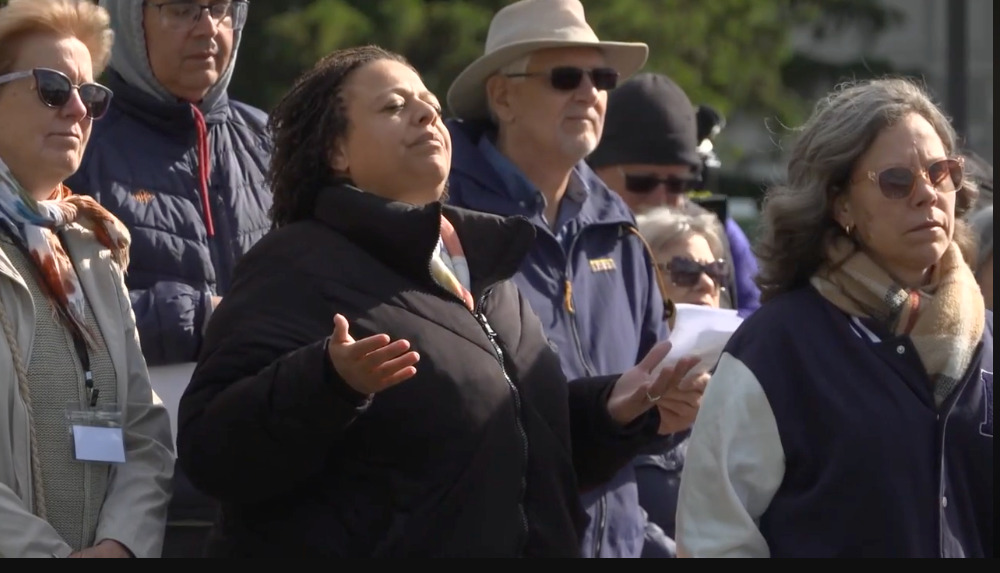
Catholics pray at a public Mass in front of the ICE processing facility in Indianapolis on May 2, 2026. (Courtesy of WTHR Indianapolis)
In neighboring Indiana, immigration enforcement has prompted Catholics to organize public demonstrations of faith outside detention facilities.
Stuart Mora, executive director of the Indiana Organizing Project and a former immigration paralegal, helped organize outdoor Masses near immigration detention facilities, including the Miami Correctional Facility.
The initiative has attracted support from Catholic leaders and parishes across three dioceses, offering a religious response to government policies that many participants consider incompatible with their faith.
"I think there's a real hunger for people to live out publicly their faith in response to what they're seeing around them," Mora said.
His organization has assisted more than 50 families in recent months, many with American-born children.
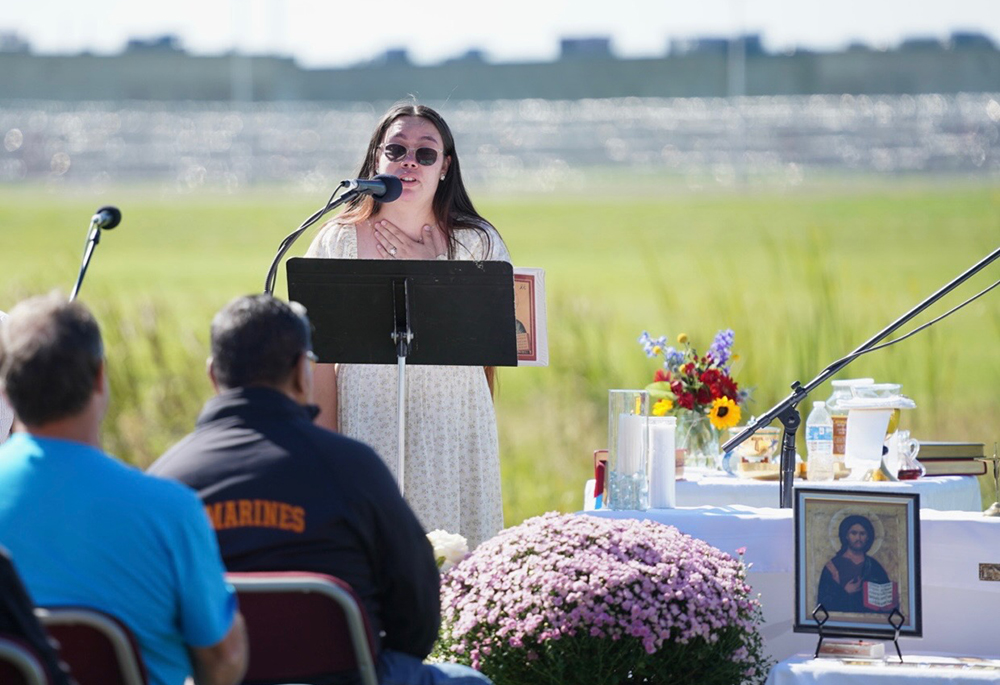
Lindsay Reyes, a 25-year-old U.S. citizen and lifelong resident of Indiana, delivers an opening witness at the Mass at Miami Correctional Facility. husband, a legal permanent resident for more than 30 years, has been in ICE detention for seven months. (Courtesy of Allison Mayer)
One case involves Lindsay Reyes, a 25-year-old American citizen whose longtime permanent-resident partner was detained while she was pregnant. Already recovering from brain surgery, she subsequently faced financial hardship and the responsibility of caring for three young children without him.
"We live within families; we live within community, and one person being detained or deported has an impact on everybody else," he said.
Emily Harts, a lifelong Catholic and parish council member at Our Lady of Mount Carmel in Carmel, Indiana, has responded to government crackdowns on immigrants by providing practical assistance, including supplies for children whose parents have been detained and transportation for immigrants released from custody.
She said she believes Catholic voters are increasingly confronting a fundamental question about the relationship between religious convictions and political allegiances.
"I think you can want every immigration law enforced to the maximum, but also you can demand that immigrants are treated with dignity and respect," Harts said. "I don't think those things have to be one or the other."
"I think it's important to have our faith influence our politics, and not our politics influence our faith," she said.
As November approaches, advocates see Catholic bishops' increasingly vocal opposition to mass deportations as another potential influence on Catholic voters. Carafone believes such interventions matter, particularly when religious leaders publicly accompany immigrants or speak against enforcement in churches and schools.
For Lagunas, the stakes are deeply personal, but he believes the fear and anger spreading through immigrant communities could also awaken a new generation of voters determined to make their voices heard.
"I'm sure that people are ready to vote and that they want to change," Lagunas said.