Following are NCR reader responses to recent news articles, opinion columns and theological essays with letters that have been edited for length and clarity.
Assisted suicide
Thanks to Sr. Mary Haddad for her excellent commentary on the trend toward legalization of assisted suicide in the United States (NCR, March 26, 2026). It is clearly an expression of American pragmatism, but it is not reflective of Catholic, or even human values. She is right to say that the answer is not death, but better care. Choosing to accompany dying or seriously ill patients is an act of solidarity. Walking away is not. Palliative care, which manages symptoms of serious illness and hospice which does the same for patients who are dying are our alternative to the growing appeal of rapid dispatch by assisted suicide.
(Fr.) CHARLES BOUCHARD
St. Louis, Missouri
***

MAGA
John Grosso's article on the break of Traditionalist Catholics from MAGA describes the beginning of the end of what Antonio Spadaro S.J. and Marcelo Figueroa in 2017 called "a strange form of surprising ecumenism" between Evangelical Fundamentalism and Catholic Integralism in the USA, brought together by "the same desire for religious influence in the political sphere" (NCR, March 23, 2026).
I am truly disturbed to read now that the Catholic wing of that relationship has descended into an ugly antisemitism as it divorces itself from its former Evangelical Protestant partner. It is encouraging to hear more mainstream Catholic voices, including NCR in its recent editorial, call on Catholics to "fight against antisemitism at home" (NCR, March 24, 2026).
Grosso quotes Massimo Faggioli: "The leaders of the Catholic Church know that keeping together the narrative of Nostra aetate against antisemitism AND the need to interpret what happened in Gaza as a 'sign of the times' has become more difficult and politically exposed to manipulations of all kinds." That's the money quote. Maintaining the catholicity of that "AND" is our challenge today.
I am extremely pleased that our Archbishop here in Western Oregon has spoken forcibly against Catholic antisemitism. At the same time I am somewhat disappointed that he missed the opportunity to speak to Faggioli's 'sign of the times.' Popes Francis and Leo have spoken against the wars, the destruction, the suffering, the killings. Why the weak response from so many of our US bishops?
JOHN O'DONOGHUE
Eugene, Oregon
***
Advertisement
Disobedience
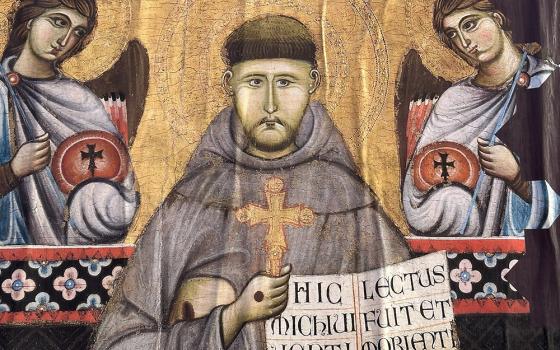
Daniel Horan's timely reflection on the edgier parts of St. Francis' spirituality and lifestyle lands like a veritable broadside against the forces today — governmental, ecclesiastical, and sociological, that cower us and expect utter compliance (NCR, March 19, 2026). However, to resist them as St. Francis did, Horan reminds us, requires considerable inner strength and discernment.
Today, after witnessing crimes against Israelis and the subsequent leveling of Gaza, the long standing war in Ukraine, and now the conflict between Iran and the U.S., those of us who seek dialogue and mutual understanding risk being deemed naive. In his time, when Francis befriended Muslims and lepers, he crossed boundaries deemed sacred. What boundaries are we being asked to broach today in Jesus' name? Will we seek to demonstrate the power of love when many consider it simply naive, unwise, and ineffective? If not, one day, history will surely ask: why did we not?
R. JAY ALLAIN
Orleans, Massachusetts
***