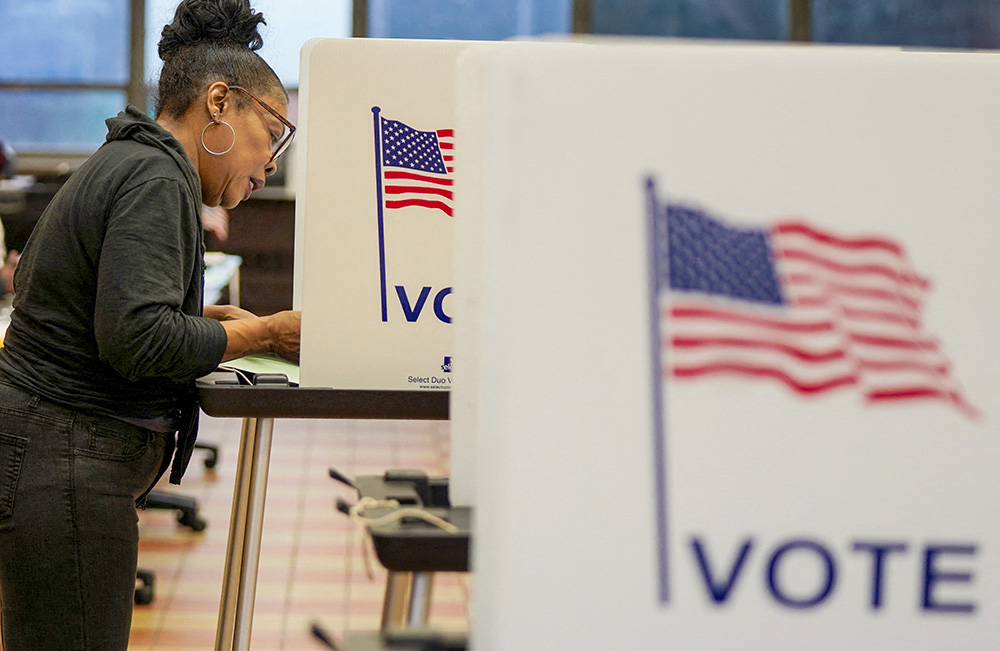
A woman casts her ballot at a polling station in Detroit as Democrats and Republicans held their Michigan presidential primary Feb. 27, 2024. (OSV News/Reuters/Dieu-Nalio Chery)
by Brian Fraga
Staff Reporter
Join the Conversation
Send your thoughts to Letters to the Editor. Learn more
Stephen Schneck knows that many progressive-leaning Catholics and others grow leery when they hear the term "religious freedom."
But rather than it being an issue for conservative Christians to advance narrow partisan interests, religious freedom is a linchpin for all the other rights and freedoms that people value, Schneck told National Catholic Reporter in a recent interview.
"One of my missions in the next stage of my life," he said, "will be trying to awaken in my colleagues on the left an appreciation of religious freedom, for our efforts to rebuild liberal democracy in these trying times."
On May 12, Schneck, a Catholic retired academic and longtime political activist, completed two terms as a member of the U.S. Commission on International Religious Freedom, an independent federal watchdog group that examines religious freedom across the world.
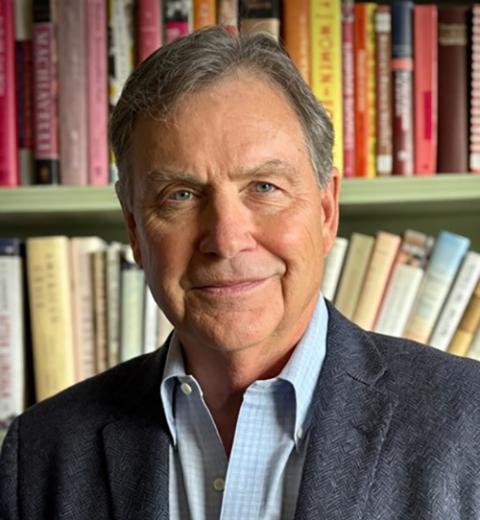
Stephen Schneck recently completed two terms on the U.S. Commission on International Religious Freedom. (Courtesy of Stephen Schneck)
The commission was formed in 1998 to monitor religious freedom violations and make recommendations to the president, State Department and Congress about them in its annual reports.
Schneck, 72, was first appointed by President Joseph Biden in 2022, and reappointed in 2024. For the last four years, he has traveled the globe, visiting refugee camps and interviewing people who had been arrested and tortured in state prisons for their religious beliefs.
"Those are hard things to hear," he said, "particularly when you really can't do anything. You literally just have to listen to it and remember it, and then bear witness to it to the rest of the world. That's basically all you can do in most cases."
One of his most notable experiences was visiting a refugee camp in Bangladesh for more than 1 million Rohingya Muslims who were driven from Myanmar by the country's military junta. The refugees live in bamboo huts in a region that is susceptible to monsoon rains and cyclones.
"They have no running water," Schneck said. "They have no permanent toilets. They have no way out so the children who are born there or being raised there have very little opportunity for anything like education. I can't tell you about the quality of sanitation there. It's just unbelievable.
"Seeing that was a very profound emotional experience for me to think that this is what happens to people when the government does not recognize the legitimacy of their religious faith," Schneck said.
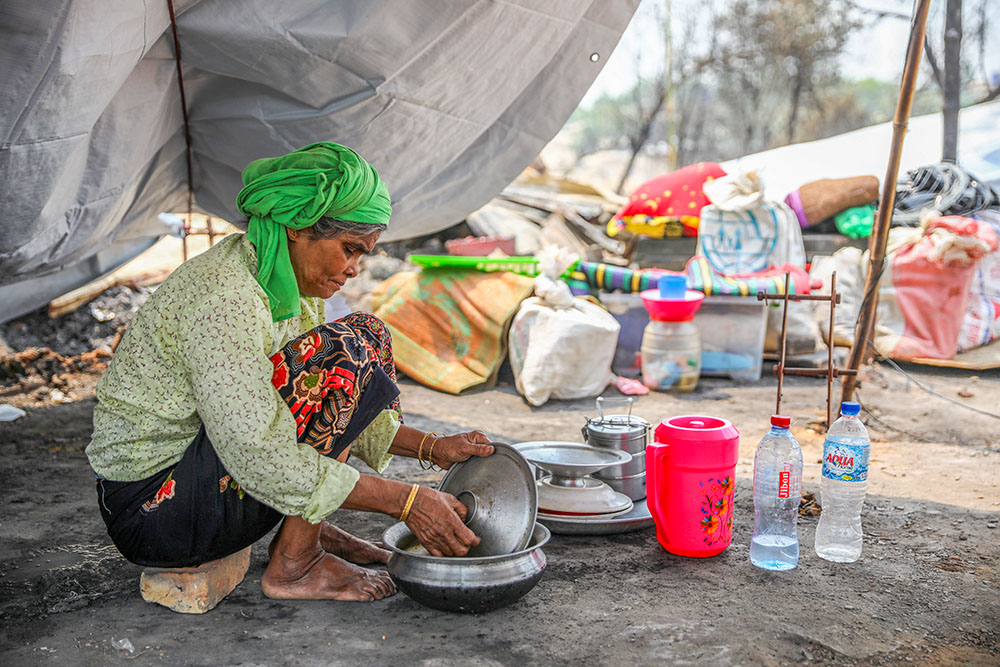
A Rohingya woman cooks in her makeshift tent March 24, 2021, after a fire broke out March 22 at a refugee camp in Cox's Bazar, Bangladesh. (CNS/Reuters/Mohammad Ponir Hossain)
At its core, he said religious freedom is synonymous with freedom of conscience and the ability to think freely and decide for oneself what to believe or not believe and how to live out those values.
"To the extent that that's compromised or manipulated or repressed, then it's compromising, manipulating and repressing other fundamental rights on which liberal democracy and frankly human dignity itself depend," he said.
The overall state of religious freedom in the world, Schneck added, "is in a bleak situation today," and it's getting bleaker.
"We're seeing spreading attacks on Christians across Africa and in Asia and Southeast Asia," he said. "We have the Rohingya Muslims driven from Myanmar and living in refugee camps. There are millions of Uyghur Muslims being persecuted in China, probably 10 million Tibetan Buddhists being persecuted in China. Here in the West, we see spiking antisemitism and anti-Muslim bigotry.
"We see authoritarianism that fundamentally is suspicious of any challenge to authority other than its own," Schneck said, "and so it views all religion as something to be controlled, manipulated or in the worst cases, shut down, as Nicaragua seems to be doing with the Catholic Church right now."
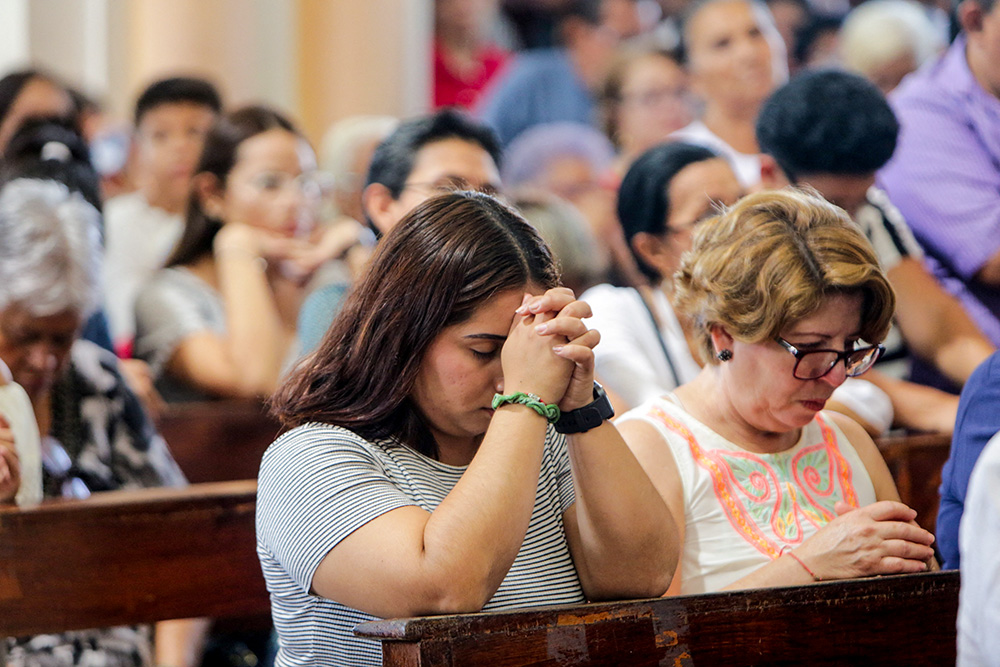
Worshippers pray during Mass at the Basilica San Sebastián in Diriamba, Nicaragua, Jan. 20, 2024. (OSV News/Reuters/Maynor Valenzuela)
A major emerging global threat to religious freedom, Schneck said, is religious nationalism, which takes many forms, from Hindu nationalism leading to persecution and discrimination against religious minorities in India, to Orthodox Christianity being weaponized in Russia to squeeze out other religious traditions and bless President Vladimir Putin's war in Ukraine.
"All these things go hand in hand," Schneck said. "If you're privileging one religion politically, then inevitably you're closing out the range of freedoms available to other religions."
In the United States, he said, people should be concerned about Christian nationalism.
"It's a real threat," he said. "It's obvious with the rise of anti-Muslim rhetoric on social media, with the spiking of antisemitism and even with some of the bizarre anti-Catholic comments that we've seen in recent months. Those kinds of incidents to a certain extent correlate to the rise of Christian nationalism in the United States."
While polarization makes finding common ground more difficult and leads to political gridlock in Washington, D.C., Schneck said he was able to work well with the commission's conservative members.
Advertisement
"This work is just about the only place I can think of where real bipartisanship is the reality rather than the exception," he said. "When it comes to dealing with victims who have been horribly mistreated because of what they believe or what they don't believe, those kinds of partisan divisions tend to melt away pretty fast."
He said he intends to stay engaged on international religious freedom "because of how important it is." He also plans to become more active in domestic politics because he believes the United States is "in a horrible place at the moment."
"We're in a pivotal political moment for Catholics in the United States," said Schneck, who cited President Donald Trump's recent attacks on Pope Leo XIV and the American bishops' strong criticisms of the war in Iran and the Trump administration's immigration crackdown.
"All these things have shaken Catholic voters so much that I think the Catholic vote is especially and uniquely up for grabs right now," said Schneck, who has taken on the leadership of a new political action committee called Catholics for the Future.
"What we're going to try to do is promote policies in accordance with the Catholic Church's social justice tradition and we hope to have some impact on the upcoming midterms," he said. "I feel called to do this work at this particular moment."