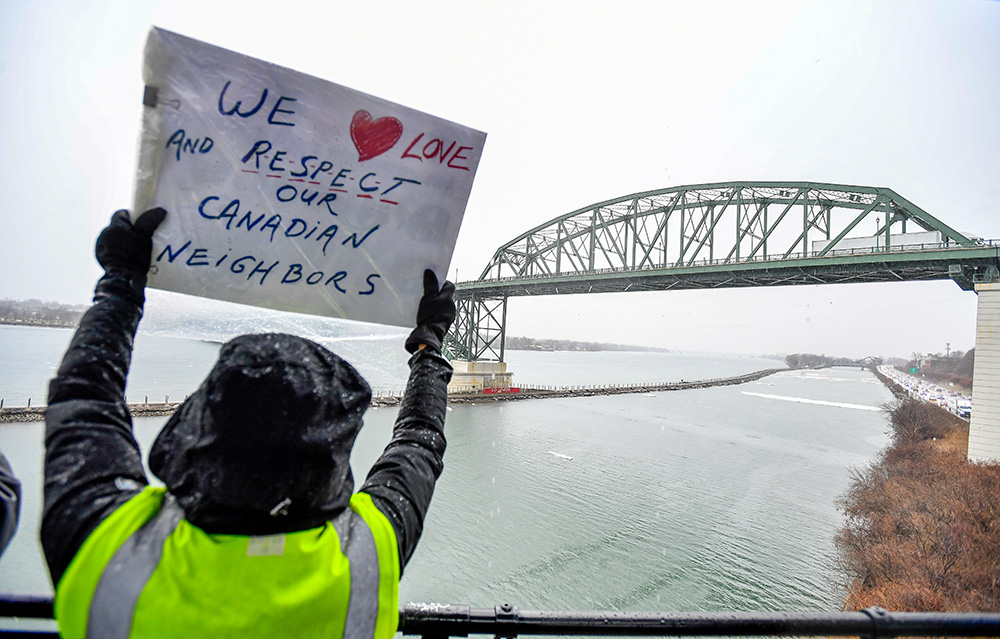
Elbows Up for Canada protesters gather near The Peace Bridge border crossing in Buffalo, N.Y., April 2, 2025. (AP/Adrian Kraus)

by Michael J. O'Loughlin
NCR executive editor
Join the Conversation
Send your thoughts to Letters to the Editor. Learn more
With relations between Canada and the United States fraying due to the U.S. trade war, the president of the Canadian Conference of Catholic Bishops says that despite increased tension, he hopes the two nations can reconcile.
"First of all, we are neighbors," Bishop Pierre Goudreault told NCR in a recent interview. "We have a lot in common and, very recently, the relationship was very good. We hope it will continue."
The 63-year-old bishop of Sainte-Anne-de-la-Pocatière, Quebec, said that Catholics have a special duty to refrain from adding to political polarization and should instead strive to "walk together in a spirit of peace."
Relations between Canada and the United States have deteriorated rapidly since President Donald Trump launched a trade war against Canada in 2025. When talks broke down last fall, even Pope Leo XIV weighed in, offering comments on what he described as "great difficulties" between the two nations. "Two countries that were once considered the closest allies at times have become separated from one another," Leo added.
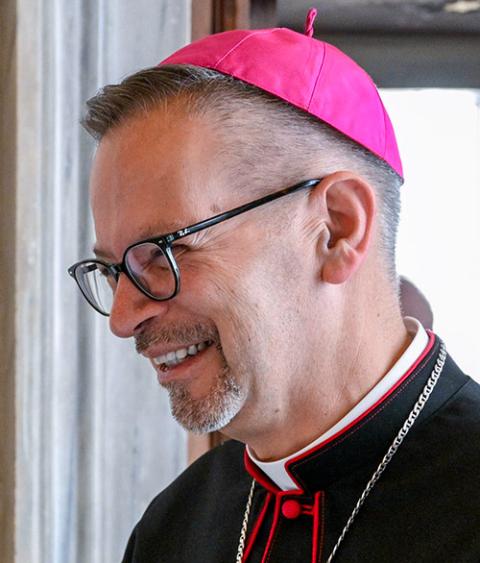
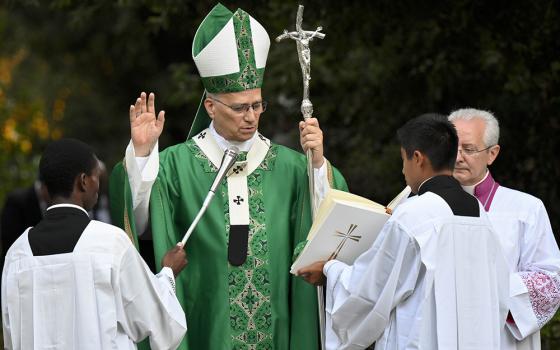
Bishop Pierre Goudreault of Sainte-Anne-de-la-Pocatière, Quebec (CNS/Vatican Media)
The U.S. and Canada remain locked in a tariff war, with Trump levying 50% tariffs on many Canadian goods in August, and Canada responding with their own tariffs on Sept. 8.
As recently as 2024, a majority of Canadians viewed the United States in a positive light, but earlier this summer, a Pew Research Center poll found that just 33% of Canadians hold a favorable view of the U.S., down from a recent high of 63% in 2022.
Americans meanwhile hold a much higher view of Canada, with 74% saying last year they had a favorable view of the country.
The pope suggested last year that perhaps lessons from the church's ongoing efforts at synodality could help heal the relationship. That suggestion was given a hearing earlier this month, when Goudreault joined bishops from the United States and Mexico at a special meeting in the Mexican city of Cuernavaca, hosted by Bishop Ramón Castro Castro, president of the Episcopal Conference of Mexico. Bishop Daniel Flores, vice president of the United States Conference of Catholic Bishops, and Bishop Oscar Cantú, chairman of the U.S. bishops' Subcommittee on Hispanic/Latino Affairs, also participated.
Perhaps presciently, the Aug. 30-Sept. 4 meeting was a couple of years in the making, according to Flores, and the bishops discussed a range of issues, including artificial intelligence and evangelization. But much of the meeting was focused on migration, which affects each country in unique ways, Goudreault said.
Advertisement
"For us, the situation of migration is not a problem," he said. "It's persons, and I think we have also to think about their human dignity and how we can welcome them, accompany them."
Catholic bishops in the United States have been critical of Trump's mass deportation efforts, including a recent letter sent to the president from Oklahoma City Archbishop Paul Coakley, president of the U.S. bishops' conference, asking the White House to back off plans to deport "large numbers" of Haitian migrants.
"What good is the immense wealth, prosperity, and influence with which we have been blessed as a nation if not used in service of our humanity?" Coakley asked.
Flores, who in addition to his role at the bishops' conference also leads the border Diocese of Brownsville, Texas, said the meeting in Mexico was an opportunity to learn how the church assists migrants across very different political realities.
"You kind of realize that under very different circumstances in the three countries, the spirit of what the church tries to do to help the vulnerable becomes kind of like the common thread, even though our circumstances are vastly different," Flores told NCR. "And that's very helpful because it really is a source of encouragement to the people on the ground."
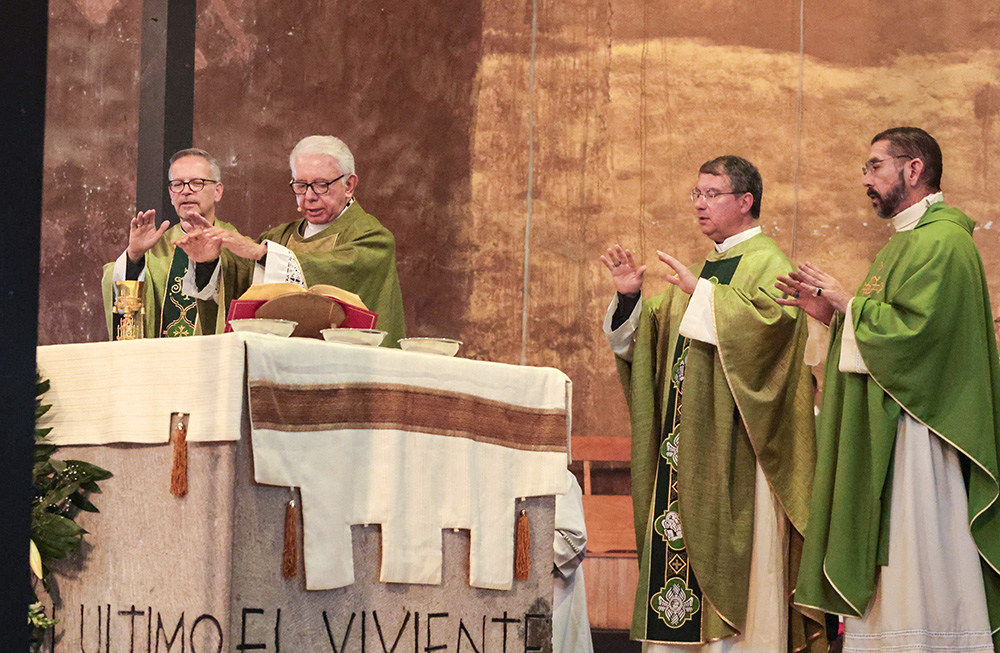
From left: Bishops Pierre Goudreault, Ramón Castro Castro, Oscar Cantú and Daniel Flores celebrate Mass Aug. 30, 2026, at Cuernavaca Cathedral in Cuernavaca, Morelos, Mexico. (OSV News/Courtesy of Episcopal Conference of Mexico)
Speaking to NCR in Rome, Flores said that the meeting in Mexico serves as "an important sign of the Catholicity of the church," offering a reminder "that the church is supposed to be a witness that you can be different ... but there are certain things, a certain faith, that holds us together, and a common desire to serve our people."
A press release about the meeting said that through dialogue, church leaders hope "to help build bridges, to foster dialogue and to promote a culture of encounter." It continued, "It is not a matter of ignoring differences, but of learning to walk together from what unites us: the dignity of every person, the pursuit of the common good and the mission of proclaiming the Gospel."
As for future collaboration, Goudreault said the bishops sought to find ways to build stronger bonds and perhaps even encourage Catholics in their home countries to help heal some of the political rifts that have become more pronounced in recent years. For starters, he said, it's important not to label entire nations with too broad a brush.
"It's very important not to put everyone in the same bag," Goudreault said. "There's some political decisions that have been made — it doesn't mean that it's all the people who are talking that way."
He said Catholics across North America should focus on what they share in common, including "our faith, our human dignity, and we need today to have people who can witness to that."
"It's possible still to work together, to live in solidarity," he added.
NCR Vatican correspondent Justin McLellan contributed to this story.