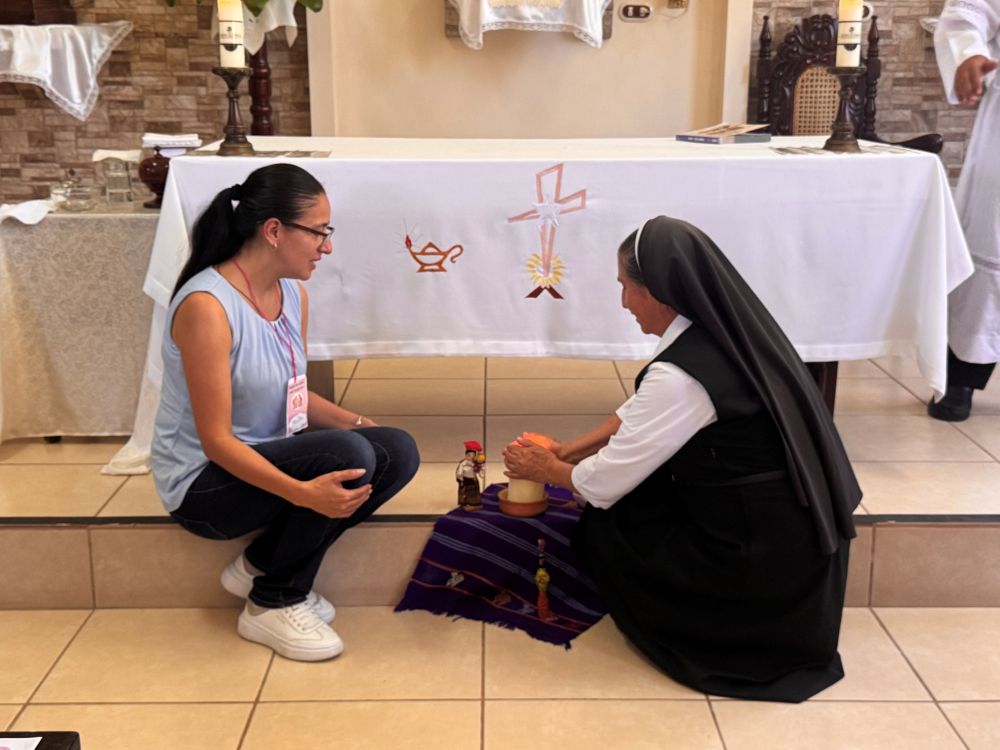
Sr. Indra Monterroso Padilla, of the Bethlemite Sisters, Daughters of the Sacred Heart of Jesus, lights a candle with laywoman Martha Calderon at a chapel in El Paraíso, El Salvador, where women religious and laywomen gathered Sept. 12, 2026, to keep the work of the synod alive. (GSR photo/Rhina Guidos)
by Rhina Guidos
Join the Conversation
Send your thoughts to Letters to the Editor. Learn more
Maria Elena Ventura had heard about the Catholic Church's consultation process known as the synod on synodality in the news, but until Sept. 12 she wasn't sure what it meant or how it fit into her life as a Salvadoran Catholic.
That day she joined more than two dozen women, nuns and sisters among them, who gathered in northern El Salvador to talk about frustrations but also dreams regarding potential leadership positions for women in the church.
"I've heard the word used, but I haven't had a personal experience of synodality," Ventura said.
She spent the morning delving into the lives of women from the Old and New Testament: Ruth, Judith, Elizabeth and Mary Magdalene. In a small group, Ventura and others read aloud what's known about them from the Bible and then shared what they learned: how women have participated in the story of salvation from the beginning of Christianity, Ventura said, how they have long exemplified loyalty and courage, recognized Jesus as Lord before his birth, and even received and used God's gifts of prophecy.
And still today, women continue to play an important part of that history, even though it's not always acknowledged, she said.
"For us [as women], it's important to feel part of history, part of a journey of struggle as women in the church, and particularly as women of El Salvador," said Sr. Zaira Gutiérrez, of the Apostolics of the Heart of Jesus. She is one of the organizers of what have become popular "New Women and Synodality" gatherings in the country.
Along with Guardian Angel Sr. Concepción Marroquín, Gutiérrez said she felt inspired by the first document in October 2023 out of the synod on synodality, called a synthesis. It talked about women who've felt the sting of clericalism and chauvinism in a "church that wounds" some female churchgoers.
As members of the peace and justice committee for the Conference of Religious in El Salvador, known as CONFRES, Gutiérrez and Marroquín set out to create spaces similar to those the synod consultation process used at the Vatican (including round tables) to allow others the chance to hear what those on the margins of the Salvadoran church have to say.
"We said 'no one is doing anything' " in El Salvador related to the synod, "so as a committee, we decided we would," Gutiérrez said.
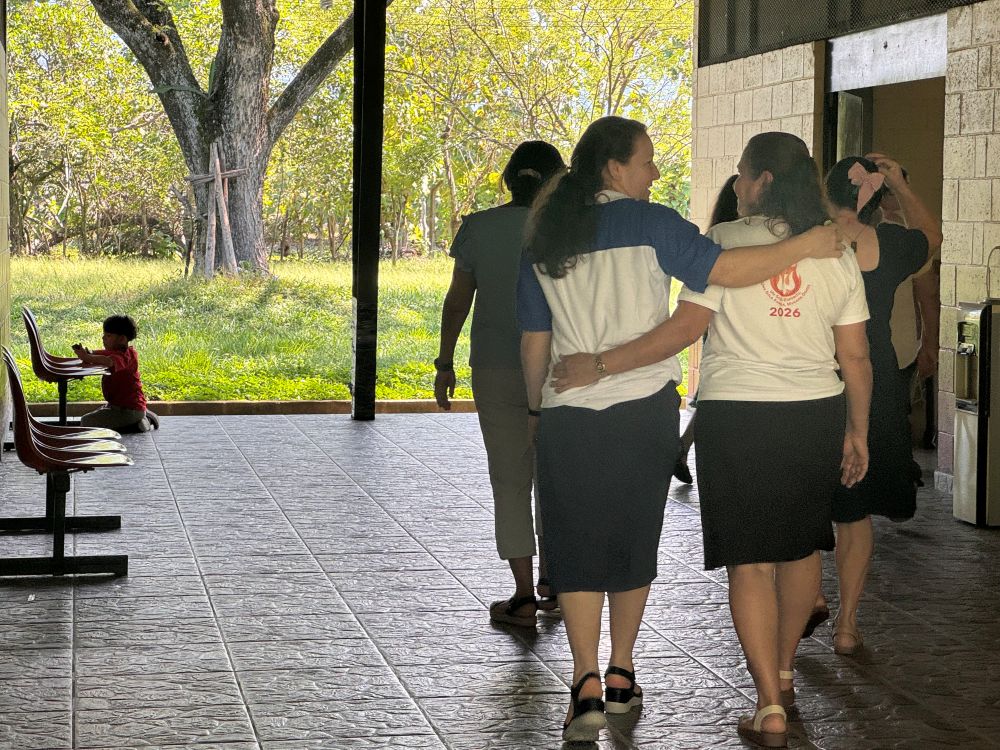
Sr. of the Immaculate Conception Ivania Blandón Montenegro, left, walks with a laywoman at a retreat center in El Paraíso, El Salvador, Sept. 12, 2026, during a gathering of the New Women and Synodality, a group where women religious and laywomen practice synodality to learn what it means. (GSR photo/Rhina Guidos)
On Dec. 2, 2023, the first gathering on the synod organized by CONFRES took place. It was a day when women religious in El Salvador often pause to remember three Catholic sisters and a laywoman from the U.S. raped in murdered in the country in 1980 during the civil war: Ursuline Sr. Dorothy Kazel, Maryknoll Srs. Maura Clarke and Ita Ford, and Jean Donovan.
And just as those women shared the mission of helping El Salvador's war wounded with the lay missionary Donovan, Marroquin said they, too, as women religious, decided to share the synod's mission with laywomen.
Last year, as the group hosted a "jubilee for women," a little more than 80 showed up, Gutiérrez said.
"People have something to say and they want to be heard," Marroquín added.
They limited the September gathering to about 20 participants, some from the city and others from rural areas, so they could better listen to each other's experiences and not get lost in a larger group. But instead of sisters leading the sessions, laywomen took over with reflections and prayers, while also guiding the direction of the event, signaling that no group in the church is above the other.
Globally, many bishops have publicly backed the synod, while others have attacked its call of a more representative church. At El Salvador's September assembly, the majority of women said that other than the gatherings organized by the conference of religious, they've never participated nor heard about other events explaining synodality to the country's faithful.
In a May interview in Colombia, Fr. Alfonso Borrás, an international synod expert who has worked with efforts in Latin America, said fear is behind the resistance to implement the synod's practices in places such as Latin America.
"The biggest problem is fear — fear of change, fear of altering or transforming personal practices or local culture, or church culture," he told Cebitepal, a pastoral training center at the Latin American and Caribbean Episcopal Council.
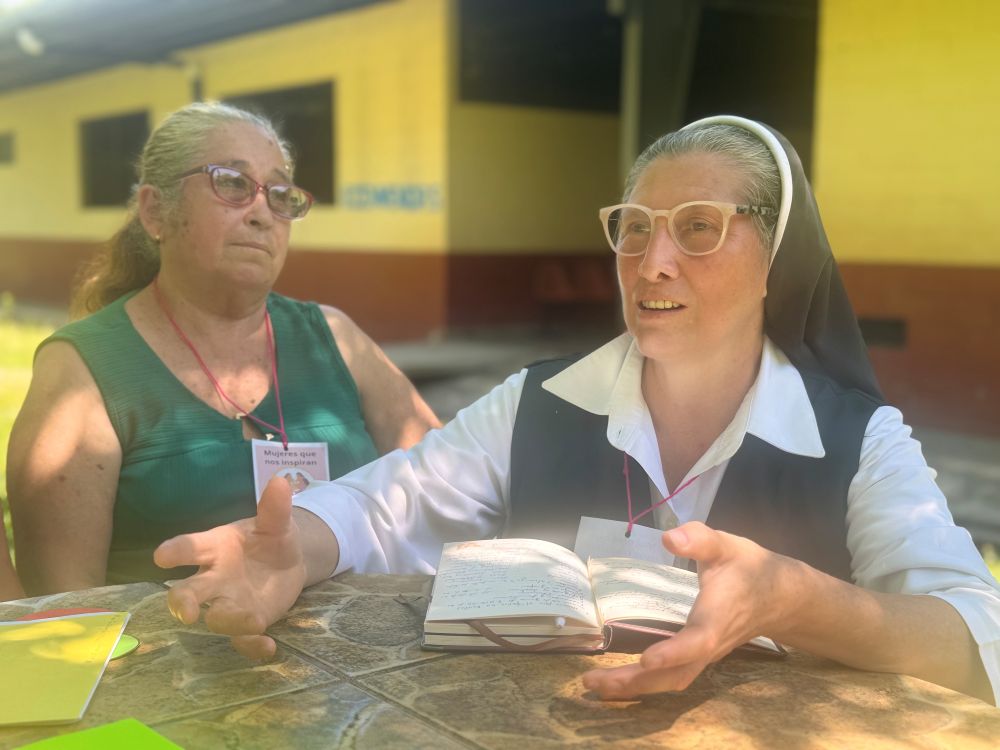
Sr. Indra Monterroso Padilla shares a biblical reflection on Mary Magdalene with a group of laywomen Sept. 12, 2026, in El Paraíso, El Salvador. The country's conference of religious began hosting sessions around the country so women can learn and practice synodality. (GSR photo/Rhina Guidos)
In April, the Confederation of Latin American and Caribbean Religious, known as CLAR, asked women and men religious in Latin America to rescue efforts to implement the synod in the region.
Marroquín said that even though she and Gutiérrez had been following that path, they doubled down their efforts after CLAR's call to religious conferences.
Sr. Indra Monterroso Padilla, of the Bethlemite Sisters, Daughters of the Sacred Heart of Jesus, whose congregation hosted the event at the sisters' retreat center, said the gatherings made her feel that the church "is a place open to all."
"Jesus Christ set an example for us by welcoming not only men but also women," she said.
While El Salvador's church circles still have much to learn about the synod's processes, Monterrosso said, she's grateful for CONFRES' efforts to help others understand what a synodal church looks like in practice.
Advertisement
Sr. Ivania Blandón Montenegro, a member of the Sisters of the Immaculate Conception, said that the gatherings have helped women from her rural parish lift their voices and take their rightful place as leaders and protagonists in the life of the church.
And yet, synodality presents a challenge for some in the church and remains "a dream," she said. But there are fruits that such gatherings produce that can benefit the entire church, building community and meeting its mission of salvation, Blandón added.
"As women, we don't walk alone; together we shape history to help other women find freedom and build community. Synodality is exactly that: We do not walk alone, but rather, synodality is the journey itself," she said. "On the journey, no one walks alone, not even Jesus. Jesus always had a good number of disciples, both male and female."
Has the synod helped the church in El Salvador walk together, particularly by involving women in any significant way?
"No," she said, "but it's never too late to start."