(Unsplash/Enrique Leyva)

by Scott Hurd
Join the Conversation
Send your thoughts to Letters to the Editor. Learn more
"America the Beautiful" is a patriotic anthem that will be sung often in celebration of the United States' 250th birthday. It was written, in part, to honor our nation's natural beauty, such as the first stanza's "purple mountain majesties" — a line inspired by the Colorado Rockies.
Yet the song also commemorates the 1893 Chicago World's Fair, a global exposition showcasing new technological wonders and celebrating the urban landscapes constructed around them: the gleaming "alabaster cities" of the less familiar fourth stanza. They, too, were considered beautiful.
Cities were on Pope Leo XIV's mind while he wrote his first encyclical, Magnifica Humanitas. In it, he implores the human family to work together in building a new city, just as Scripture speaks of the people of Israel rebuilding the city of Jerusalem. Yet building this new city might be a challenge for Americans, as what we're constructing today may undermine the effort.
I say this as I watch a giant rectangle being erected near my home. It's punctuated by neat rows of smaller rectangles: windows into the worlds of future apartment dwellers who will spend much of their time staring at even smaller rectangles that glow on their walls or in their hands.
My wife calls this giant rectangle a "Lego building" because it looks like one of the chunky plastic blocks we played with as kids. You've seen similar structures in your town, and they're increasingly seen around the world. Their cut-and-paste architecture makes every place look identical. The designs and styles that once made a city or region distinct are now relics of the past.
Lego buildings symbolize an expanding "monoculture" in which everything and everyone increasingly looks, thinks, acts and sounds the same. As Pope Francis lamented in Laudato Si', "If architecture reflects the spirit of an age, our megastructures and drab apartment blocks express the spirit of globalized technology, where a constant flood of new products coexists with a tedious monotony."
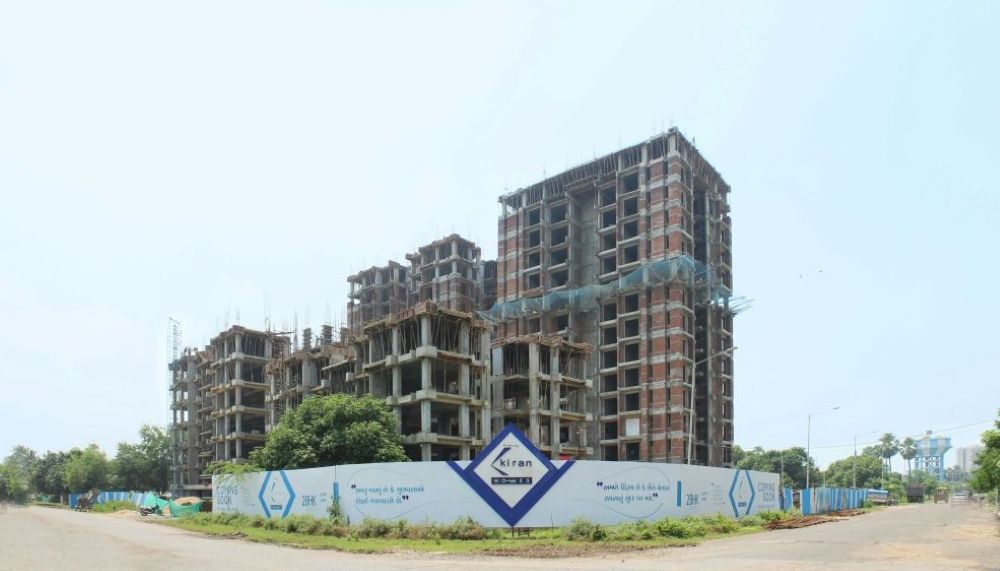
(Unsplash/Parth Savani)
That was written years before the proliferation of the latest "globalized technology" — generative artificial intelligence — which has only accelerated the monoculture's reach. In acknowledging its power, Leo warns in Magnifica Humanitas that digital culture should "not become an instrument of homogenization," or be permitted to "create a uniformity that neutralizes differences."
Architecture is far from monoculture's only casualty. Thanks to algorithms shoveling the same content into our glowing rectangles, it's evidenced in music, dress, art and even coffee shop interiors. Native languages, traditional wisdom and local customs not digitized by AI are being lost. And the same chain restaurants dot our urban centers.
Communication hasn't been spared either. College essays and resume cover letters increasingly bear the uniform stamp of machine generation. The use of AI to generate text flattens the voice and tone of human writing, contributing to linguistic homogenization and algorithmic mono voice. And heavy AI users are even beginning to sound the same when they speak.
Francis was especially concerned that people will increasingly think alike — "groupthink" — because of their reliance on a handful of AI systems. The growth of artificial intelligence, he warned, "... represents a form of genuine ideological colonization" that leads to a "narrowing of intellectual perspectives."
This advancing monoculture is being forged by a combination of globalized commerce and big tech — which these days are increasingly synonymous. Perhaps that's why Lego buildings that house people look eerily similar to AI data centers housing processors for robots. And neither of those structures are beautiful.
Yet "big. beautiful. buildings" is what Sam Altman, the CEO of ChatGPT's parent company, OpenAI, gushed on X about a massive, rectangular data center under construction. But he's in a distinct minority. Most Americans find data centers ugly eyesores that detract from natural beauty and represent a threat to their local cultures, either from the companies behind them or the technologies they support.
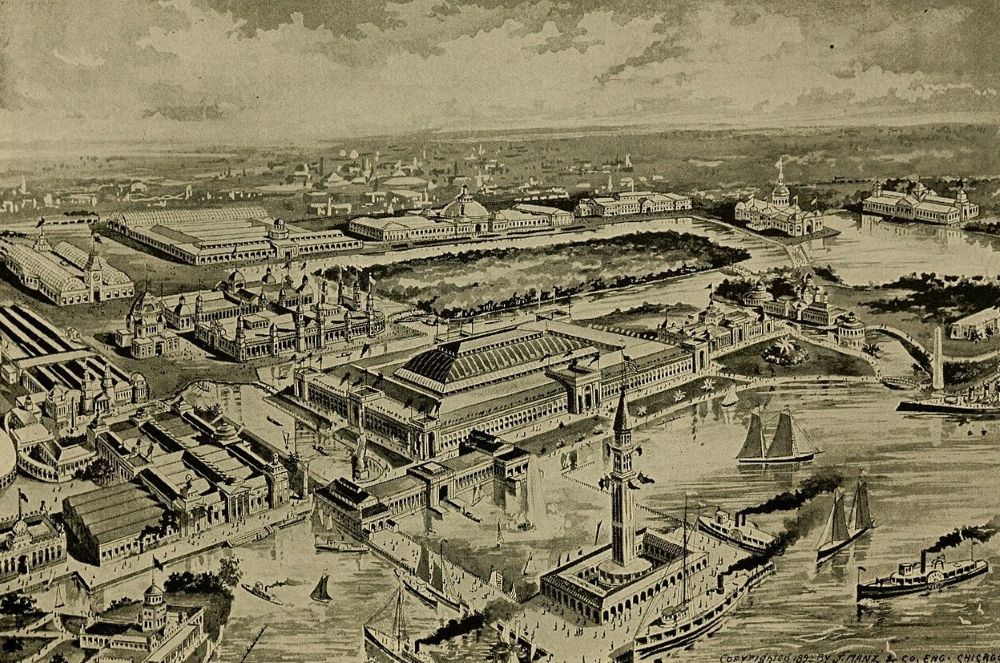
A drawing of buildings in the 1893 Chicago World's Fair (Wikimedia Commons/The Library of Congress/Harold Richard Vynne)
The monoculture's threat to local cultures is real. In Fratelli Tutti, Francis feared that their loss would "result in utter monotony." When the "global economy" seeks to "impose a single cultural model," he explained, we can lose grasp of the "spiritual and human riches inherited from past generations." He warned that such rootlessness — not knowing who we are or where we're from — leads to loneliness and is fertile ground for dangerous ideologies.
Leo shares this concern about cultural loss and rootlessness in Magnifica Humanitas. "We live," he observed, "in a time of significant … cultural blindness." He continued: "A false pragmatism urges us to sever the roots of our history, as if it were possible to inaugurate a kind of 'new pragmatism' detached from the past."
As we mark our nation's 250th birthday, Americans might reflect on the dangers of a creeping monoculture as we look back upon the "roots of our history," consider the polarization and ascending nationalism of the present, and ask what foundations we should build for the future. Decisions we make about culture — even the very structures we build — may well determine the shape of the next quarter millennium.
Advertisement
We can begin by celebrating the uniqueness and beauty of our own cultures and resisting the monoculture with little acts of defiance. As Leo explains in his encyclical, a "civilization of love" — the new city he invites us to build — "will not arise from a singular spectacular gesture, but from the sum total of small and steadfast acts of fidelity that serve as a bulwark against dehumanization."
How might we do this? Ditch the chatbots and think and write for yourself. Shop and dine locally. Support original artists. Celebrate your culture while honoring others. Nourish your roots while growing where you're planted. Study your history. Protest a data center. Turn off the glowing rectangles. And as for giant rectangles? Work so new buildings look like they were designed for your part of the world.
Such actions can help us construct the new city Leo invites us to build. As Americans, who've long aspired to be a "shining city on a hill," we have an opportunity today to build something beautiful, to complement our "purple mountain majesties." In our divided age, our efforts might help to "crown thy good with brotherhood." From, of course, "sea to shining sea."