"We can't allow the words of the Declaration of Independence to devolve into impotent platitudes. Following the example of Leo, we must incarnate its commitment to dignity, equality and flourishing in our actions and in our laws."
"Decisions we make about culture — even the very structures we build — may well determine the shape of the next quarter millennium," Scott Hurd writes.
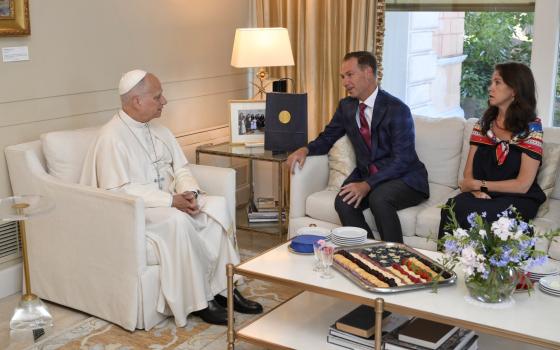
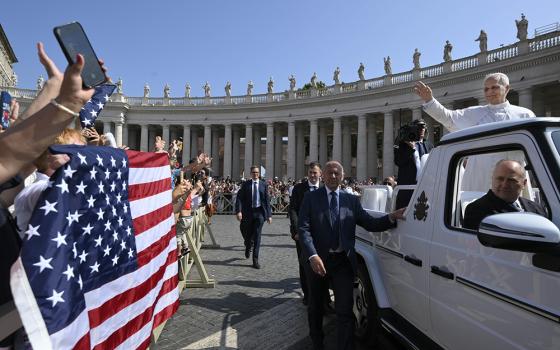
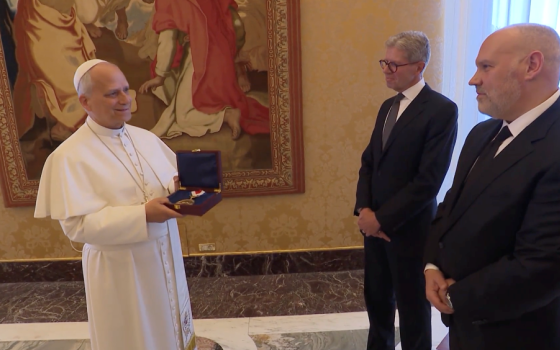
After spending the morning praying for migrants on the island of Lampedusa, Italy, Pope Leo XIV celebrated the 250th anniversary of the signing of the Declaration of Independence with the U.S. Ambassador to the Holy See and his family.
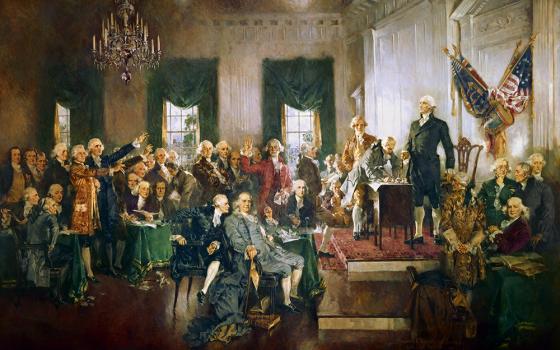
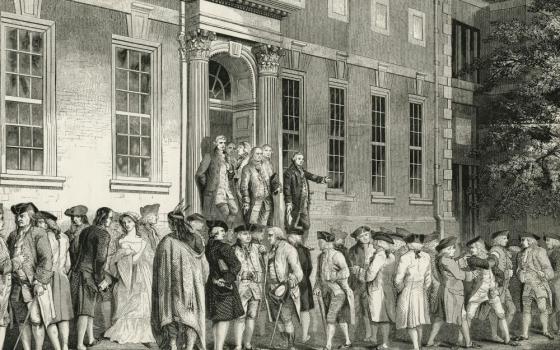
Did the founders of the United States intend to create a Christian nation? Some, and perhaps many, scholars would say no: that while many founders were religious, as a group they concluded that the national government should not support any particular faith.
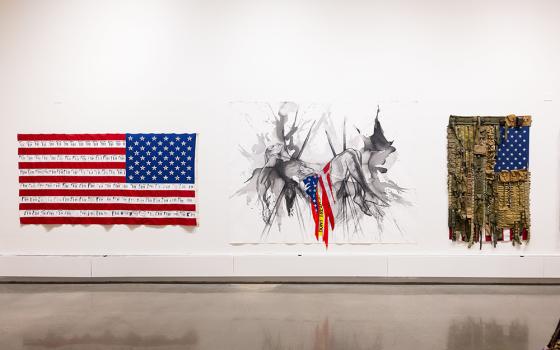
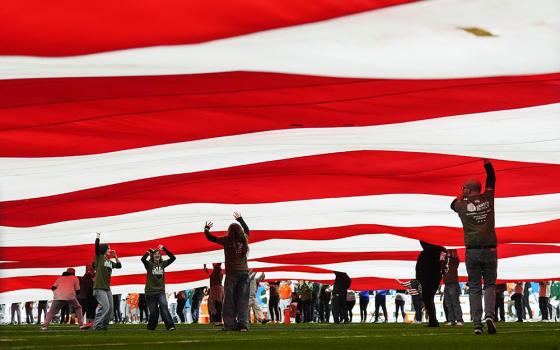
The wide range of reactions to the American flag through painting, photography, print, video and mixed media make the 74-piece exhibit at Fairfield University as diverse as the country itself.
"As every American knows, the path to building a society that would embody those high ideals of liberty and justice for all was not always easy and, in many respects, is still a work in progress," the pontiff said.
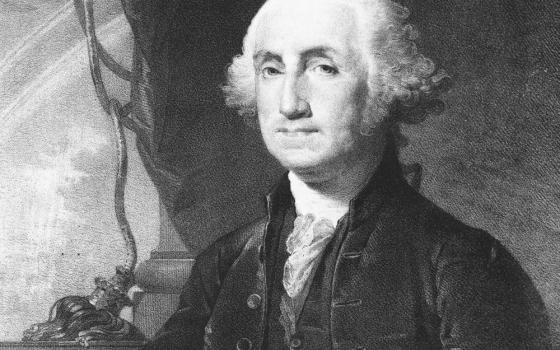
On America's 250th birthday, we can celebrate and embrace our first president's commitment to religious freedom — and rejoice that it's shared by the first American pope.
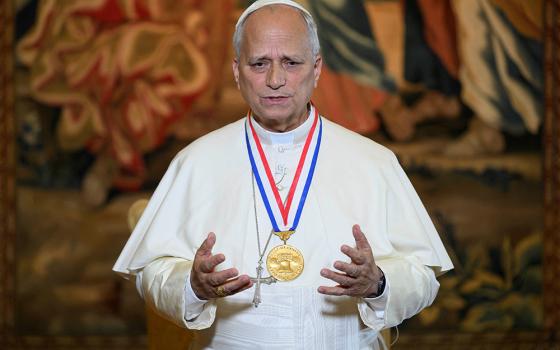
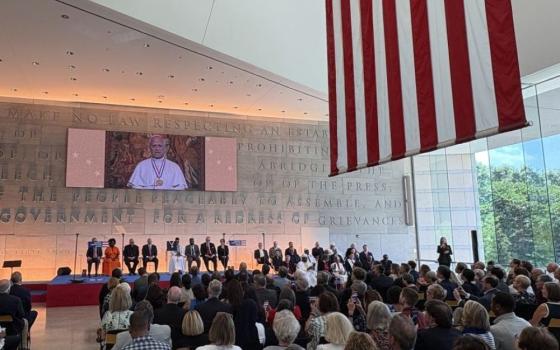
Pope Leo XIV will be honored as a recipient of the Liberty Medal by the National Constitution Center on July 3. The last three popes have all made serious attempts to address the idea of America in its own terms.
"What is your hope for America at 250?" Read responses from political leaders (including two former speakers of the House), leaders in ministry, Catholic activism, and Catholic colleges and universities.
In 1776, we declared ourselves free of allegiance to Great Britain. We did not leave behind the human race with its capacity for sin as well as greatness, generosity as well as moral blindness.
A spirit of extremism is pulling us apart, and Catholic social thought offers a different path forward, one rooted in dignity, responsibility, and the hard work of staying in relationship with people we disagree with.
The question we need to pose this July Fourth, one that previous generations of Americans have had to pose and answer, is this: What are we celebrating?
The ceremony ahead of the 250th anniversary of American independence will celebrate the importance of religious liberty, freedom of conscience and human dignity.
For Americans reflecting on the nation's history during its 250th birthday, the word "pioneer" might conjure up images of settlers' covered wagons trundling into the wilderness; buckskin-clad explorers mapping lands unseen by European eyes; or homesteaders eking out a lonely and challenging existence in an unforgiving terrain.
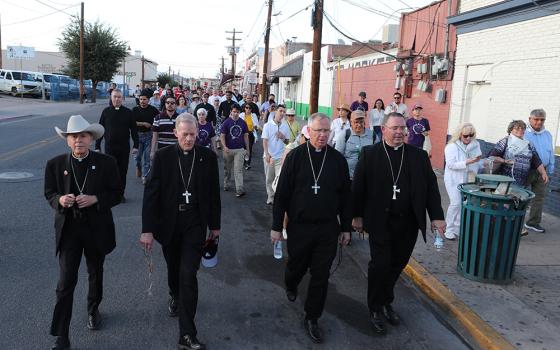
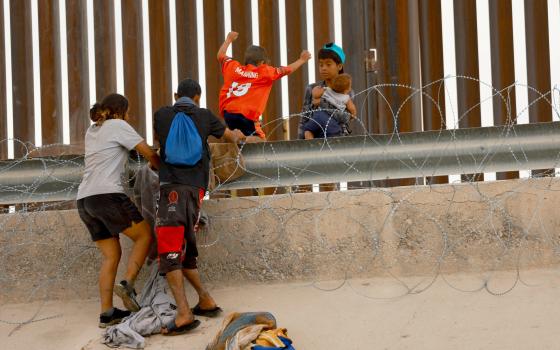
During a June 26 Mass just blocks north of the U.S.-Mexico border with Spanish-language hymns and prayers in English, Tucson Bishop James Misko, the main celebrant, called on Catholics to honor the dignity of immigrants.
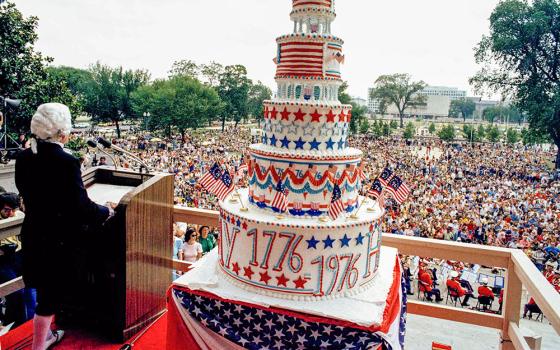
As the United States approaches its 250th birthday, read a sampling of NCR's six-page spread in the July 2, 1976, issue, which had dozens of 200th birthday greetings from Catholics and others around the nation.
As the U.S. approaches its 250th anniversary, Catholic leaders in Ohio and Florida have issued separate appeals calling for continued protection for Haitian migrants living legally in the country under temporary protected status.
As the United States marks the 250th anniversary of its independence, old questions have returned about who belongs and whose religious practices are truly protected in the country.
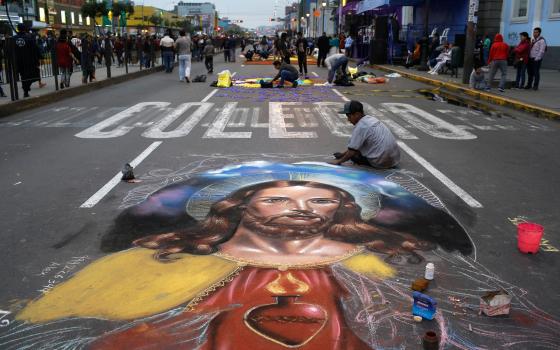
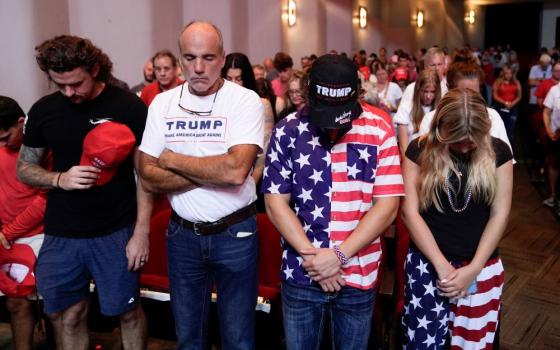
As Catholics consecrated the nation to the Sacred Heart, speakers at the Zeale for America 250 rally emphasized America's greatness while largely avoiding the language of repentance traditionally associated with the devotion.
A new poll by PRRI shows two-thirds of Americans still prefer a nation made of many different faiths, despite the growth of Christian nationalism in the public square.
"Christ does not advance the kingdom through political coercion or institutional domination," writes Enzo Del Brocco. "The kingdom arrives quietly, often unnoticed, yet capable of transforming everything around it."
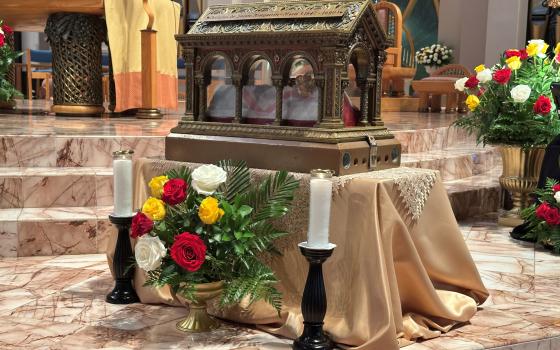
The nation’s Catholic bishops gathered June 11 in Orlando for a liturgy consecrating the United States to the Sacred Heart of Jesus, drawing on a centuries-old devotion to mark the country’s 250th anniversary.
To mark the 250th anniversary of the United States, Catholic bishops from across the nation will come together Thursday to consecrate the country to the Sacred Heart of Jesus.
As the U.S. marks its 250th anniversary, the nation's Catholic bishops have released a prayer service text commemorating its immigrants and refugees, as well as those trafficked under historic and modern forms of slavery in the U.S.
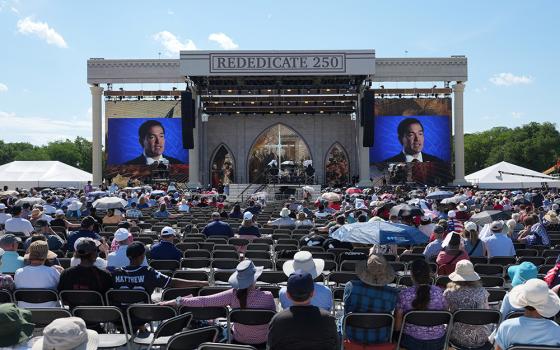
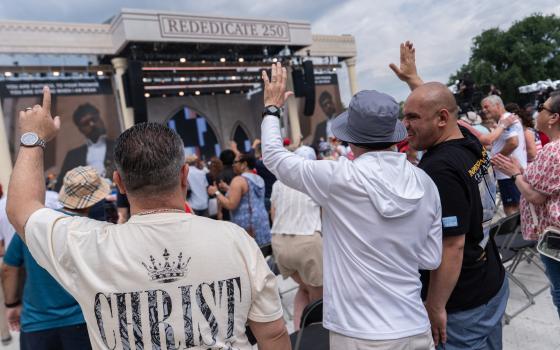
"Rededicate 250 was plagued by the same division that has afflicted American Christians since our country's beginning, and which now undermines the already fragile MAGA coalition between Catholics and Protestants," Emma Cieslik writes.
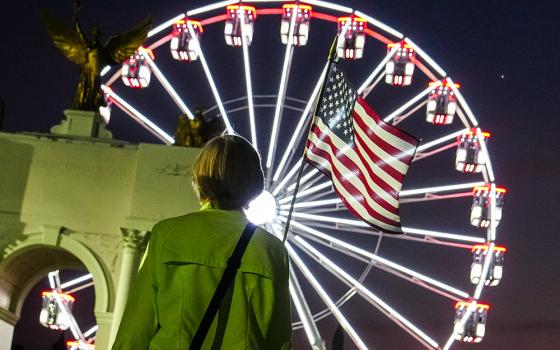
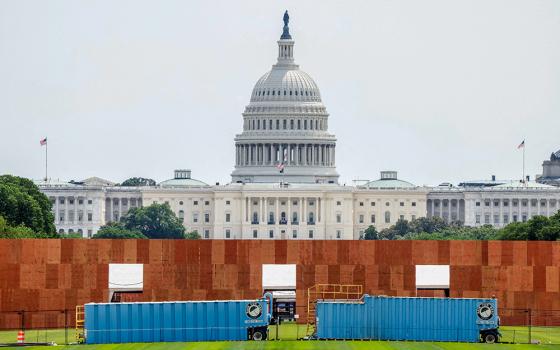
Thousands of people streamed onto the National Mall for a daylong prayer rally Sunday billed as a "rededication of our country as One Nation under God."
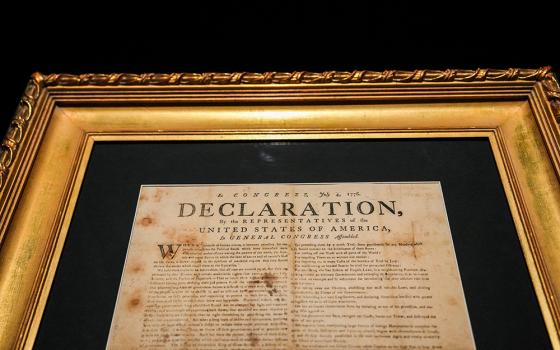
In recent decades, the 1776 document's few references to God have been especially polarizing, as Americans defend starkly contrasting views of the United States.
The U.S. officials who will speak "are political lieutenants of an administration that has waged war on immigrants, gutted Catholic Charities contracts, and treated the Holy Father as an adversary," said one critic.
The medal recognizes what organizers described as the pontiff's lifelong advocacy for religious liberty and freedom of conscience — principles embedded in the First Amendment to the U.S. Constitution.