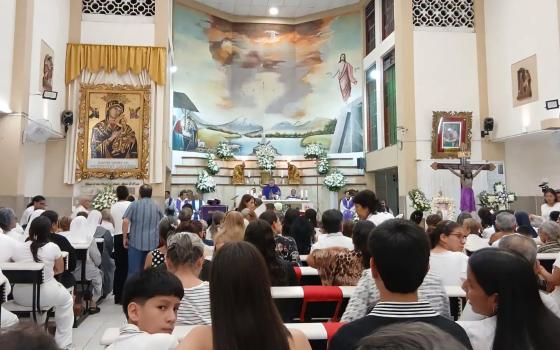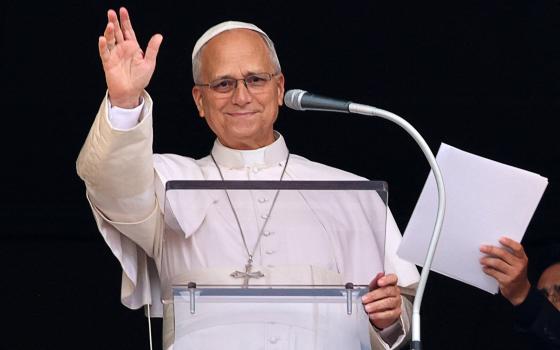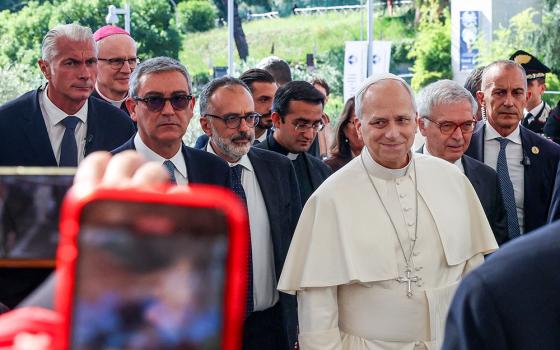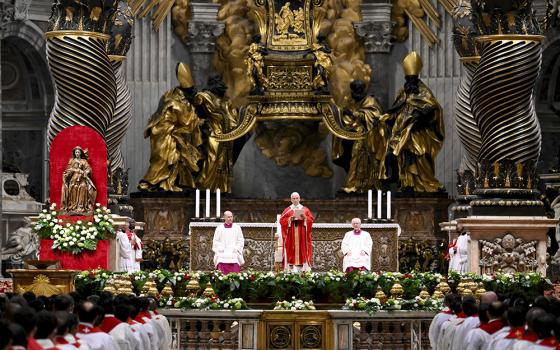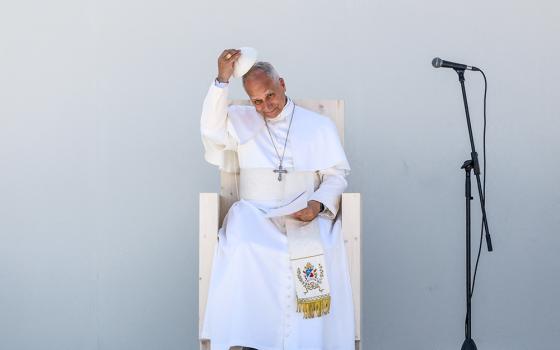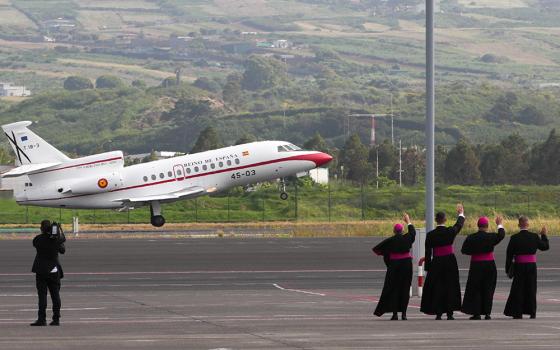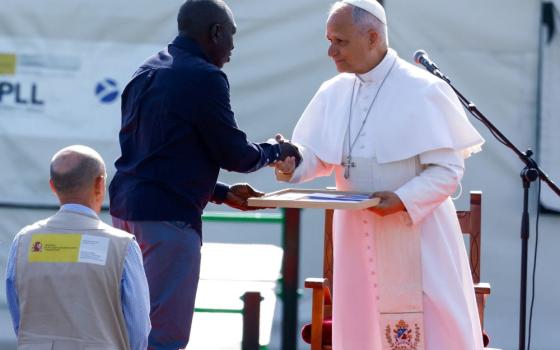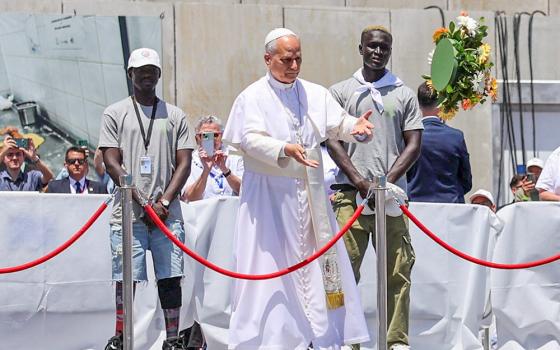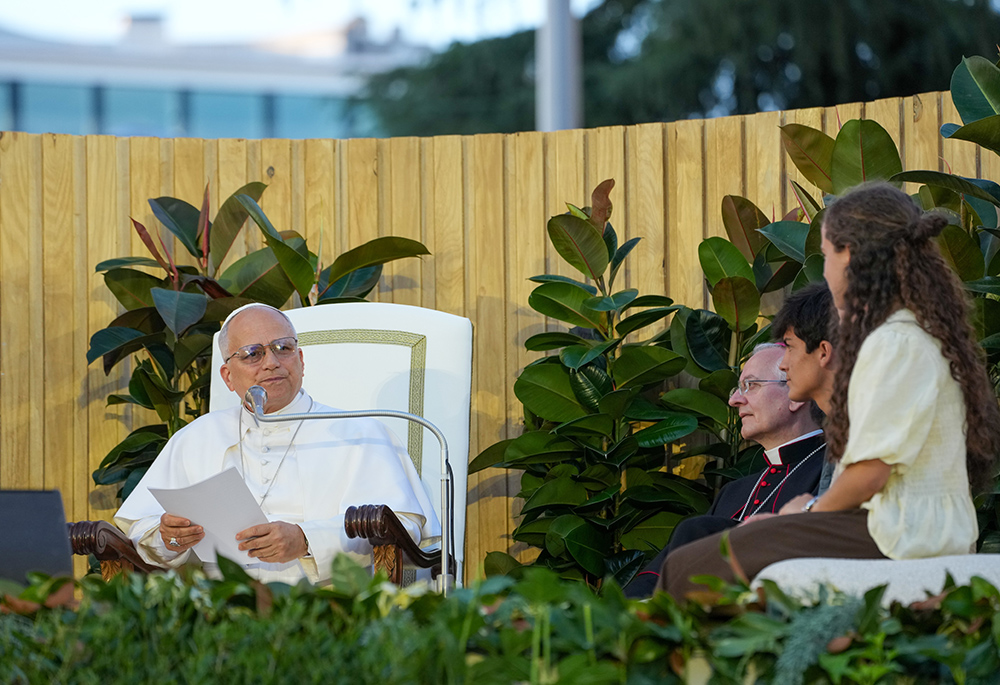
Pope Leo XIV speaks with young people during a prayer vigil at the Plaza de Lima in Madrid June 6, 2026. (CNS/Lola Gomez)

by Enzo Del Brocco
Join the Conversation
Send your thoughts to Letters to the Editor. Learn more
I live and work in Hyde Park. Around 6 p.m. on Memorial Day, while heading home, I noticed something unusual: streams of people moving toward the lakefront and 57th Street Beach in unusually large numbers. At first, I assumed it was simply warm weather and a holiday weekend.
Something else was happening.
By nightfall, sirens echoed for hours. Helicopters hovered overhead. Police and emergency vehicles gathered near the beach and surrounding streets. Reports emerged of frightened residents, crowds being dispersed, nearby gunfire that injured three teens and temporary closures of DuSable Lake Shore Drive.
For many in Hyde Park, the evening left behind sadness, unease and familiar questions.
What happened? Why does this seem to happen again and again?
Much of the public conversation quickly turned toward disorder, policing, parental accountability and public safety. These questions matter. Violence should neither be romanticized nor excused. Young people need boundaries, guidance and responsibility.
During the rest of the week, I wondered if we are dealing with this phenomenon the right way; whether we are responding to young people's actual questions, or simply answering questions of our own making.
Nearly two weeks later, on the other side of the Atlantic, hundreds of thousands, many of them young people, gathered in Madrid to pray with Pope Leo XIV. The contrast was difficult to ignore.
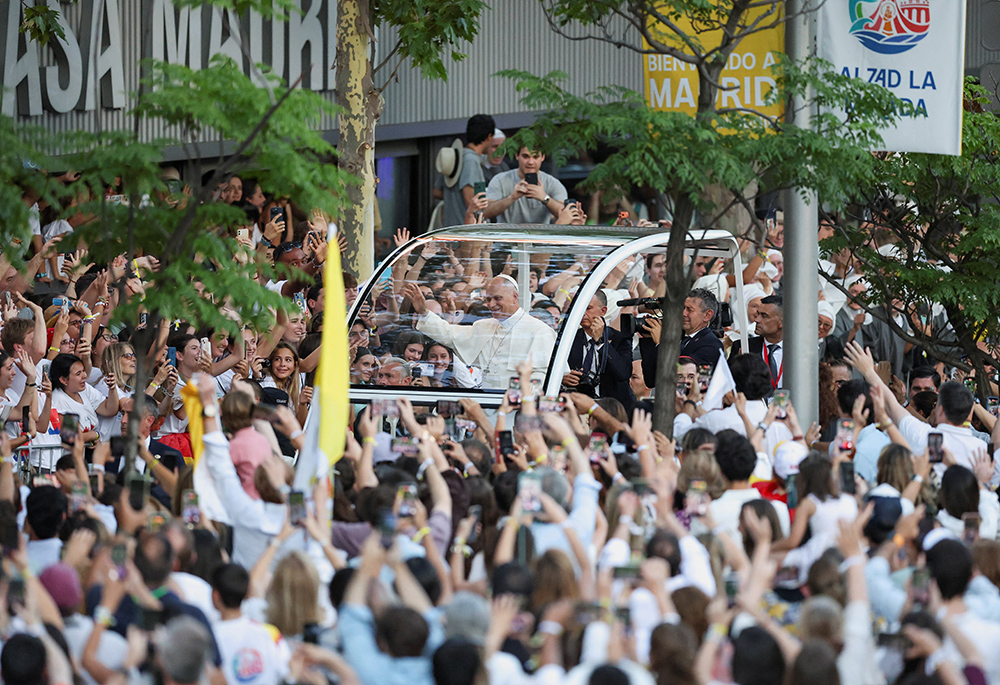
Pope Leo XIV greets faithful from the popemobile ahead of a prayer vigil at Plaza de Lima in Madrid June 6, 2026, during his apostolic journey to Spain. (OSV News/Reuters/Mohammad Salem)
Before the gathering, Leo joked with reporters about sharing Madrid with Bad Bunny, who happened to be performing in the city the same weekend. If young people were asked whether they wanted to attend a Bad Bunny concert or see the pope, Leo smiled, "I think many will go to see Bad Bunny." Yet he added, almost quietly: "But I think there will also be a few here to see the pope, and that says something."
He was not lamenting competition so much as pointing toward a deeper truth: beneath the noise of modern life, many young people still hunger for meaning.
And they came.
Hundreds of thousands gathered for a candlelight vigil. More than a million attended Mass. Young people slept outdoors, stood in long lines, sang, waited, listened and prayed.
What are we supposed to make of this?
In one week, many Americans watched images of gatherings of teenagers with anxiety and fear. In another week, enormous crowds of young people crossed cities and countries to gather around prayer, meaning and transcendence.
The temptation is to tell ourselves these are two entirely different stories about two entirely different kinds of young people.
I suspect they are, in fact, the same story.
What if both moments reveal something we have failed to understand?
We often speak about young people as though they are apathetic, distracted or incapable of seriousness. We lament shortened attention spans, social media dependency and digital overstimulation. Much of this concern is justified.
But perhaps we mistake the symptoms for the deeper condition.
Young people do not seem indifferent. They seem hungry.
Hungry for belonging. Hungry for meaning. Hungry for intensity. Hungry for recognition. Hungry for spaces where they matter and experiences that feel real.
The question is not whether that hunger exists. The question is what answers it.
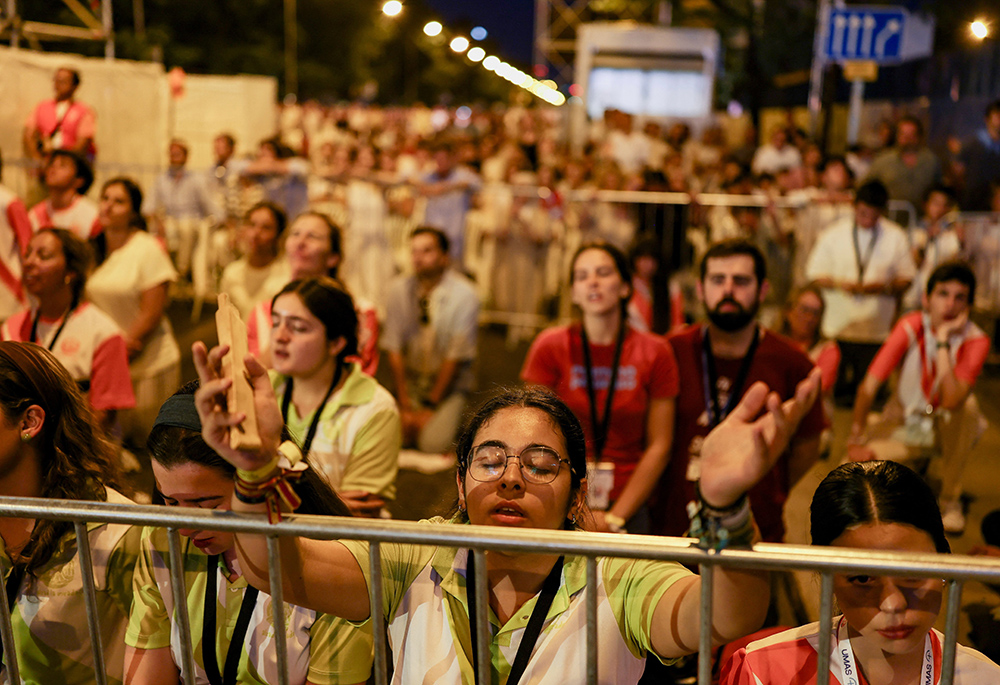
A young person gestures as Pope Leo XIV holds a prayer vigil at Plaza de Lima in Madrid June 6, 2026, during his apostolic journey to Spain. (OSV News/Reuters/Mohammed Salem)
Sometimes it is answered poorly.
A "teen takeover," however chaotic, may still reflect something profoundly human: the desire to gather, to be seen, to belong to something larger than oneself, to escape isolation, boredom or invisibility. This does not excuse violence or disorder. But it may help explain why these gatherings continue to happen.
We should ask ourselves a harder question: What alternatives have we created?
Many young people today inhabit strangely fragmented worlds. Neighborhood life has weakened. Public trust has thinned. Churches, civic organizations and local institutions no longer hold young people with the force they once did. Even ordinary unstructured spaces — places simply to gather without spending money, performing identity or fearing suspicion — feel increasingly rare.
Parks, playgrounds, recreation centers and youth programs were often built with good intentions: to provide safety, structure and alternatives to danger. As neighborhoods changed and fears about violence increased, children were gradually taken off streets where earlier generations once gathered, wandered and improvised forms of belonging.
Yet safety alone has not solved the deeper problem.
Advertisement
Too many public spaces now stand neglected, underfunded or strangely empty. A playground is not the same thing as community. A supervised activity is not the same thing as belonging.
And so a strange reversal has occurred. Adults increasingly grow uneasy when young people gather in unstructured ways, even while many of the spaces designed for them remain unused or neglected.
We wanted children to be safer. But perhaps, without meaning to, we also helped make spontaneous forms of belonging feel abnormal — even suspect.
Meanwhile, technology quietly deepens the problem.
Young people move through worlds saturated with messages, images and algorithmic systems designed to capture attention. Social media rewards spectacle, outrage and visibility. The result is a generation more connected than any before it, yet often profoundly alone.
And still, the events in Madrid suggest something we should not overlook.
Perhaps younger generations are telling us something important. Perhaps they are searching for more than adults imagine.
The extraordinary turnout around Leo says something deeper than conventional measures of religious affiliation. It tells us less about belonging to a religious institution alone and more about hunger itself.
Hundreds of thousands, many of them young people, crossed cities and countries, waited for hours, slept outdoors and gathered simply to listen to a 70-year-old man speak about meaning, sacrifice, humanity and hope.
That fact alone deserves attention.
In an age often described as distracted, cynical and spiritually indifferent, something significant is revealed when so many young people willingly gather not merely for entertainment, consumption or spectacle, but for singing, joy, reflection and encounter. Across languages, cultures and backgrounds, young people stood together waiting to listen, to celebrate and to search for something larger than themselves. Whatever one believes about religion, such a moment points toward a deeper longing: for meaning, belonging, seriousness and transcendence.
I believe young people are searching for more than we think we are offering them.
Two weeks offered a striking contrast: fear in Hyde Park and hope in Madrid. The deeper lesson is that these events were not opposites. Both revealed a generation searching.
Searching for one another. Searching for meaning. Searching for adults willing to remain present long enough to guide them toward something greater than themselves.
We already know young people are willing to gather.
The real question is whether we still know how to meet them there.