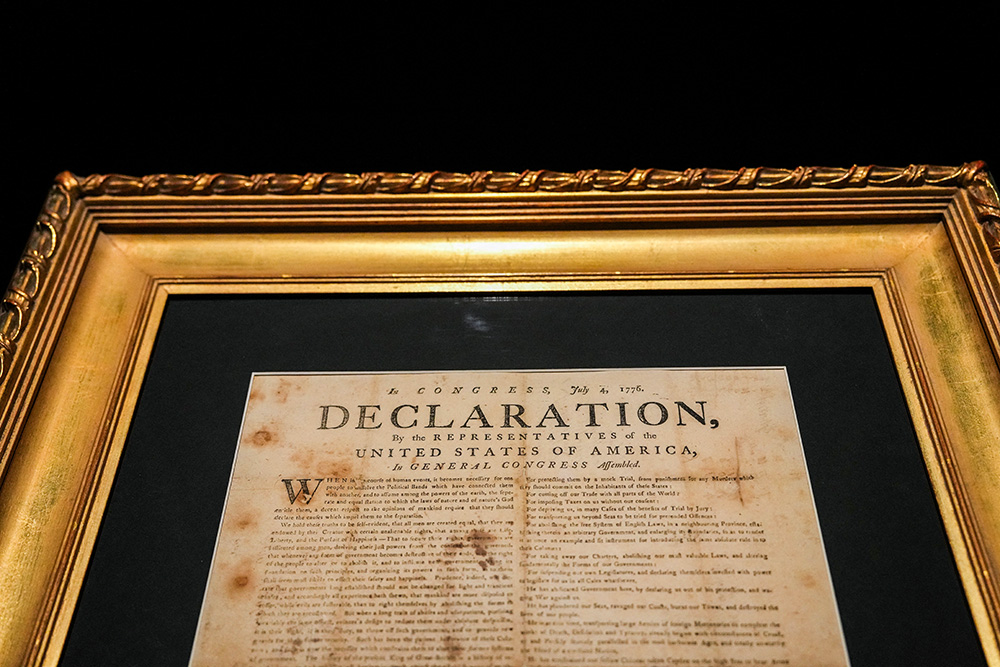
A July 1776 printing of the Declaration of Independence: The Exeter Broadside hangs on the wall during a press preview at Sotheby's in New York City, January 17, 2025. (OSV News/Reuters/Adam Gray)
Happy 250th birthday to us! It is a milestone and, just so, celebrating a quarter of a millennium warrants more than fireworks. The question we need to pose this July Fourth, one that previous generations of Americans have had to pose and answer, is this: What are we celebrating?
If you asked what was being celebrated 250 years ago, as the Declaration of Independence was being read for the first time throughout the land, the answer would have had to do with the break with Great Britain and its king. Much of the Declaration of Independence consists of a list of grievances against the British government.
With the passage of time, and the growth of a deep and abiding friendship between ourselves and the mother country, the break is not what we celebrate now. Instead, it is the manner in which we articulated our new national project that makes this a momentous anniversary.
The Declaration of Independence made large and original claims about the source of governmental legitimacy and the rights of the human person. Our rights are given to us by our Creator and they precede any government, indeed the protection of those rights is one of the chief aims of government. Those rights are distributed equally and to all: The declaration makes universal claims, which is one reason it is revered throughout the world. The people govern themselves and their consent is the basis of any government's legitimacy.
These ideals drew on a variety of ancient and Enlightenment sources, but they were also fundamentally new, especially when placed together. These ideals became the core of our national identity.
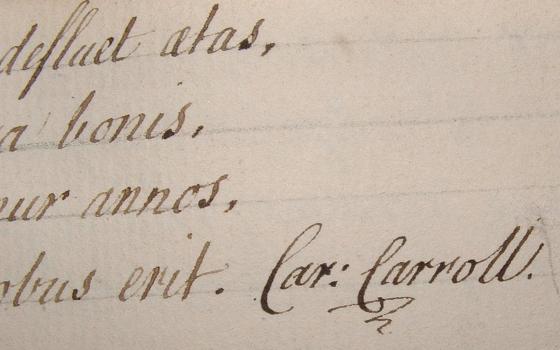
Only one Catholic signed the Declaration of Independence, Charles Carroll of Carrollton, yet we were overrepresented, as Catholics constituted about 1% of the population in 1776. Late colonial America had been awash in anti-Catholic sentiment, which was frequently on display in the political pamphlets that informed public debate.
Anti-Catholic bigotry seemed to evaporate in the course of the Revolutionary War. The French alliance, combined with the patriotic part Catholics played in the war, diminished prejudices against the faith. That bias would reemerge in the 19th and 20th centuries and it sometimes carried the day. But bigotry did not, finally, win the struggle.
Advertisement
Side by side with the high ideals of our national founding was the stench of our national original sin. And the founders did not smell the sin or, if they smelled it, confront it. It is still shocking to us that the man who wrote the draft of the declaration, Thomas Jefferson, and so many other signers, were slaveholders. Whether it was through an ability to rationalize or a willful ignorance of the humanity of others, the universal rights they articulated were betrayed by not extending them to all. At the time, African Americans, women, Native Americans, and white males without property were not included in the promises the declaration made. But the ideals persisted.
All the great Americans since the founding have cited the words of the declaration in their quests to extend freedom to those who were previously denied it. Frederick Douglass, Elizabeth Cady Stanton, Abraham Lincoln, Martin Luther King Jr., Franklin D. Roosevelt, all invoked these ideals, and the need to realize them more fully, as they worked to make ours "a more perfect union."
In arguably his most famous speech, "What to the slave is the Fourth of July?", Douglass said:
Fellow Citizens, I am not wanting in respect for the fathers of this republic. The signers of the Declaration of Independence were brave men. They were great men, too, great enough to give frame to a great age. It does not often happen to a nation to raise, at one time, such a number of truly great men. The point from which I am compelled to view them is not, certainly, the most favorable; and yet I cannot contemplate their great deeds with less than admiration. They were statesmen, patriots and heroes, and for the good they did, and the principles they contended for, I will unite with you to honor their memory.
It was precisely this complicated but very real respect for the founders and the ideals that they articulated that made Douglass' indictment so stinging: "This Fourth of July is yours, not mine, You may rejoice, I must mourn."
So, in our day, it may be understandable that people question why we honor founders who were also slaveholders, understandable but anachronistic. As historian Bernard Bailyn noted in Ken Burns' recent masterful documentary "The American Revolution," "Before the Revolution, slavery was never a major public issue. There were people who spoke against it and gave good reasons to what evil it was, but it was not a major public issue. After the Revolution, there never was a time when it wasn't."
The founders could not imagine how to abolish slavery, but they gave us the ideals that made its abolition inevitable.
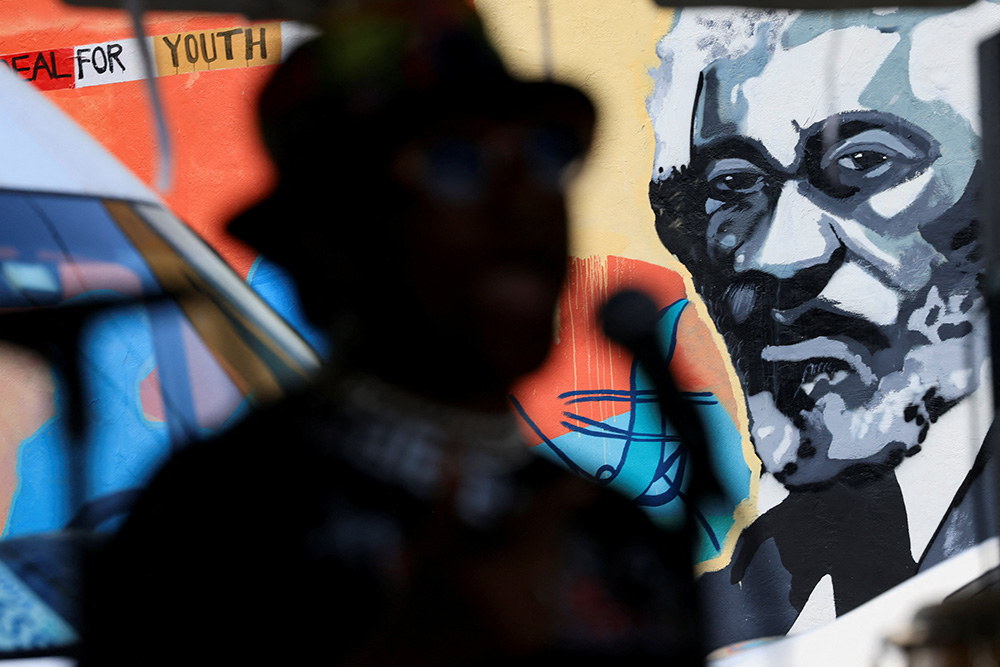
A mural of Frederick Douglass appears in the backdrop of an event to celebrate the Juneteenth federal holiday in Washington June 19, 2025. (OSV News/Reuters/Kevin Mohatt)
It is vital that we Americans learn — and teach our children — about the ugly chapters in our nation's history as well as the more ennobling ones. Attempts to ignore the sordid parts of our national story misunderstand the role of education and the frailty of human nature. The goal is not to stand in judgment of the past but to searchingly examine our own hearts and minds to assess how we, today, stand up to the ideals set forth 250 years ago. Such an examination is especially important at this moment in our history because those ideals are more threatened than at any time since Gen. Robert E. Lee surrendered at Appomattox.
The Trump administration aims to restrict, not expand, participatory democracy. It has mocked freedom of the press with its subpoenas to reporters and displayed a shocking misunderstanding of religious freedom by removing 180 religious groups from the Pentagon's list of recognized religions, as if they get to decide. A survey of federal judges, lawyers and law professors revealed that these people who work in the administration of justice "perceive a significant erosion of the rule of law since Trump returned to office, including politicized law enforcement, a dysfunctional separation of powers, and executive-branch overreach."
Catholics may have not played much of a role in the articulation of our nation's ideals 250 years ago. It is vital we help defend those ideals and work to see them fulfilled in our own time. Ours is the largest denomination in the country. The social doctrine of the Catholic Church sheds light on every problem confronting the nation, yet that social doctrine is still too often "the best kept secret" of Catholicism.
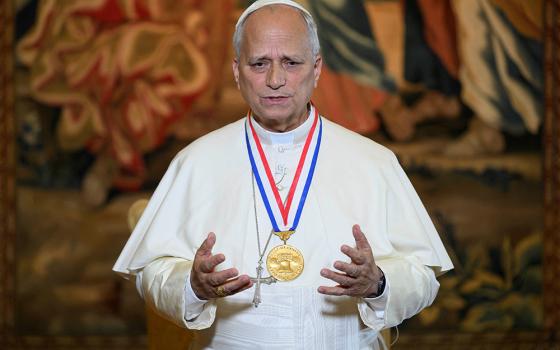
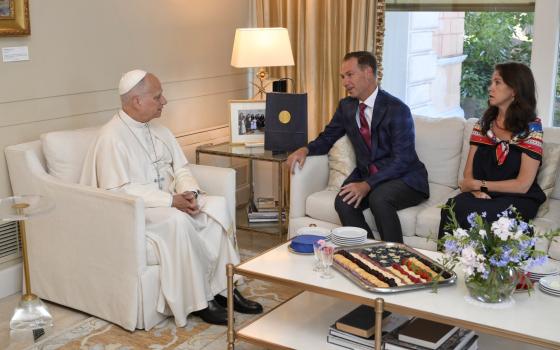
One thing that is different today from previous generations is that we have an American-born pope who breaks through the media noise in ways none of his predecessors did. In Pope Leo XIV, we have not only a moral voice, but a voice that explains how our moral vision is rooted in our belief in the dignity of the human person.
As the pope said to the Spanish parliament, "Christian faith proclaims [human dignity] on the basis of Revelation; human reason can recognize it as a requirement inscribed in the truth of man."
At this sad moment in our national history, when we are cursed with a chief executive who is corrupting everything we hold dear, and a complicit Congress that is unwilling to defend its own rights let alone the rights of others, all Americans need to return to the Declaration of Independence and the ideals of life, freedom, equality and self-governance it set forth.
We should brace ourselves to the task of defending democracy from Trumpism and ameliorating the social problems that made Trumpism possible. There is no time to complain. There is work to be done, the work of political engagement and persuasion, of listening to the grievances of those with whom we disagree and seeking a point of common humanity so that we can forge a better path forward. This will only be a happy anniversary if we emerge committed to a more just, a more perfect union in the next 250 years.