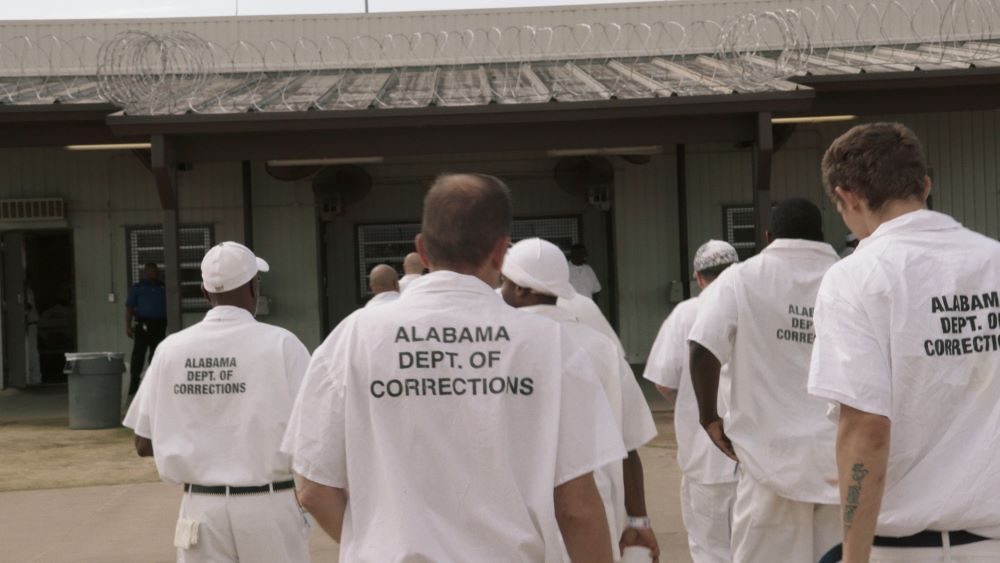
A still image shows a scene from "The Alabama Solution," nominated for a Best Documentary Feature Oscar. The documentary takes viewers into the Alabama state corrections system to examine the inhumane, violent and abusive reality of life behind bars. (Courtesy of HBO)

by Daniel P. Horan
Join the Conversation
Send your thoughts to Letters to the Editor. Learn more
As we approach Good Friday, I have been thinking about a movie that has haunted me for weeks.
Each year in the lead-up to the Oscars, I try to see as many of the nominated films as I can. While my primary aim is to at least view all the nominees for Best Picture, I also enjoy watching films in other categories, including Best Documentary Feature. It was this quest that led me to watch the film "The Alabama Solution" last month, and I haven't stopped thinking about it since.
The documentary takes viewers into the Alabama state corrections system to examine the inhumane, violent and abusive reality of life behind bars. What is distinctive about the film is the way incarcerated men use contraband cellphones to record interviews and document atrocities such as the violence corrections officers inflict on inmates.
It is not an easy film to watch, but it is powerful and important. It traces a six-year -long investigation into atrocious and inhumane living conditions and numerous deaths that had gone unreported or misrepresented in Alabama state prisons.
The living conditions the prisoners depict reveal unaddressed flooding, extreme heat, rodent infestation and other abject circumstances that can only be described as dehumanizing and disturbing.
In addition to the sickening day-to-day conditions facing the living, the documentary sheds light on those who die within the prison walls. Those in authority and power have sought to obfuscate the real causes of violence and death, leading to accusations of coverups. The documentary's website explains, "The truth is, people are dying in Alabama's prisons from complex and horrifying circumstances, but if we rely only on the prison's statistical reports, causes of death are reduced to one word, like 'accident' or 'undetermined.' "
Directors Andrew Jarecki and Charlotte Kaufman weave together two stories that offer viewers a rare glimpse into the suffering experienced not only by those locked up in prison, but also by the families and friends of those killed or abused.
The fact that convicted criminals are literally locked away behind barbed wire and concrete blocks, out of sight and mind of the rest of society, further contributes to our collective willful ignorance about what is happening to fellow human beings in our names.
The first story focuses on an illustrative case of an alleged wrongful death at the hands of prison guards. It centers on the death of Stephen Davis, a 35-five-year-old man who died while in custody at the William E. Donaldson Correctional Facility in Bessemer, Alabama. The state prison authorities claimed that he died while attempting to attack prison guards, who subdued him in self-defense.
However, as the film recounts, Davis' mother, Sondra Ray, received a phone call from an anonymous prison employee who said that Davis was murdered by guards and the state was covering up the truth of his violent death. Viewers follow Ray's quest to uncover what really happened to her son and hold the authorities in Alabama accountable. More death follows, including the suspicious death of Davis' former cellmate, James Sales, who had told Ray's attorney that he would be willing to say more once he was released from prison in just a few months.
The documentary follows the "official narrative" presented by Alabama corrections authorities and shows how it continually conflicts with evidence and information arising from an independent investigation. According to the filmmakers, Davis and Sales are just two of 1,377 people who died in Alabama prisons between 2019 and 2024.
The second story traces the efforts of inmates Melvin Ray, Robert Earl Council and Ricardo Poole, who documented abuses and conditions inside Alabama prisons with their contraband cellphones, personally filed lawsuits against the system and state, and launched a prisoner work strike in 2022. In retaliation, prison officials sought to make the living conditions as uncomfortable as possible, including limiting access to food and restricting inmate access to law libraries, in order to break the prisoner strike.
"The Alabama Solution" reveals the deeply disturbing truth about how we as a society treat those convicted — rightly or wrongly — of a crime. It can be easy to dismiss the terrible treatment of convicted criminals with slogans like "they deserve punishment" or "they have to pay their debt to society." The fact that convicted criminals are literally locked away behind barbed wire and concrete blocks, out of sight and mind of the rest of society, further contributes to our collective willful ignorance about what is happening to fellow human beings in our names.
The Catholic Church has always taught that states have the right to incarcerate those who commit crimes, especially those individuals who are deemed a continued threat to their communities. However, law enforcement and prison systems are meant to be restorative and just, not retributive and cruel.
The core ethical teaching of Christianity is the inherent and inalienable dignity of the human person. Regardless of what one does, a person never loses their status as beloved children of God created imago Dei.
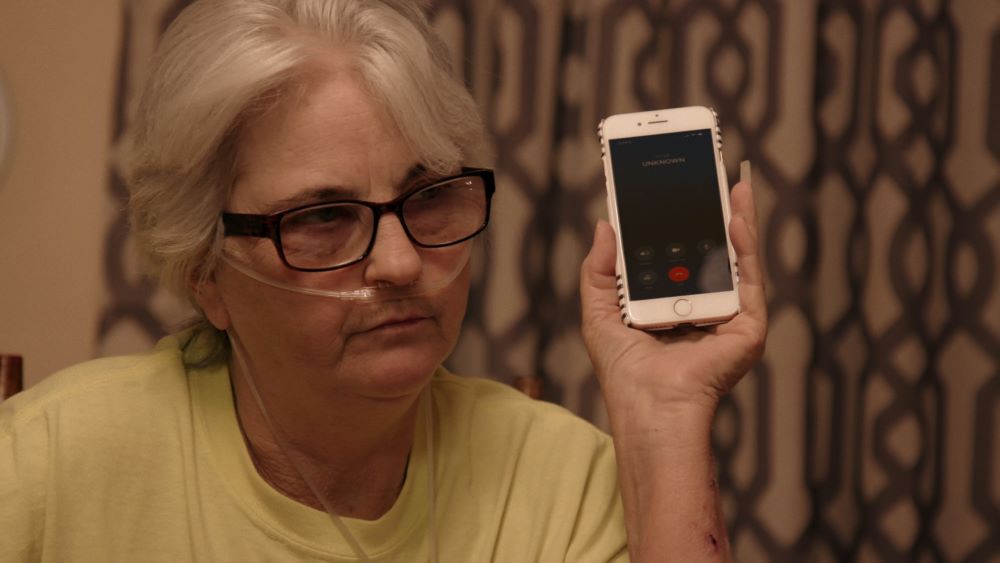
An image from the documentary "The Alabama Solution" (Courtesy of HBO)
In 2000, Pope John Paul II spoke to a gathering of Italian judges and attorneys, reiterating these fundamental points of Catholic moral theology. He said:
The truth that the judge is called to ascertain has nothing to do with mere events and cold norms, but with the concrete individual who may be marked by inconsistencies and weaknesses, but is endowed with inalienable dignity because he is God's image. The nature and application of penal sanctions must be such as to guarantee the rightly invoked security of society, but without attacking the dignity of man, beloved of God and called to redeem himself if guilty. The sentence must not shatter this hope of redemption.
What we witness in "The Alabama Solution" is a glaring illustration of the kind of systemic violation of the incarcerated individuals "inalienable dignity" and a condition of life that indeed shatters "this hope of redemption."
Advertisement
As Sister of St. Joseph Helen Prejean often says, even when considering individuals who have committed the most heinous and terrifying crimes, we must recall that people are more than the worst thing they have ever done. This is true for each of the men portrayed in "The Alabama Solution" and it is true for each of us. Failure to respect the divinely bestowed dignity of another is to contribute, as John Paul II consistently reminded us, to a culture of death and not life.
A few days after I watched "The Alabama Solution," The New York Times published a searing editorial calling for the abolition of the death penalty in the United States in response to the sudden rise of its use in recent years. As the editorial board noted, there were "more executions in 2025 than any year since 2009. It is a cruel and unjust development."
As we commemorate the wrongful conviction and state execution of Jesus of Nazareth, whom Christians proclaim was God incarnate, we would do well to reflect deeply on our individual and collective roles in promoting a culture of death and denying the human rights and intrinsic dignity of those sentenced to serve prison sentences in our penal institutions.
Just as the Good Friday liturgy begins with the ministers laying prostrate in penance and prayer, we might also take an opportunity for some penance before Easter Sunday to challenge ourselves to see the ongoing dehumanization of siblings in the prison system and work to abolish the death penalty, which is the most overt form of dehumanization in the criminal justice system.