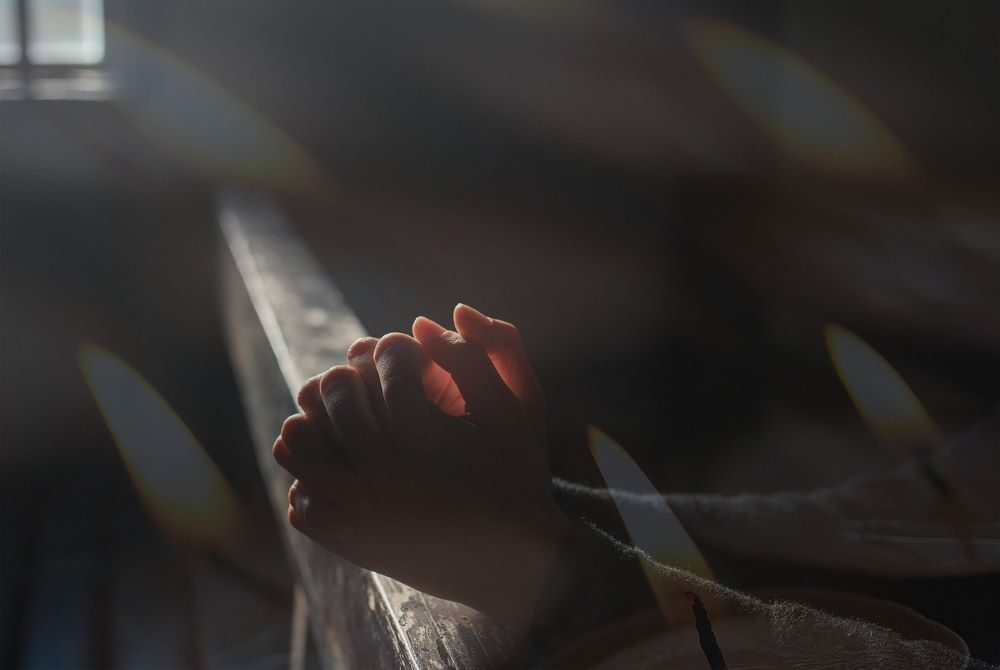
(Pixabay/Ri Butov)

by Daniel P. Horan
Join the Conversation
Send your thoughts to Letters to the Editor. Learn more
I have been thinking about hope a lot lately, both as a theological topic of interest as well
as a practical matter in the Christian life.
We live in times that can be increasingly described as hopeless. We have witnessed dehumanizing and violent policies targeting immigrants and refugees. We have seen innocent people shot in the streets by Immigration and Customs Enforcement officers. We have watched as the Trump administration attacked ships in the Caribbean and exfiltrated the sitting leader of Venezuela with impunity.
And, just this week, President Trump started an illegal war with Iran without offering a cogent justification or seeking congressional approval. These attacks against Iran have exploded into a conflict that continues to spread in the region, destabilizing the Middle East and threatening further violence and chaos.
It can be difficult to feel anything but hopeless in light of these terrible events. And yet, hope is a core Christian virtue, something we talk about in homilies and faith-sharing groups, read about in Scripture and teach to the next generation. So, how are we to understand hope and where are we to find it today?
The ability to recognize God's presence in the midst of these tragedies, to know that we are not abandoned and we are called to not abandon one another, gives me hope.
In trying to understand authentic Christian hope, I have found it helpful first to identify what hope is not.
First, hope is not the same as optimism. Whereas hope is seen as a virtue by philosophers and theologians, optimism is more of a feeling or disposition. Optimism tends to lead people to brush past the present and fixate on the future when "things will inevitably be better" without reason or justification. This is the curse of Pollyanna, living in such a way that one's optimism distracts from what the Second Vatican Council called "the signs of the times." It inhibits any change of thought or behavior, or what we in the Christian tradition would call conversion. Why change when everything is going to work out just fine?
Second, hope is not the same as desire. Although it is the case that in our everyday usage there is clear slippage or interchangeability between the terms, hope and desire are in fact different realities. Desire gives shape to what we want; it arises from a lack, a longing or aspiration and points toward something that we do not yet possess. Meanwhile, hope grounds us in the conviction and outlook that what we desire may be attainable, even when such an object of hope seems improbable. As St. Thomas Aquinas explained in his Summa Theologiae, "the object of hope is a future good, difficult but possible to obtain."
Finally, hope is not individualistic. As the German Jesuit theologian Fr. Karl Rahner emphasized in his essay "On the Theology of Hope," Christian hope "is not merely an individual 'virtue' practiced in isolation by one who is pursuing his [or her] own private salvation, but something that provides a basic framework for the attitude of the people of God as such on their pilgrimage, and one in which each individual does not merely hope for himself [or herself] alone, but each hopes for all."
For Rahner, hope is oriented toward the absolute future, which is participating directly in the life of God. This is never a purely individual act or phenomenon, but something shared as the communion of saints and the body of Christ together. From the Christian perspective, hope is always communal, a shared vision of purpose and intention, which comes from Christ.
With this in mind, we can turn to resources in the tradition that help us make sense of this virtue of hope we are called to embrace and practice.
The Trappist monk and author Fr. Thomas Merton wrote in his moving 1963 essay "Advent: Hope or Delusion?" that "The certainty of Christian hope lies beyond passion and beyond knowledge. Therefore, we must sometimes expect our hope to come in conflict with darkness, desperation, and ignorance."
In this way, Christian hope is nothing like optimism or the unfounded conviction that "everything will work out fine." Merton calls this kind of optimism irrational and admonishes Christians to leave it behind and instead focus on Christian hope. He cautions against belief in what we might imagine as a "helicopter God" who swoops down to fix all our problems and tidy up the messes we make in our world. Focusing on the meaning of the liturgical season of Advent, Merton reminds us that the Word became flesh in this world to indicate that there is another way to live, one that is actually more preferable to God.
The Incarnation demands something of us. Merton explains that "the fact remains that our task is to seek and find Christ in our world as it is, not as it might be." He adds:
The fact that the world is other than it might be does not alter the truth that Christ is present in it and that His plan has been neither frustrated nor changed: indeed, all will be done according to His will. Our Advent is the celebration of this hope. What is uncertain is not the "coming" of Christ but our own reception of Him, our own response to Him, our own readiness and capacity to "go forth and meet Him." We must be willing to see Him and acclaim Him, as John [the Baptist] did, even at the very moment when our whole life's work and all its meaning seem to collapse.
John the Baptist serves as a stand-in for us, Christ's would-be disciples. In prison and on death row, unknowingly soon to be beheaded, John has his own doubts about whether Jesus of Nazareth is the one. John sends his disciples to Jesus to ask, to confirm his inklings and absolve his doubts, to give him some hope. Jesus' response is simply to say: Look what I am doing here. Jesus signals that the hope God gives us is not naïve or irrational belief in a magical reset of world history or freedom from the real and perceived perils of the time, but a call to stand in the face of the pain, suffering, loss, violence, injustice and misunderstanding of reality, and recognize how God is at work amid these "tragic realities."
Merton reminds us that, if we place our hope in a tailor-made savior who will come to alleviate us from our personal and collective fears, then we place our hope in irrationality and non-Christianity. But if we find some way to recognize the presence of Christ amid the tragic realities of our world, allow ourselves to be inspired by the Gospel to resist the unnatural fear that seeks to prevent discipleship, and allow the Spirit to work in our lives in contributing to the in-breaking of the kingdom of God — then we are on the path to authentic Christian hope.
Advertisement
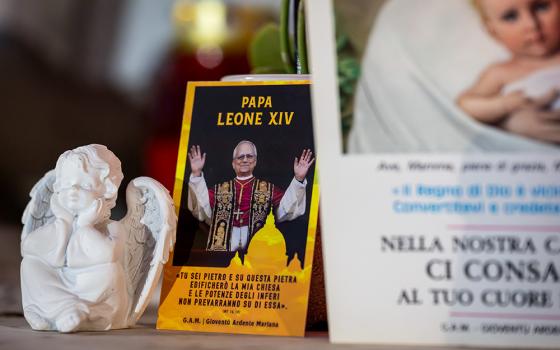
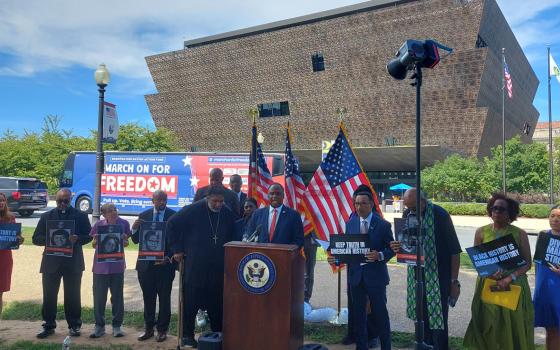
For me, I see the presence of Christ amid the tragic realities of our world when ordinary citizens stand up to intimidating and oppressive forces in American cities, or when religious leaders like Pope Leo XIV denounce the attacks in Iran, or when athletes from around the world — including from nations in armed conflict with one another — gather to compete peacefully and respectfully at the Winter Olympics.
None of these things takes away from the terrible circumstances of unjust wars or children separated from their parents by immigration enforcement or the persistence of global climate change. But the ability to recognize God's presence in the midst of these tragedies, to know that we are not abandoned and we are called to not abandon one another, gives me hope.
As the Boston College theologian Colleen Griffith once keenly observed, "Christian spirituality recognizes hope to be a powerful resource, something that is both gift and choice." She explains, "As the gift of a generous God, hope stirs within the human to be received and tended. As a choice made in the context of human freedom, hope remains something ultimately to be embodied and practiced."
During these challenging times, let us accept this divine gift and choose to live as people of hope in our broken world.