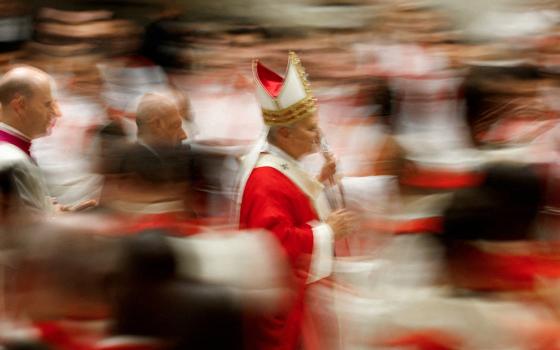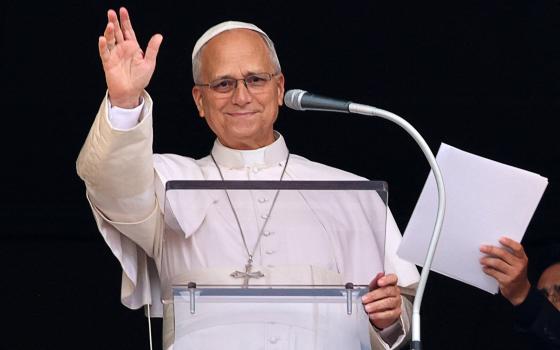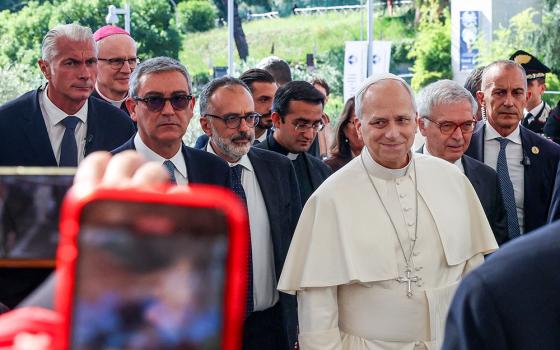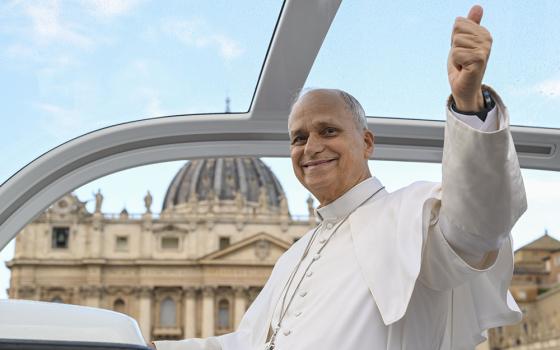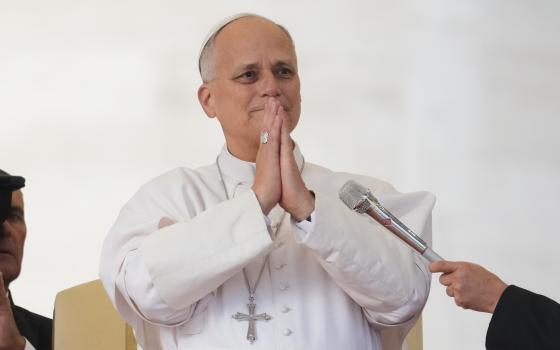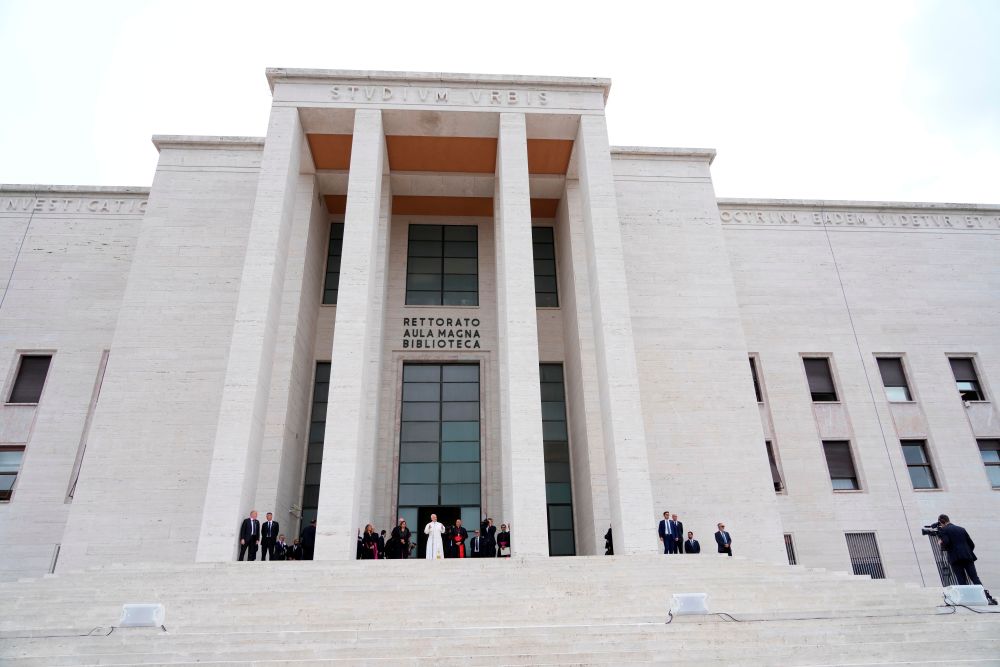
Pope Leo XIV visits the Città Universitaria (University City) at Sapienza University of Rome to meet with faculty and students at the institution's primary campus, one of the world's oldest and largest universities, May 14, 2026. (AP/Gregorio Borgia)

Join the Conversation
Send your thoughts to Letters to the Editor. Learn more
Higher education in the United States is in crisis in ways that is not the case in the rest of the world. Nonetheless, it is still worth contrasting the vision Pope Leo XIV articulated during his visit to La Sapienza University of Rome last week to the recently issued Yale report on the crisis of trust in higher education
The pope's vision is centered on the students and on the challenges our societies and cultures face. After discussing both the good and the bad aspects of young people feeling uneasy and restless, the pope said, "To you young people, this unease asks: 'Who are you?' Being ourselves, in fact, is the defining commitment of the life of every man and every woman. 'Who are you?' is the question we ask each other; the question we silently pose to God; the question that only we can answer, for ourselves, but which we can never answer alone. We are our bonds, our language, our culture: all the more reason, it is vital that the university years be a time of great encounters."
The pope noted that the world is still beset by so much violence and challenged the young people to craft a better future. "The cry 'Never again war!' of my Predecessors, so consonant with the repudiation of war enshrined in the Italian Constitution, spurs us to a spiritual alliance with the sense of justice that lives in the hearts of young people, with their vocation not to confine themselves within ideologies and national borders," the pope told the university community May 14.
And the pope specifically called on all people to "monitor the development and application of artificial intelligence in both the military and civilian spheres, so that it does not deprive human decisions of responsibility and worsen the tragedy of conflicts."
"Today, the very implosion of a possessive and consumerist paradigm clears the way for the newness that is already sprouting: study, cultivate and safeguard justice!" Leo said. "Together with me and so many brothers and sisters, be artisans of true peace: a disarming and disarming peace, humble and persevering, working for harmony among peoples and the protection of the Earth."
The Holy Father's discourse is deeply humanistic, and it points to the ways higher education can and should form students holistically so that they can head out into the world aiming to make it more just and more peaceful. The idea of a "value neutral" education is a contradiction in terms.
The future of higher education, and perhaps of democracy, may depend upon the willingness of liberal leaders and intellectuals to engage with the Catholic intellectual tradition, and vice versa.
The Yale report's different perspective is clear in the opening sentences: "Universities exist to preserve, create, and share knowledge. In one form or another, Yale has affirmed this mission for centuries." Setting aside the fact that the original "form" this mission took was forming ministers to serve God's people, it is interesting that there is no mention of students.
Not until three pages later do students enter the report's picture of a university's mission: "Universities play a distinct role in a modern democratic society. They exist not only to educate students and preserve cultural heritage, but also to push the frontiers of knowledge." Again, the focus is exclusively on knowledge, with a hint that democracy and its demands have a normative character.
One part of the report shows the limits of its self-examination. Noting the existence of "pressures toward conformity, intimidation, and social shaming" in higher education and in the wider society, the report gives a pathetic rendering of an infamous incident on campus in 2015:
For those who were at Yale or paying attention to its activities in fall 2015, "Halloween" operates as shorthand for a series of events that began with an email from the Yale Intercultural Affairs Committee urging students to think twice about potentially offensive costumes. Subsequent incidents gained international attention, notably with a viral video highlighting a group of students surrounding and shouting at a faculty head of college. The very word "Halloween" remains charged around campus. Few episodes have done more to raise public questions about Yale's commitment to freedom of expression and open, reasoned debate. At Yale as elsewhere, such events became identified with "cancel culture": The idea that one wrong word or departure from campus orthodoxy could yield outsize punishments and social sanctions.
The events in 2015 were worse than that. One video showed students behaving like sociopaths and getting away with it. Here is the video. You be the judge. The Yale report fails to grapple with the enormity of this incident.
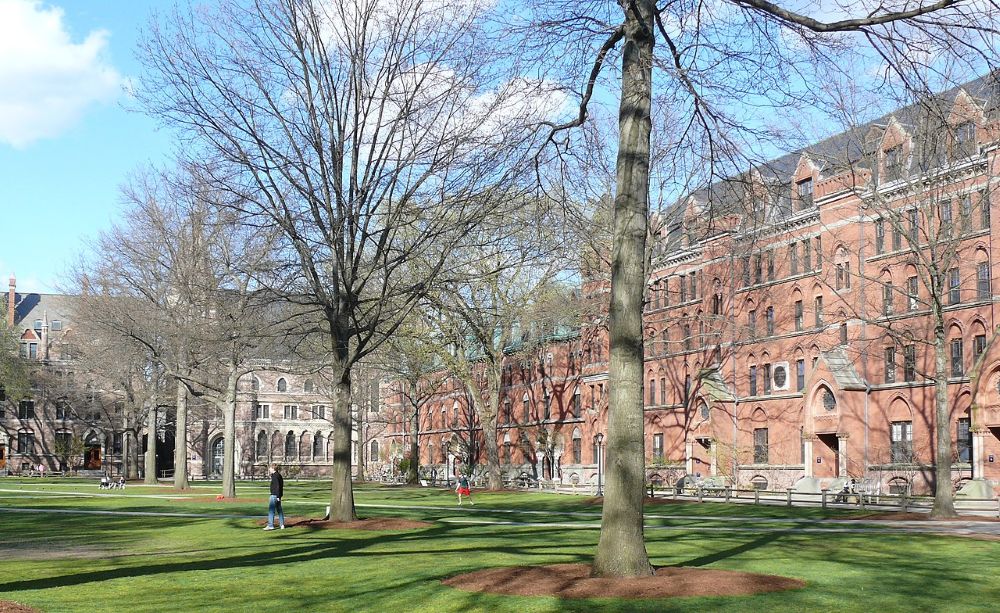
The Old Campus Courtyard of Yale University in New Haven, Connecticut (Wikimedia Commons/CC-SA 3.0/Ad Meskens)
The report's narrow focus is evident even when it makes an otherwise fine recommendation, such as: "We recommend that Yale reaffirm its commitment to the undergraduate liberal arts and work actively to help students translate a liberal arts education into successful professional and civic life." Three cheers for the centrality of the liberal arts, but they also help a person achieve a "successful" moral and personal life, not just a professional and civic one, and they teach a person that "successful" is a contentless adjective and that there is human dignity in defeat and suffering too.
The Yale report is not altogether unwelcome. The sections on the cost of college and admissions challenges are well done. Acknowledging that "enhancing open and critical debate on campus" as a worthy goal is a step away from the ugly scenes of 2015. It is good that they plan to inaugurate programs of civic education. Ultimately, the report's hyperfocus on knowledge is an effort to get away from the activist sensibilities that have brought higher education into disrepute. That is important, even if it falls short of what is needed.
In 2025, Holy Cross Fr. John Jenkins, former president at the University of Notre Dame, examined the fallacy of institutional neutrality in the Chronicle of Higher Education and "the narrowing of educational mission and the neutrality that so well accords with it eviscerates the university's key educational aspirations." The lack of moral pedagogy in modern research universities is a fatal flaw, not a bragging point. He rightly called on higher education leaders "to embrace the institution's values to retain its voice — but use it wisely."
For those of us who attended Catholic colleges or universities, articulating a school's values may seem like breathing, but it is a remarkable quality of late 20th century liberalism that its commitment to human autonomy made it allergic to all other values. The dialogue between the Catholic intellectual tradition and conservative thought yielded some interesting ideas and programs in the past 40 or 50 years, but conservatism has been co-opted and discredited by its political capitulation to Trumpism. The future of higher education, and perhaps of democracy, may depend upon the willingness of liberal leaders and intellectuals to engage with the Catholic intellectual tradition, and vice versa. Bring Leo to Yale and let him explain the vocation of education.
Advertisement