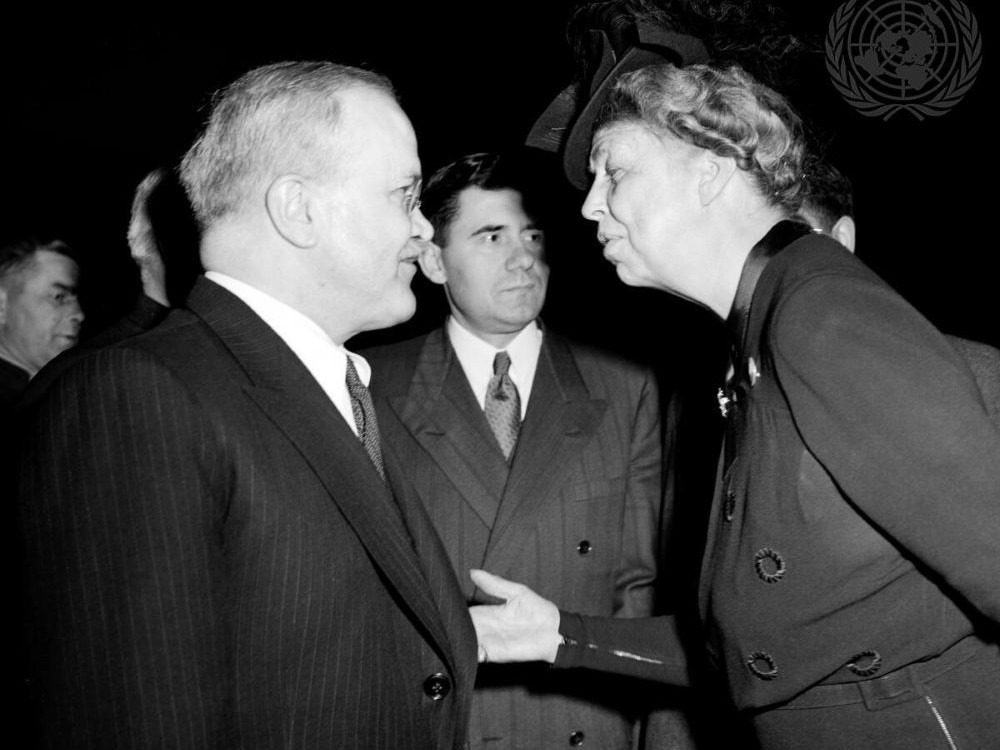
Eleanor Roosevelt (right) speaks with Vyacheslav Molotov, chairman of the Soviet Union's delegation at the first U.N. General Assembly on Oct. 23, 1946. Andrei Gromyko, Soviet ambassador to the United States, is in the background. (UN)

Join the Conversation
Send your thoughts to Letters to the Editor. Learn more
Much of the world's attention focused on the United Nations General Assembly this week as world leaders came to make their annual addresses to that body. It is not clear why. The United Nations has failed utterly to live up to its promise and, perhaps, never could.
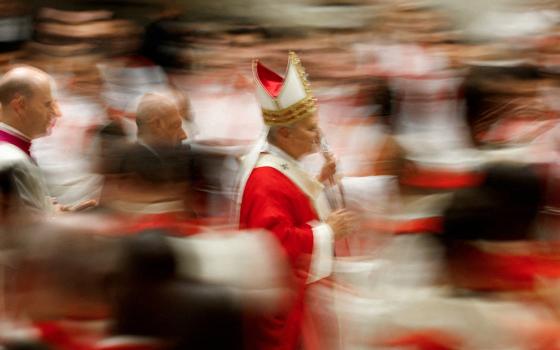
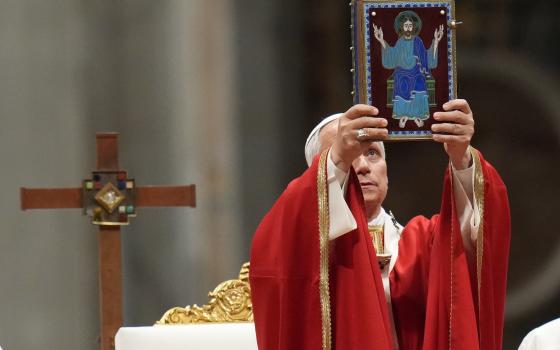
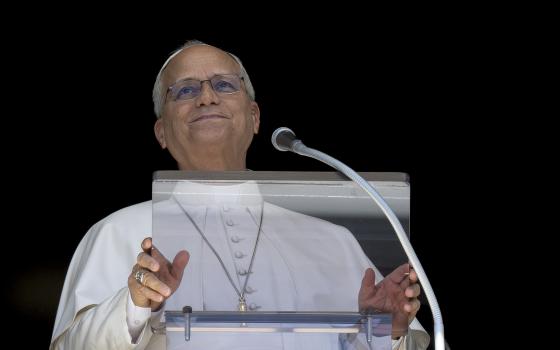
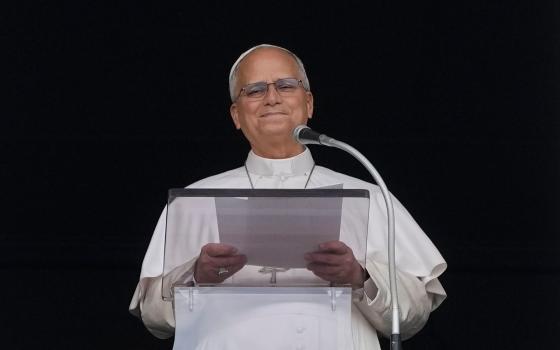
In his encyclical Magnifica Humanitas, Pope Leo XIV mentioned the United Nations in the fifth chapter. "Following developments in the immediate post-First World War period, a turning point occurred after the Second World War: peace was made the focus of the international order, as attested in particular by the United Nations Charter, with the intention to 'save succeeding generations from the scourge of war,' " he wrote.
This strikes me as a curious reading of history. When the delegates to the first meeting of the U.N. gathered in San Francisco in, the Soviet delegation was led by Vyacheslav Molotov, Stalin's closest aide and Soviet foreign minister. By that date, the Red Army had conquered most of the ancient capitals of central and eastern Europe: Belgrade, Berlin, Bucharest, Budapest, Prague, Sofia and Vienna were all liberated from the Nazi tyranny by the forces of the Soviet Union. The Russians knew that the liberation was not real, that a Soviet-style tyranny was being put in place throughout Eastern Europe.
Indeed, Soviet intentions were obvious to all after the Warsaw Uprising of the previous summer. Having urged the Polish patriots to rise up against their Nazi overlords, the Soviets held back and refused to come to the aid of the Poles. The Soviets even refused to let British and American planes fly in supplies to aid the Poles, denying the right to land and refuel on Soviet-controlled airstrips. Stalin let Hitler wipe out the leadership of the Polish nation.
In short, one of the five permanent members of the U.N. Security Council had no intention of abiding by the spirit of the U.N. The goal of promoting genuine peace, a peace that respected the right of all nations to self-determination, was strangled in the cradle.
Later in that same chapter Leo wrote, "The institutions established to safeguard the concept of a common future for all peoples and a global common good appear to have been weakened. This is due not only to structural limitations, but also to a frequent lack of shared will to support and reform them, or to recognize their moral authority." This is true. It is also true that the U.N. has helped squander its own moral authority.
For example, earlier this year, the U.N. Economic and Social Council elected China, Cuba, Nicaragua, Saudi Arabia and other repressive regimes to its Committee on Non-Governmental Organizations. The committee decides which civil society groups get to engage with U.N. agencies. Last time I checked, there isn't much civil society left in any of those countries.
Do you remember when Libya, suffering under the brutal dictatorship of Muammar Gaddafi, was elected to chair the Commission on Human Rights in 2003? Or when the U.N. declined to send reinforcements to its own peacekeepers in Bosnia in 1995, allowing Serb forces to overrun the peacekeepers and massacre more than 8,000 men and boys in Srebrenica?
Advertisement
The Holy See's support for multilateralism needs refinement. On Monday (Sept. 28), the Holy Father travels to Metz, where he will speak at the Robert Schuman Centre, named for the postwar French Prime Minister Robert Schuman who, along with German Chancellor Konrad Adenauer and Italian Prime Minister Alcide de Gasperi, led the founding of what became the European Union. All three were devout Catholics deeply schooled in Catholic social doctrine. They had seen their countries overrun by fascism. They had lived through two world wars so they knew the limits of an international order premised on the balance of power. These were bonds that forged a healthy expression of multilateralism.
To be sure, there are times the EU bureaucrats in Brussels get over their skis, trying to force elite cultural views on the member states. The reaction has sometimes been fierce, and populist parties have run and won on anti-EU platforms, Brexit being the most famous.
Multilateralism is a skill that must be acquired. It is easiest to achieve when, as in the postwar era, there remains a common threat, but the skills of patient negotiation and eventual cooperation overcame the historic enmity between France and Germany. French novelist Francois Mauriac naughtily observed, "I love Germany so much that I am glad there are two of them." Nonetheless, the EU survived the reunification of Germany. Balancing the interests and values of individual states against the needs of the union is never easy; it requires constant attention. It requires patience for forbearance. But it can be done. The fact that war has not broken out in central Europe since the end of World War II is an enormous achievement.
Expecting the entire world to embrace multilateralism at a global assembly is, at this time, too large an expectation and too unwieldy a burden. The General Assembly will feature countries with no skin in the game exercising equal voting rights with countries that do. Countries that are directly affected have a better chance at resolving tensions and preventing conflicts when problems arise. You might say that the goal of universal peace and solidarity must be achieved with a healthy dose of subsidiarity, keeping decisions as local as possible.
The U.N. today needs a fundamental reorientation of how it operates. The political leaders who took to the rostrum at the U.N. General Assembly were playing to the cameras. UNESCO will continue its good work, as will other branches of the organization. But the central focus on the general assembly as an arbiter of peace should be rethought.