(Unsplash/Stefan Vladimirov)

by Michael J. O'Loughlin
NCR executive editor
Join the Conversation
Send your thoughts to Letters to the Editor. Learn more
Pope Leo XIV's new encyclical, Magnifica Humanitas, is a dense treatise exploring centuries of Catholic social teaching and many sections directly address the heads of governments and technology leaders crafting the future of humanity. Yet within the 42,000 word document are several practical ideas for ordinary Catholics concerned about the future of humanity in light of rapid changes related to artificial intelligence.
Host a dinner party
Perhaps most importantly, Leo urges readers to "cultivate relationships" and engage with other human beings. Much of the encyclical is a defense of the human person, and so Leo wants us to actually engage with one another to understand what it is we're defending against the "threat" of AI.
"I invite everyone to cherish places and times where physical presence remains crucial, such as shared meals, Christian community gatherings, time spent with the lonely and serving the poor." Leo writes. "These are signs of a humanity that continues to believe that every person's body is a dwelling place of God and a temple of the Holy Spirit."
These kinds of encounters lead to dialogue, and Leo writes, they can have big payoffs, for "if we experience authentic encounters with others, with those who are different, strangers and migrants, it becomes much more difficult even to imagine war."
Advertisement
Put down your phone
Leo takes aim at technology's effects on human beings, particularly the pernicious effects smartphones seem to have on young people.
"Having a personal mobile device at too early an age and using it without adult supervision can exacerbate young people's vulnerabilities, foster addiction and expose them to isolation, bullying and cyberbullying, as well as to pressures to share intimate images or sensitive information," Leo writes.
Getting time away from screens might be obvious advice and Leo notes that sometimes it takes more than willpower.
"It is difficult for parents by themselves to resist the influence of business models that monetize attention and time," he concedes. Therefore, legislators will have to introduce bills that regulate technology, and we all have a responsibility to "teach children, adolescents and young people how to recognize manipulation, defend their dignity and respect that of others in digital environments."

(Unsplash/Myles Tan)
Choose your words carefully and peacefully
Leo mentions peace more than 80 times in the encyclical. While solving global conflicts might feel out of reach to most people, Leo says the words we choose each day go a long way toward building a culture of peace.
"We must all, therefore, examine our conscience regarding the words we use, the prejudices we have and the explicit or implicit aggression that lies within them," Leo writes. "We have a real opportunity to contribute to the common good each time we speak the truth, offer wise advice, support those in need of comfort, denounce injustice and give a voice to the voiceless."
Become savvy about artificial intelligence — and stop sharing disinformation
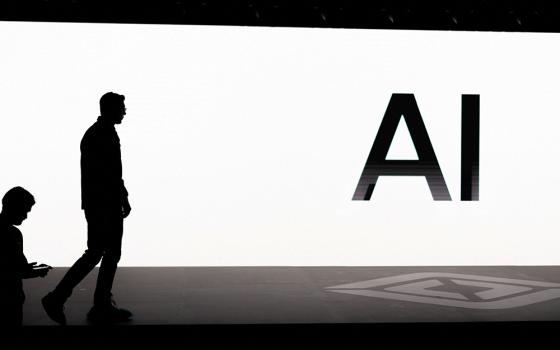
The amount of AI slop flooding social media can feel overwhelming and Leo includes heady sections about the threats of AI-generated misinformation to democracy and to the very foundation of truth itself. But he says we all have a responsibility in learning more about how technology is used to warp reality and to fight that in our everyday actions.
"We all need to learn how to engage with the digital world in a human way, as an integral part of our education in the faith and in a life lived according to the Gospel," he writes. Adults must "rediscover their vocation as artisans of education" and help "children and young people in using technology for developing responsible relationships."

(Unsplash/Eliott Reyna)
Figuring out what is true takes more time than even just a few years ago. The speed at which AI produces lifelike images and videos should give us all pause before posting or spreading news that might be fake. And as Leo warns, "Indifference to the truth leads, slowly but surely, to a descent into totalitarianism." That's why he is so emphatic that education must play a part in serving the common good.
"Technology has the power to heal, connect, educate and protect our common home," Leo writes, "but it can also divide, exclude and generate new forms of injustice."
Learn Catholic social teaching
Leo devotes much of his encyclical to reviewing the church's history of Catholic social teaching since the promulgation of Rerum Novarum by Pope Leo XIII in 1891, looking closely at previous encyclicals, teachings from the Second Vatican Council and especially the words of his immediate predecessor, Pope Francis. This may feel overwhelming at first, but Leo says understanding that the church has been defending human beings against rapid technological advances for many decades will help us make better decisions about how to use technology.
"In order to protect the human person in the age of artificial intelligence, I believe that today we must once again reflect on the common good, the universal destination of goods, subsidiarity, solidarity and social justice," Leo writes.
To aid with this, the pope said he hopes Catholic universities and schools will "give fresh impetus to these principles, and to apply them in a way that will be relevant and effective in addressing the digital revolution."