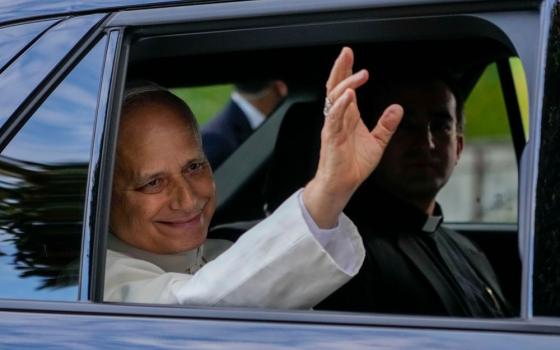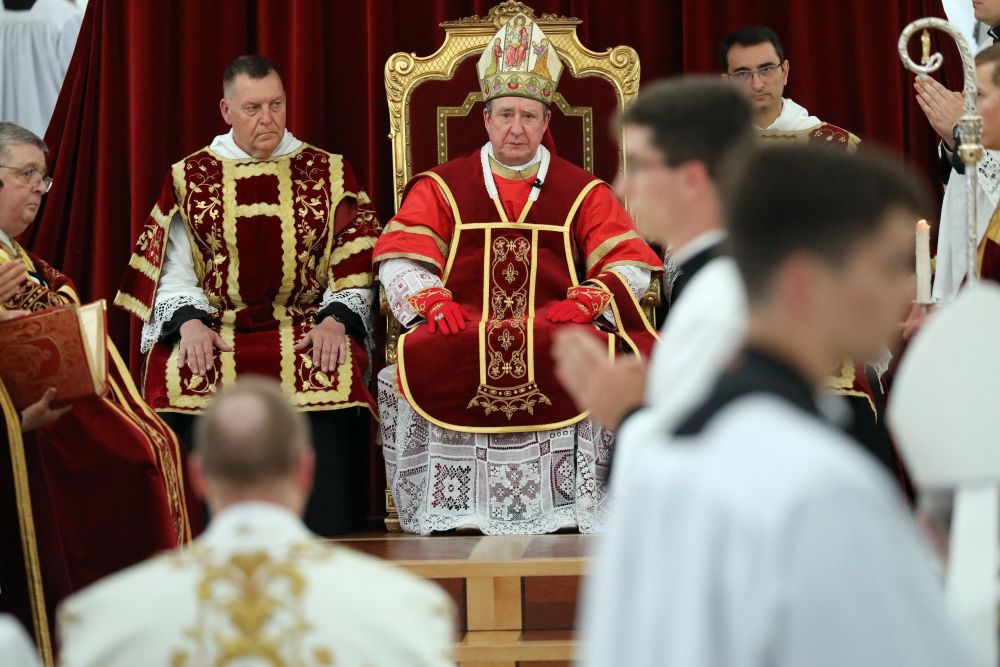
The Society of St. Pius X's Bishop Alfonso de Galarreta is seen July 1, 2026, in Écône, Switzerland, during a liturgical service for the consecration of SSPX bishops. Galarreta, along with Bishop Bernard Fellay of SSPX and four newly consecrated bishops were excommunicated by the Vatican July 2, as the consecration lacked the mandate of the pope and was decreed to be schismatic. (OSV News/CPP)

OSV News
Join the Conversation
Send your thoughts to Letters to the Editor. Learn more
A canon lawyer said the Vatican's decree that the Society of St. Pius X is "in schism" after the traditionalist group consecrated four bishops without the papal mandate was a much needed step for the unity of the church.
Fr. Jan Dohnalik, chancellor of the Archdiocese of Kraków, Poland, said the move reflects Pope Leo XIV's episcopal motto, "In Illo uno unum" — "In the One, we are one."
"Concerned for the faithful who may not understand the immense spiritual harm associated with separation from communion with the pope and the church, the Holy Father made this sad but necessary move to declare excommunication, which merely reveals the dramatic consequences of this schismatic act," Dohnalik told OSV News.
Dohnalik also said the decree does not mean all lay people who attend SSPX services are automatically excommunicated.
He pointed to a section of a 1996 document on the excommunication for schism incurred by the adherents of the movement started by Archbishop Marcel Lefebvre. Dohnalik said that the document's phrase "exclusive participation" means that "occasional participation of the lay people does not mean automatically participating in the schism — but consciously and permanently choosing to participate in SSPX liturgies does."
He explained: "For instance if a family or friend of the bishop consecrated without the papal mandate just came to that July 1 Mass to participate, they are not automatically in schism with the Catholic Church, but if they deliberately choose to participate in SSPX liturgies in the future, ignoring the papal power of the Roman Pontiff — that's participating in a schism."
The Vatican said in a memorandum that "all the faithful are exhorted to remain steadfast in communion with the Roman Pontiff, with the Bishops in communion with him and with the whole Church" and to "abstain from participating in the celebrations and activities" promoted by SSPX.
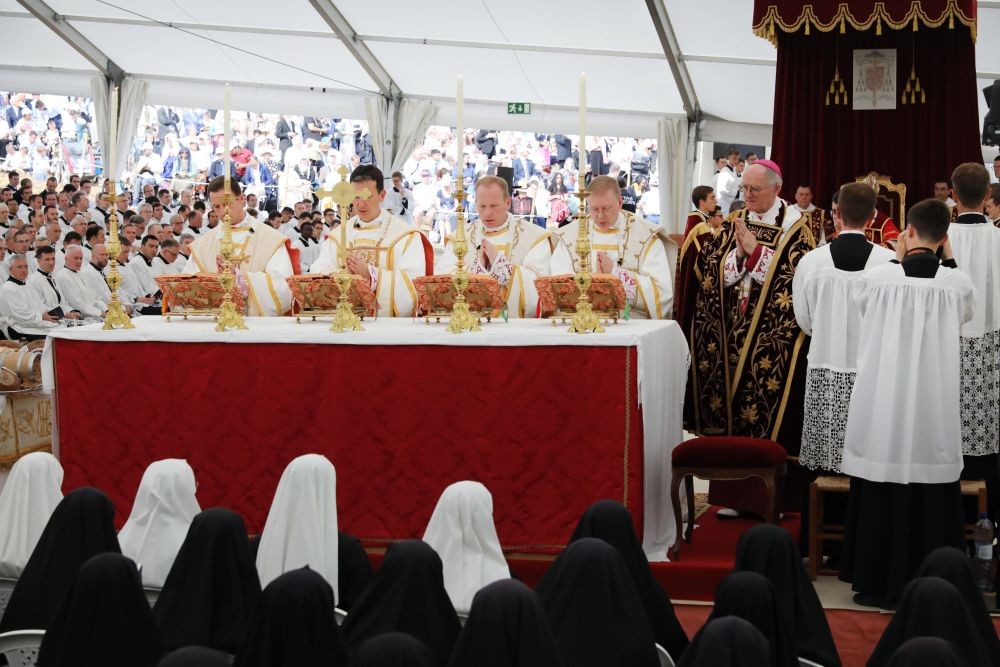
Newly consecrated Society of St. Pius X bishops stand at the altar during a liturgical celebration with Bishop Bernard Fellay of SSPX, right, on July 1, 2026, in Écône, Switzerland. The five bishops, along with Bishop Alfonso de Galarreta, leading the celebration, were excommunicated by the Vatican July 2. (OSV News/CPP)
The Vatican on July 2 declared the ultraconservative group to be "in schism" after a day earlier it consecrated four bishops without the papal mandate, marking the most serious rupture in the church since Lefebvre's unauthorized episcopal consecrations in 1988.
The Vatican also declared sacraments of penance and marriage invalid if they proceeded within the society.
The decree also said, "Clerics and lay faithful are warned not to adhere to the schism of the Priestly Society of Saint Pius X, as they would ipso facto incur the penalty of latae sententiae excommunication."
For months, tensions had been building between Rome and the group, which rejects several church teachings and reforms it says have been tainted by modernity. Organizers said some 16,600 adults attended the outdoor Mass outside the society's international seminary, in Écône, Switzerland.
In 1988, the Vatican excommunicated the society's founder along with four bishops he then consecrated without the papal mandate. On July 2, the Vatican excommunicated four SSPX bishops consecrated without the authorization of the pope at the society's seminary, along with two bishops leading the liturgical celebration July 1.
The four newly consecrated SSPX bishops — Frs. Pascal Schreiber, Michael Goldade, Michel Poinsinet de Sivry and Marc Hanappier — were also excommunicated, the DDF said in a document signed by Cardinal Victor Manuel Fernández, prefect of the DDF; Archbishop John Kennedy, secretary of the disciplinary section; and Msgr. Armando Matteo, secretary of the doctrinal section of the dicastery.
The apostolic mandate is required to proceed with bishops' consecrations, which the society did not have for the July 1 ceremony — a fact that they publicly acknowledged.
The explanatory memorandum that followed the decree from the DDF included measures affecting both ministers of the society and lay faithful. The DDF noted that from the time of St. Paul VI "until the most recent discussions held at this Dicastery, the multiple attempts to bring the adherents of the movement initiated by Archbishop Lefebvre back into full communion with the Catholic Church have proven futile."
The July 1 consecrations constitute "the crime of schism, with canonical consequences for the sacred ministers and lay faithful involved."
In a memorandum signed by the same group of prelates as the decree, the DDF said that "the sacred ministers belonging to the Priestly Fraternity of Saint Pius X are in schism and must therefore be considered schismatic," citing the 1988 letter of St. John Paul II "Ecclesia Dei" and the 1996 Explanatory Note from the Pontifical Council (now Dicastery) for Legislative Texts on the excommunication for schism incurred by the adherents of the movement of Lefebvre (1905-1991).
According to Canon 751, "schism is the refusal of submission to the Supreme Pontiff or of communion with the members of the Church subject to him."
The Vatican extended its decree to the whole society, including the laity, and said that lay faithful "who formally adhere to the Priestly Fraternity of Saint Pius X ... are to be considered schismatic and excommunicated."
Advertisement
The Holy See warned that "the sacred ministers of the Priestly Fraternity of Saint Pius X are administering the sacraments illicitly," declaring invalid the sacrament of penance and marriage administered by SSPX priests.
The celebration of the Mass and the confection of the Eucharist, because they are done by an ordained priest, are still valid, though illicit. The sacraments of penance and marriage need an authorization, or faculty, which the society lacks.
According to Canon 966, "The valid absolution of sins requires that the minister have, in addition to the power of orders, the faculty of exercising it for the faithful to whom he imparts absolution" — a priest can be given this faculty "either by the law itself or by a grant made by the competent authority."
According to Canon 1111, "As long as they hold office validly, the local ordinary and the pastor can delegate to priests and deacons the faculty, even a general one, of assisting at marriages within the limits of their territory" — with bishops consecrated without the papal mandate, the local authority to grant such faculty is not in place.
Dohnalik said that the faithful must be warned that receiving the holy sacraments in the SSPX "is associated with a real threat to the life of faith, and that such important sacraments as penance and marriage are simply invalid."
The canon lawyer said that "Precisely because the unity of the Church is so dear to the Holy Father's heart, he had to announce the threat posed by this tragic step taken by the Lefebvrists." The pope was acting "as a good shepherd who does not shy away from danger but wants to protect his flock. … to tear the seamless garment of Christ is a sin of extreme gravity."