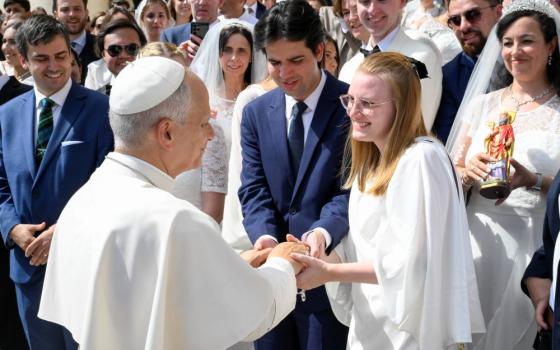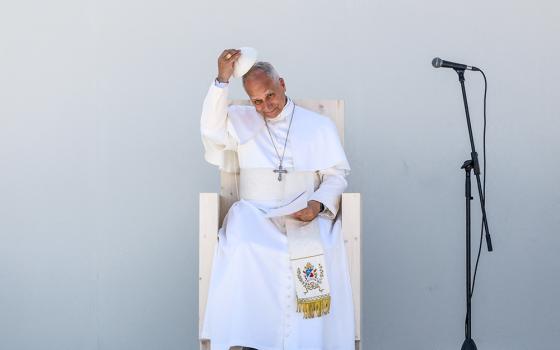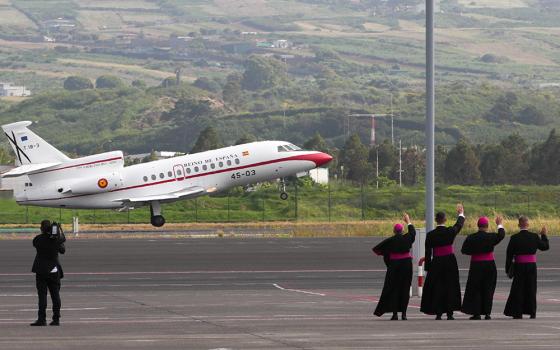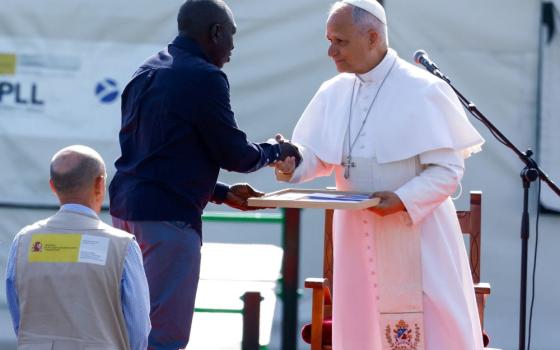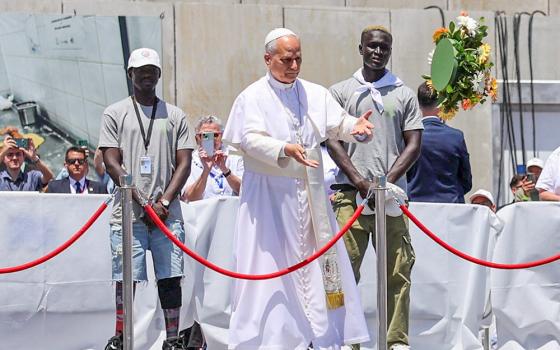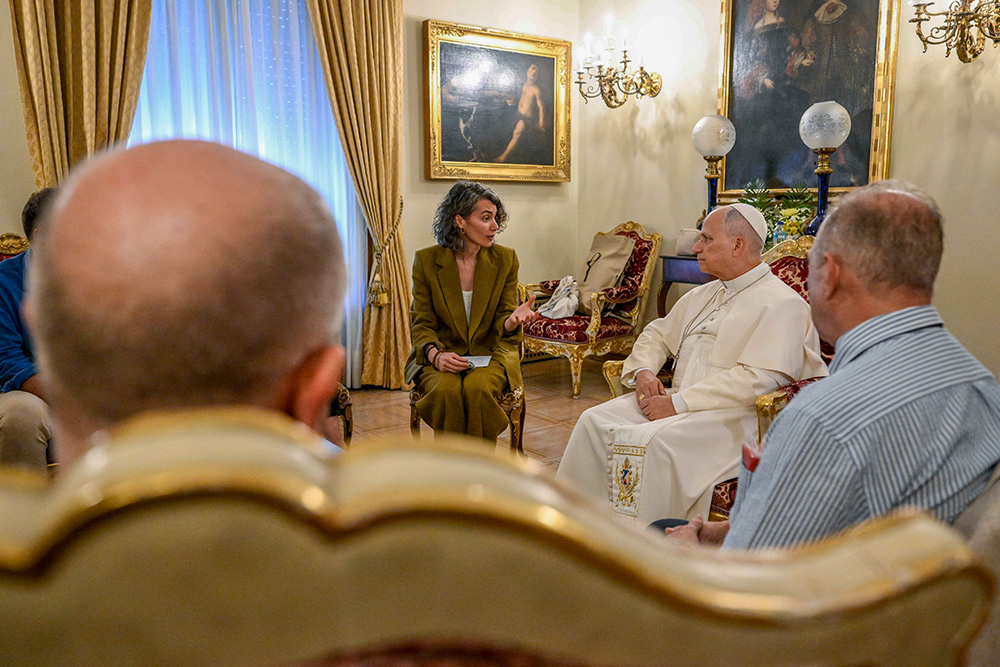
Pope Leo XIV meets with abuse victims at the Apostolic Nunciature in Madrid June 8, 2026, during his June 6-12 apostolic journey to Spain. During the conversation, which lasted nearly an hour, each of six victims, drawing on their own experiences, offered Leo suggestions on how to make the church's response to such cases more effective. (OSV News/Vatican Media/Simone Risoluti)

Join the Conversation
Send your thoughts to Letters to the Editor. Learn more
Pope Leo XIV met with victims of clergy sex abuse Monday, June 8, in Madrid, engaging with the Spanish church's abuse crisis that has loomed large over the first papal visit to Spain in 15 years.
At the residence of the Vatican ambassador where he was staying in the Spanish capital, the pope met for almost an hour with six people who were abused by "members of the clergy and the church in Spain, accompanied by Church personnel involved in supporting the victims," the Vatican said in a statement.
"Each person present shared their own painful personal experiences and offered the Pope suggestions on how to make the Church's response to such tragic cases more effective," it said.
"The Pope listened with affection and attention, assured them of his closeness — and that of the entire Church community — and pledged his commitment to ensuring that the suggestions received serve as a foundation for further efforts, so that the Church may truly be a safe and spiritually healthy place where wounds find comfort and healing."
It is the first time Leo has met with victims of clergy abuse during his international travels; at the Vatican, he has met with two groups advocating against clergy sex abuse and held a one-on-one encounter with an Irish abuse victim.
Spain's delayed reckoning of its clergy sex abuse crisis came more than two decades after The Boston Globe brought the issue to the forefront within the church in the United States, yet in January the Spanish government and bishops' conference signed a reparations deal for compensating victims of abuse. The unique agreement allows for abuse victims to submit cases to Spain's national ombudsman, who will determine reparations to be paid out by the church.
Advertisement
But the issue of clergy abuse remains far from settled in Spain.
At Leo's first official event upon landing in Madrid on Saturday, June 6, with political leaders in Spain's royal palace, King Felipe VI introduced the pope and praised the church's contributions to Spanish society, but said, "There could be no greater contrast to all of this than the pain caused by cases of abuse, which are not, and cannot be, representative of the vast ecclesial community."
And before Leo addressed Spain's parliament on Monday in a papal first, the president of the congress, Francina Armengol, said that Spain and the church must work to address the "abuses within the church and reparation and compensation for victims," particularly in light of a 2023 report published by the Spanish ombudsperson. That report estimated the number of minors abused by members of the church to be in the hundreds of thousands.
Leo, however, only touched on the topic of abuse indirectly in a meeting with Spanish bishops on Monday, saying the wounding of people by members of the church was a "scourge" that "the ecclesial community is called to respond with listening, truth, justice, reparation and an ever more determined commitment to prevention and a culture of care."
"Every wounded person must be able to find sincere listening, welcome, protection and real paths to healing," he said.
In 2021, the Spanish newspaper El País published the results of a three-year investigation into clergy sex abuse in Spain and reported that there were more than 1,200 victims. The newspaper's correspondents gave the report to civil and church authorities, including Pope Francis. The report prodded the Spanish government to launch its own investigation into the country's clergy abuse crisis.
The results of that investigation by the Spanish ombudsman, published in 2023, led some Spanish media outlets to estimate that some 440,000 minors had been abused by a member of the Catholic clergy or a lay member of the church, a figure reached by extrapolating data from 8,000 phone and online responses.
Barcelona Cardinal Juan José Omella, then president of the Spanish bishops' conference, rejected the report's numbers, saying the figures presented "are a lie and are meant to trick [people]."
Outside the nunciature this June where Leo met with abuse victims in Madrid, several victims were present hoping to get a chance to speak to members of the hierarchy and to show support for the other victims inside.
Juan Cuatrecasas told reporters that the victims who met with the pope belonged to an initiative called Repara organized by the Madrid Archdiocese to heal people who have experienced abuse.
He said the pope "decided to meet with victims who are part of a platform within the Spanish church itself," but was not interested in meeting with "victims who hold different opinions, biases, or are even outside the church."
Cuatrecasas said it seems that other victims make church officials uncomfortable and added: "We're here to see if there's any kind of rapprochement or something that gives us some hope."
José Luis Velasco, president of the Madrid chapter of Stolen Childhood (Infancia Robada), an association for victims of clergy abuse, told reporters he was concerned the pope was receiving a "completely biased view of the reality within the Catholic Church" through the meeting.
Still, he said he viewed the reparations deal between the bishops' conference and the government as something "very positive" for victims of abuse.
"The good thing is that the state is the guarantor," Velasco said. "I think it can be an example for the rest of the world."
The National Catholic Reporter's Rome Bureau is made possible in part by the generosity of Joan and Bob McGrath.