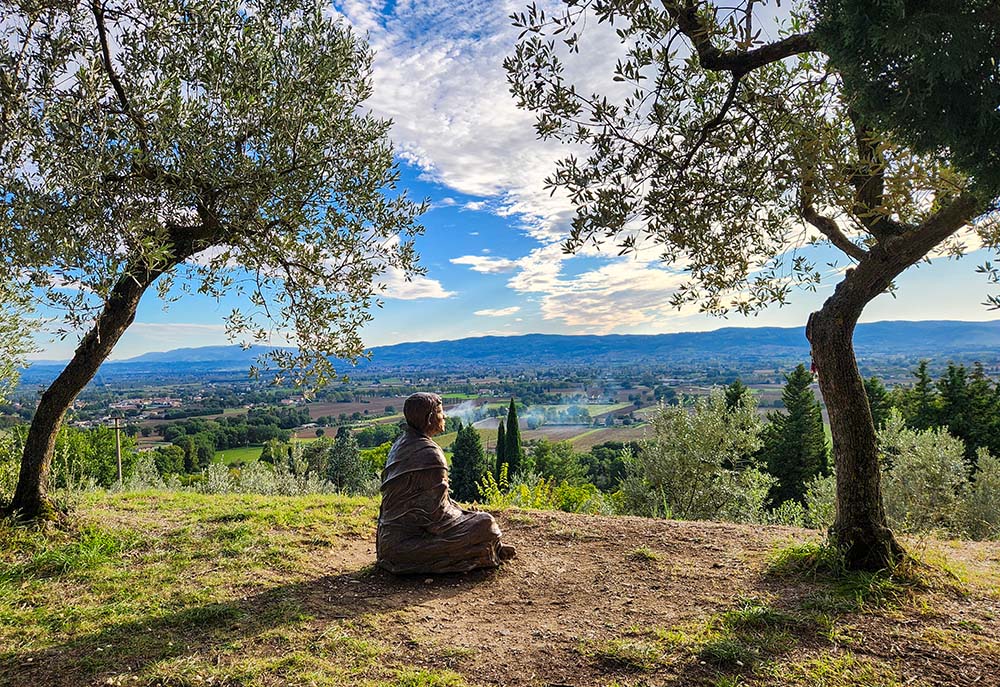
A bronze sculpture of St. Francis of Assisi looks out over the medieval Italian town outside the Church of San Damiano on Oct. 4, 2025. (NCR photo/Brian Roewe)

Join the Conversation
Send your thoughts to Letters to the Editor. Learn more
In the Umbrian hills outside Assisi, far from the throngs of tourists in the streets and pilgrims visiting the churches below, a tranquil spirit fills the forest along the Via di Francesco.
This section of a hiking trail through central Italy leads from the medieval town renowned worldwide for the saint who bears its name, connecting it to the forests and slopes where he communed with God and nature more than eight centuries ago.
In early autumn, leaves from ancient holm oak trees carpet the steep, stony path while overhead a canopy of bowing branches forms stretches of natural tunnels. Its endpoint is Eremo delle Carceri, a centuries-old hermitage that marks the place where St. Francis of Assisi and his followers prayed in nature and slept in caves.
The unimposing rock where Francis lay is now enshrined inside Eremo. The compact space, set between a series of narrow stone corridors, emanates with intense spiritual energy.
It is here where Francis of Assisi came into touch with the created world, where he learned to see the trees, the birds, the sun, the wind and all that God created as his kin, later inspiring one of his most famous compositions, "The Canticle of the Creatures."
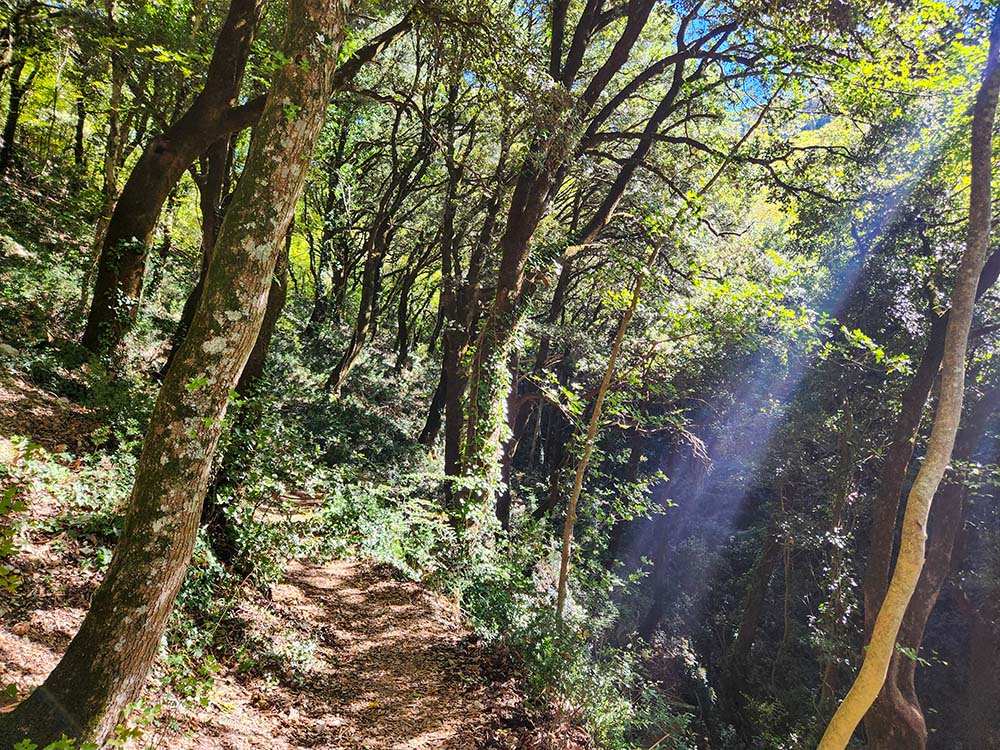
Sunlight breaks through the forest canopy on Mount Subasio outside Assisi, Italy, where St. Francis regularly spent time in prayer in the wilderness more than 800 years ago. (NCR photo/Brian Roewe)
It's a place that goes unseen by many Assisi pilgrims, its story often not fully told.
For the past three years, a new initiative has sought to change that.
Working with the Franciscan orders that steward the shrines marking the major events of St. Francis' life, Terra Laudato Si' aims to reveal how St. Francis became the patron saint of ecology in the lands where he lived. More than just a walk through history, organizers see the project as a means to connect the saint's embrace of creation with modern-day calls for ecological conversion as made in Pope Francis' landmark encyclical "Laudato Si', on Care for Our Common Home."
"There are 2 million pilgrims that come every year to Assisi. And up till now, nobody was telling the story of Laudato Si' in the birthplace of Laudato Si'," said Tomás Insua, past board chair of the center behind Terra Laudato Si' and the co-founder of the Laudato Si' Movement.
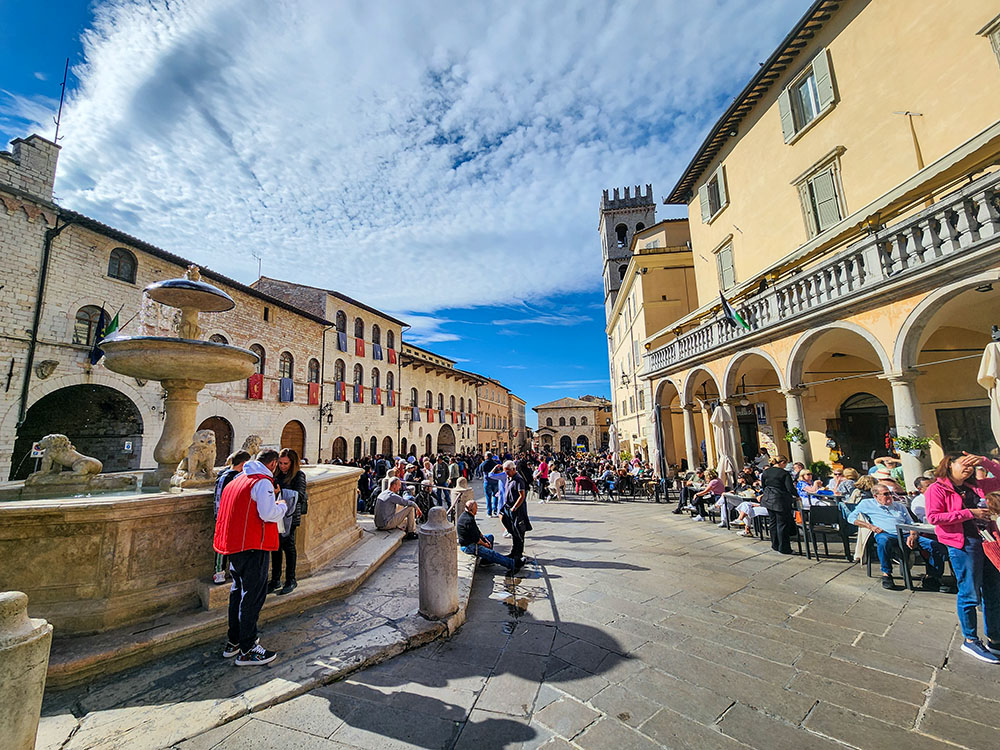
Tourists congregate in the streets of Assisi, Italy, on Oct. 4, 2025, the feast day of St. Francis. (NCR photo/Brian Roewe)
A new way of experiencing St. Francis
On Oct. 4, 2025, the feast day of St. Francis, the cobblestone streets of Assisi clacked from the feet of thousands, the faithful in lockstep with day-trippers. Long lines formed outside the Basilica of St. Francis, where the 13th-century saint's body lies, as well as at the Basilica of St. Clare — both UNESCO world heritage sites. Small shops were crammed with souvenir-seekers. Tables outside cafes were filled to capacity.
The town was abuzz.
While 2026 marks 800 years since St. Francis' death, this day a year earlier celebrated 800 years after he composed "The Canticle of the Creatures," the hymn-poem of praise to God for the sun, water, fire and more that is considered the first poem written in Italian. Its refrain — "praised be my Lord," or in Italian, laudato si' — gave the name to Pope Francis' 2015 encyclical on ecology. The Argentine pope also selected his name from the Italian saint. But for many visitors these connections aren't wholly clear.
It's that story Terra Laudato Si' aims to tell.
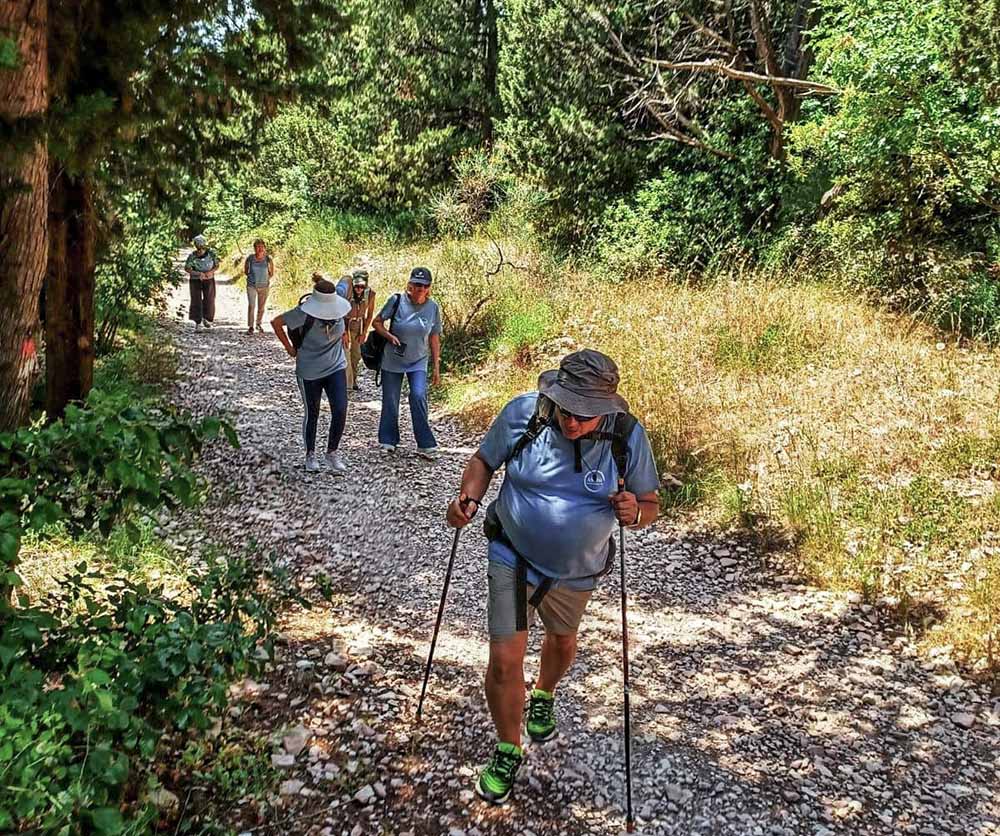
Pilgrims with Terra Laudato Si' hike in the forests outside Assisi, Italy. (Courtesy of Terra Laudato Si')
Since 2024, Terra Laudato Si' has offered pilgrims to Assisi a new way of experiencing the life of St. Francis, through the way its ecosystem radically shaped his deep spiritual connection with God and the created world.
"We are learning more and more that what people desire is no longer simply a vacation or the need to learn something new," said Antonio Caschetto, director of the Laudato Si' Center, which oversees Terra Laudato Si'.
In allowing the places of Assisi "to speak," as Caschetto puts it, Terra Laudato Si' hopes the same spots that inspired St. Francis can awaken visitors more to the present-day environmental crises facing the planet — like climate change, biodiversity loss and pollution — and ultimately support meaningful responses.
Organizers view Terra Laudato Si' as the spiritual counterpart to the action-oriented Borgo Laudato Si' ecology project at Castel Gandolfo outside Rome, with the former focused on cultivating the ecological conversion Popes Francis and Leo XIV have said is an essential foundation to bring about systemic change to address socio-environmental challenges.
Advertisement
Laudato Si' pilgrimages, ranging from a few hours to several days, spotlight "Laudato Si' sites" in and around the ancient town. Among them are Eremo, San Damiano (where St. Francis composed the first draft of the canticle), Piandarca (the field where he preached to the birds), the Shrine of the Renunciation, and the forest where St. Francis walked. Some of the sites are featured in "The Letter," a 2022 documentary about the encyclical.
Thematic itineraries, modeled off the parts of the canticle, take pilgrims along three distinct routes into the life of St. Francis. A volunteer program offers a chance to extend the experience weeks or even months while working and living part time at Assisi's Franciscan shrines.
"What Assisi offers, unlike so many other places in the world, is an oasis of true peace — peace of the heart, peace with all of creation," Caschetto said.
'Places of profound encounter with God'
Historians and biographers of St. Francis estimate he spent up to half his ministry in prayer and contemplation in the wilderness outside Assisi's city walls.
"Through nature, Francis began to perceive that God is holding all things together," said Br. Michael Perry, the recently elected leader of the U.S. Franciscans.
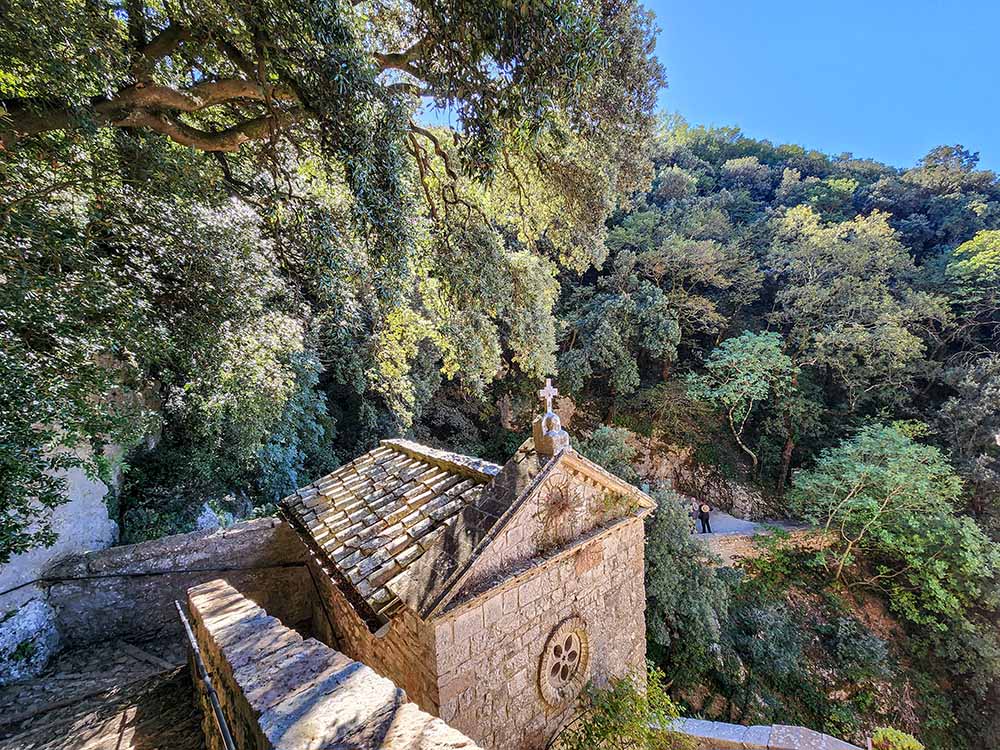
The Chapel of Santa Maria Maddalena at Eremo delle Carceri outside Assisi, Italy (NCR photo/Brian Roewe)
Since 2023, Perry served as founding director of the Laudato Si' Center for Integral Ecology at Siena University in upstate New York, following a nine-year term as head of the global Franciscan Order of Friars Minor as the 120th successor of the saint.
In that role, Perry accompanied Pope Francis to Assisi during the pope's 2013 visit, including a tour of Eremo.
"He talked about just the beauty of looking out into the valley," Perry said.
Nearly eight centuries earlier, St. Francis likely looked upon similar vistas as he went into the same woods to fast and pray with his band of brothers. Most days were spent in silence. Together, they read the Scriptures with a special focus on the Psalms.
"These were places of profound encounter with God, where he had a deep experience of the impossible by extended periods of silence and fasting that allowed him to grapple with who God is and who God was for him," said Br. Keith Warner, a leading scholar on Franciscan eco-spirituality and president of the Franciscan University of Theology in San Diego.
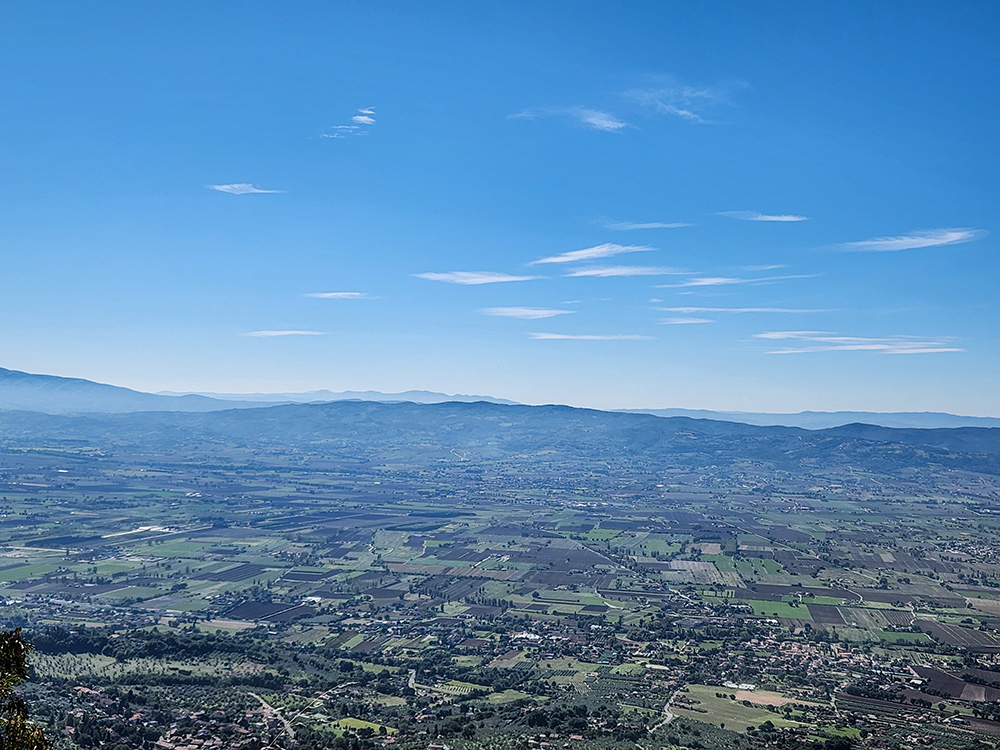
View of the town of Assisi, Italy, from Mount Subasio, where St. Francis often headed to fast and pray in the wilderness (NCR photo/Brian Roewe)
Franciscans point to several key moments in forming St. Francis' relationship with the created world.
A major turning point came in 1202 in Collestrada during the war between Perugia and Assisi. Witnessing the barbarity of the battle attuned the 20-year-old Francis, who was captured there, to human suffering and division, Perry said. That slowly led Francis to new ways of seeing interconnections among life, love and death.
"He began to sense what [his official biographer] St. Bonaventure calls nature being a mirror, if you will, or the way to be able to perceive God is through nature. The qualities of God, the beauty of God, the embrace of God, the expansiveness of God," Perry said.
Increasingly, Francis formed a close relationship with all creatures as he grew more aware of his own limitations and interdependence with the rest of creation.
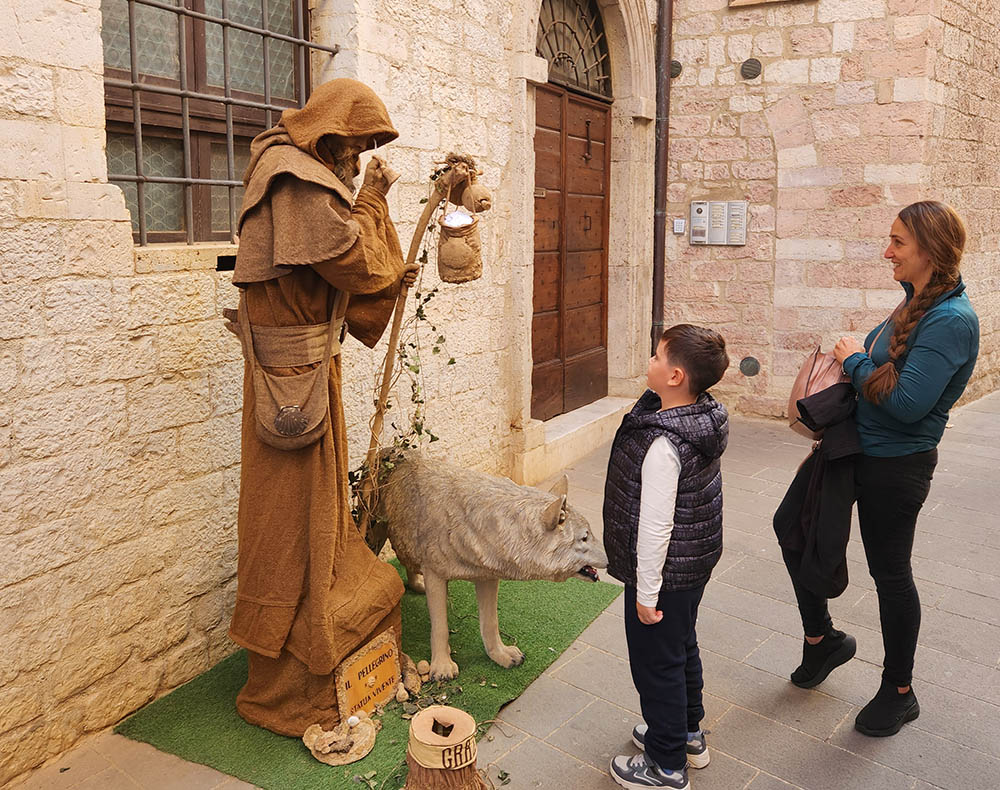
A man depicts St. Francis in the streets of Assisi, Italy. (NCR photo/Brian Roewe)
"He slowly began to perceive the natural world as being a subject and not an object. And this is a significant development," Perry said.
"When you become a subject, when you have a name, you have a personality, you have an intrinsic dignity. This is something which I think progressively began to grow in Francis' life."
Another pivotal moment came when St. Francis preached to the birds. Commonly depicted in garden statues and birdbaths, Warner said that portrayal misses the radical awakening it represented for Francis, who scolded himself for not preaching to them earlier.
"In some ways, we could say that he had an aha moment or a shift in consciousness. ... He recognized that not only was he called to preach to humans but also to preach and to give witness to other forms of life," Warner said.
Recognizing his communion with other creatures expanded Francis' moral imagination, Warner wrote in a chapter for the 2011 book Green Discipleship, and led him "to further integrate his love of creation with his religious identity and responsibilities."
Close to death and virtually blind, Francis wrote the first stage of "The Canticle of the Creatures" in a small hut amid the garden of the Church of San Damiano.
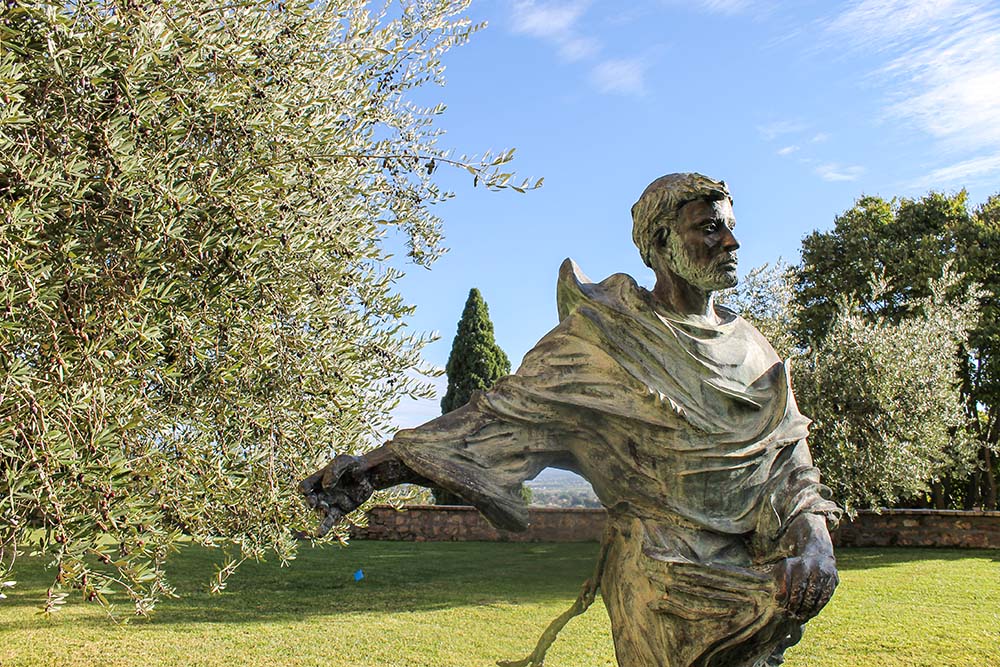
A statue of St. Francis of Assisi stands in the garden outside the Church of San Damiano in Assisi, Italy. (NCR photo/Brian Roewe)
Through the canticle, seen as the summation of his spirituality, Francis offered praise to God through all creation, which he referred to as his brothers and sisters, including "Sister Earth, our Mother." He later added lines praising "Sister Death" as he approached his own. It is believed in his final hours he again invited all creatures to praise God.
For Warner, Terra Laudato Si' provides a counter to the tendency of pilgrimages to devolve into religious tourism, offering a new entry to a deeper transformational experience.
"We can't be Francis, but we can capture a little bit more of the flavor and a little bit more of the spirit of entering into the canticle, into the spirituality of the canticle that allows us to live out Laudato Si' today. And these off-site, off-the-beaten-track locations definitely can be really helpful for that."
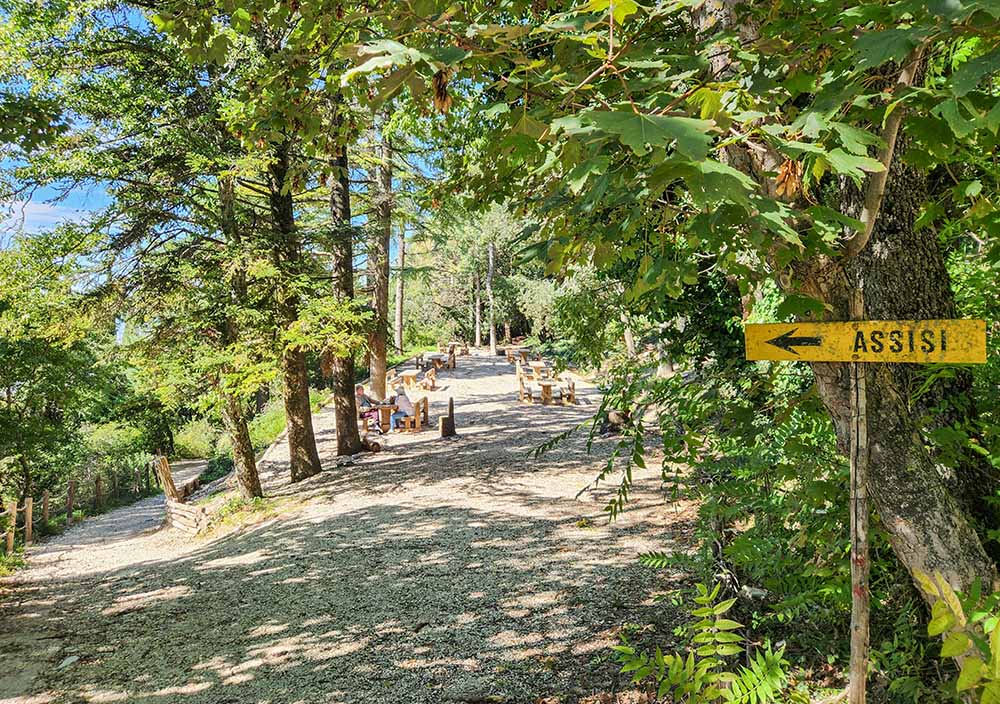
A sign points the way to Assisi along the hiking trail on Mount Subasio in Italy. (NCR photo/Brian Roewe)
Eco conversion 'doesn't happen over Zoom'
How Terra Laudato Si' came to be traces to the digital age.
In January 2015, the Global Catholic Climate Movement formed — over Skype — in anticipation of Pope Francis' highly awaited encyclical. The lay-led organization aimed to promote its teachings and mobilize Catholic responses to climate change, including support for the Paris Agreement that would be adopted that December.
As it grew to 900-plus institutions worldwide, much of the work of the movement (renamed Laudato Si' Movement in 2021) unfolded over videoconferences, webinars and other online communication.
That digital environment left Insua, its founding executive director, longing for more connections with the natural world himself. Ultimately, it led him to Assisi.
He had dreamed for some time of creating a Laudato Si' experience in the Italian town, believing addressing climate change requires confronting the spiritual crisis at play in humanity's environmental destruction as much as it involves international treaties and technological fixes.
"We know that an ecological conversion, which is the core of Laudato Si', doesn't happen over Zoom," Insua told a small group last October at a conference outside Rome marking the 10-year anniversary of Pope Francis' encyclical.
"To really enable an ecological conversion, it needs to happen in touch with creation, face to face with others," Insua said. "And what better place than Assisi for that?"
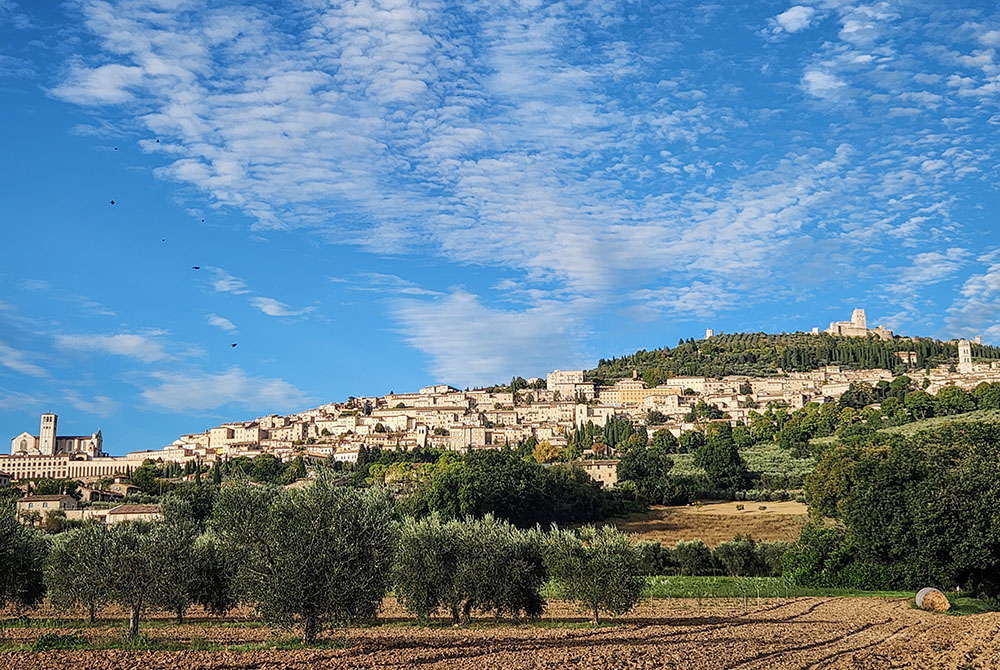
Birds fly over Assisi, Italy, on the feast of St. Francis on Oct. 4, 2025. (NCR photo/Brian Roewe)
In December 2023, Insua announced he would leave leadership and focus on establishing a Laudato Si' center in Assisi. The center would not just educate on Pope Francis' encyclical but connect it to its roots in Franciscan creation theology.
Insua worked on the project with Caschetto, who for years led Laudato Si' Movement's Italian programs. They met with the Franciscan orders overseeing the Assisi sanctuaries as they formed a new pilgrimage experience around creation's place in St. Francis' life and ministry.
"There's a common expression that is called città-santuario — the whole city is a sanctuary," Insua said. "Which it is, but we are trying to go beyond that notion, that it's the ecosystem sanctuary. It's not only Assisi but the forests and mountains."
On Earth Day 2024, Terra Laudato Si' officially launched, with speeches by a climate scientist and Assisi Archbishop Domenico Sorrentino. Its partners include the Diocese of Assisi-Nocera Umbra-Gualdo Tadino, three Franciscan orders (Capuchins, Conventuals, Minors), the municipality of Assisi, and several local organizations.
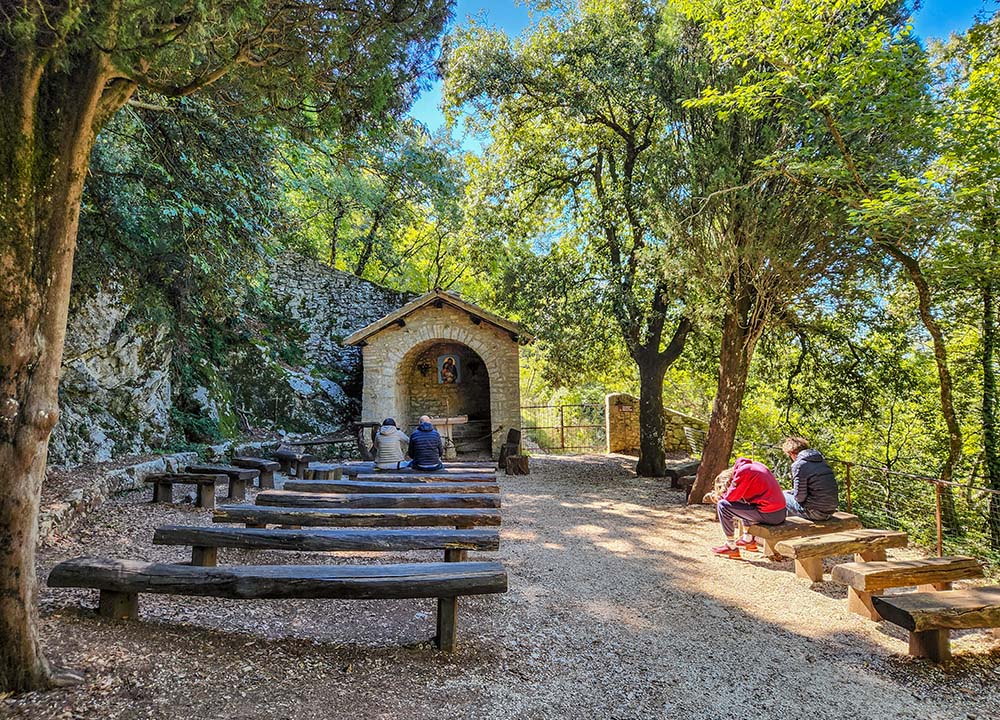
People pray at an outdoor altar at Eremo delle Carceri on Monte Subasio in Italy. (NCR photo/Brian Roewe)
Sanctuary on a hill
The journey to Eremo delle Carceri offers multiple routes.
From Assisi, it's a 3-mile car ride east up steep winding roads along Mount Subasio. On foot, it's a two-hour spiritual hike amid holm oaks nearly a half-mile above sea level.
Whichever path you take, it's a climb to this sanctuary on a hill.
Stillness awaits at the stone gate of the Carceri, a Latin term for a secluded and solitary place. When St. Francis first came here around 1205, he found a simple oratory surrounded by forest and caves. In 1400, St. Bernardine of Siena constructed a small friary with a church and a dormitory. More buildings were added over the centuries.
Today, it is overseen by the Friars Minor of the Seraphic Province of St. Francis of Assisi, who live and work at the hermitage. Visitors can attend Masses and walk the same grounds a saint did eight centuries earlier.
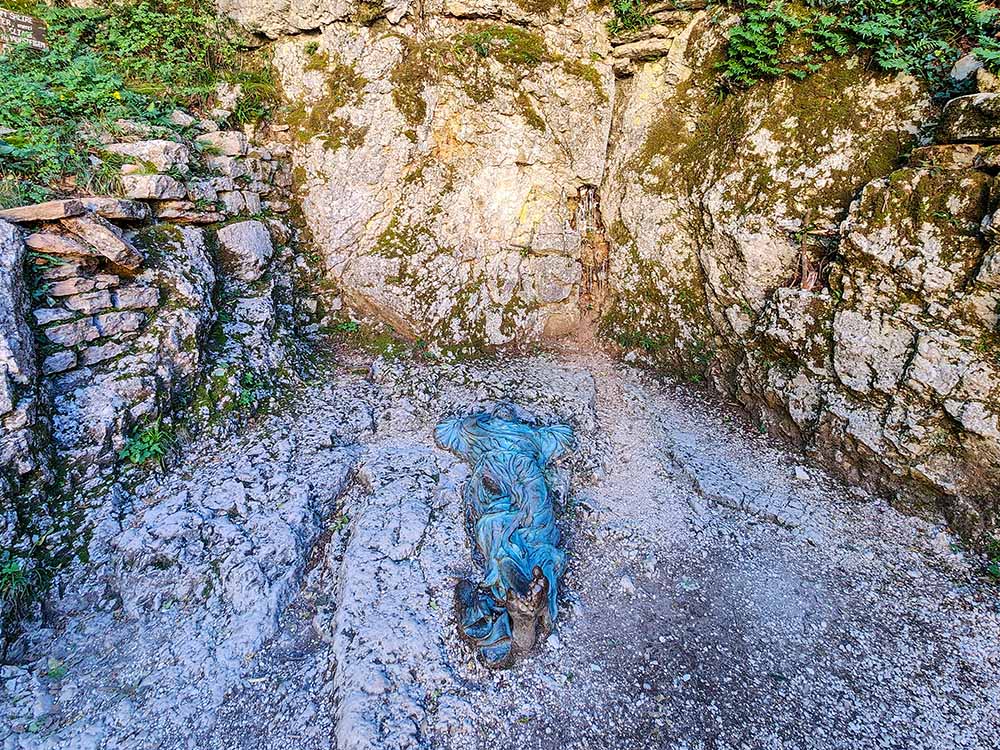
A statue depicts St. Francis of Assisi lying on the ground gazing toward the heavens at Eremo delle Carceri on Mount Subasio, Italy. (NCR photo/Brian Roewe)
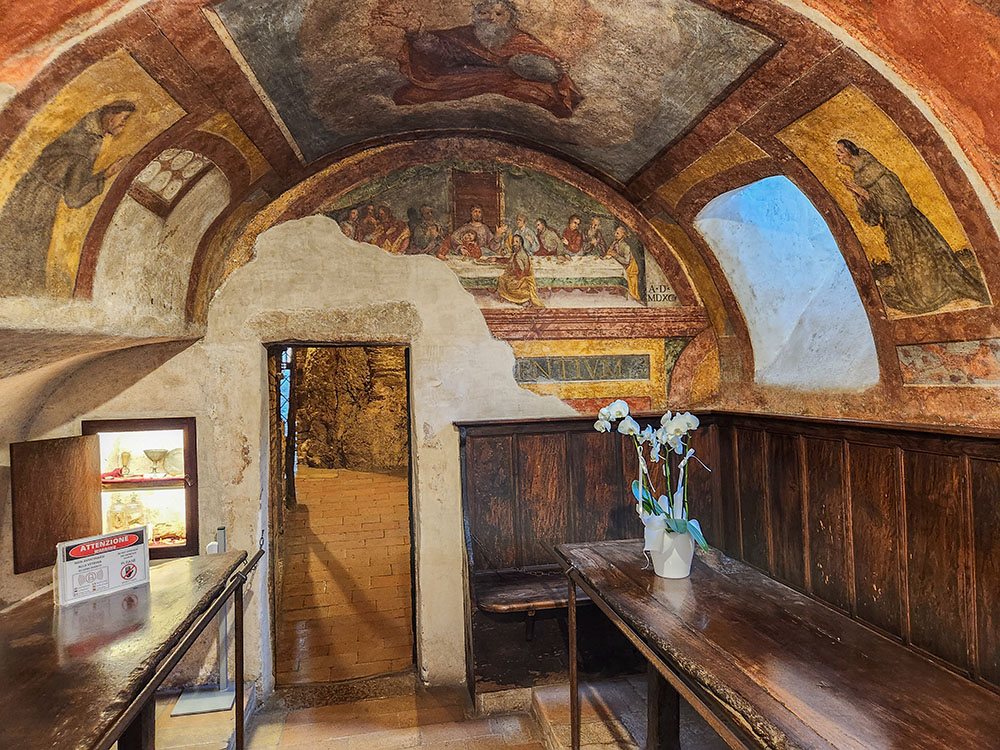
Frescoes seen on the walls inside Eremo delle Carceri (NCR photo/Brian Roewe)
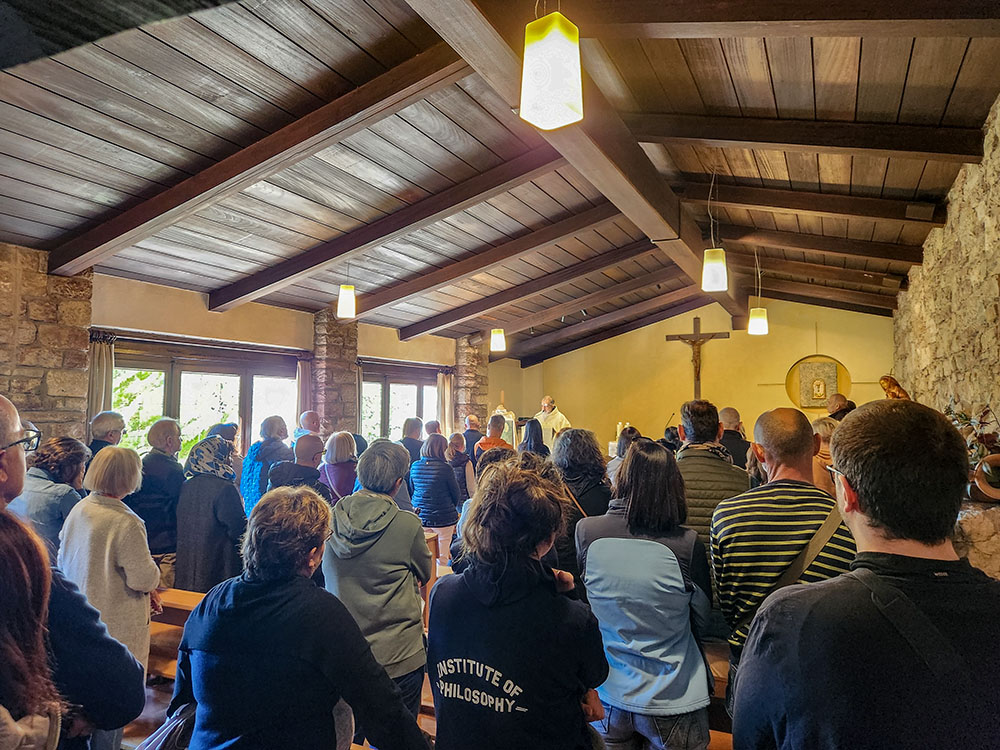
People attend midday Mass at Eremo delle Carceri on the feast of St. Francis, on Oct. 4, 2025. (NCR photo/Brian Roewe)
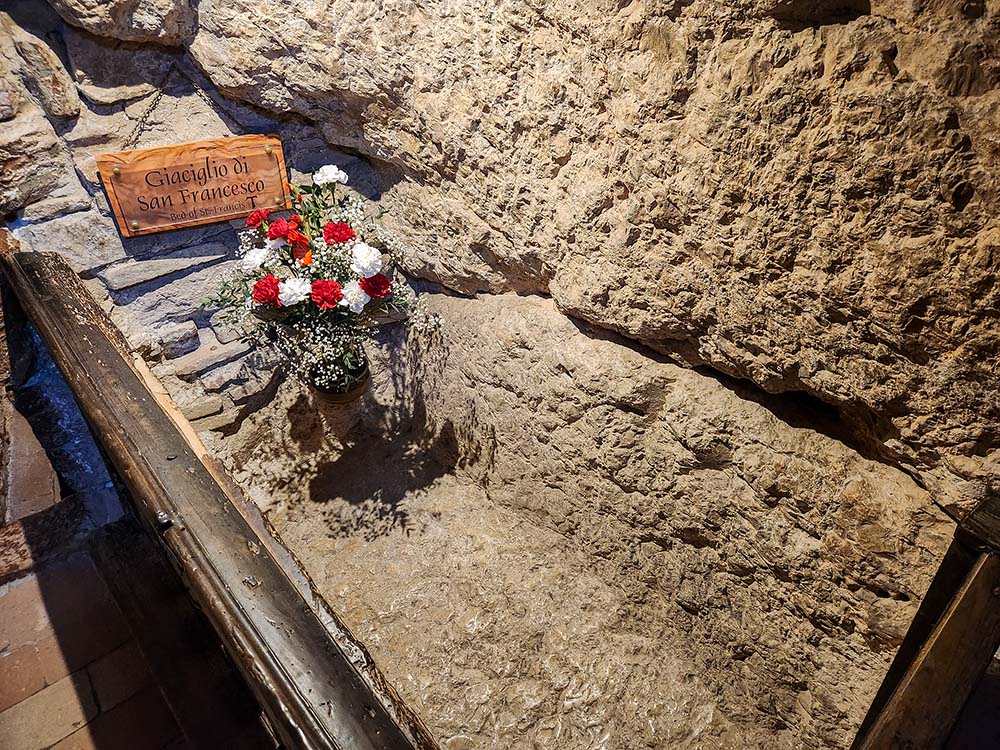
The grotto of St. Francis, where he slept more than eight centuries ago, is enshrined inside Eremo delle Carceri. (NCR photo/Brian Roewe)
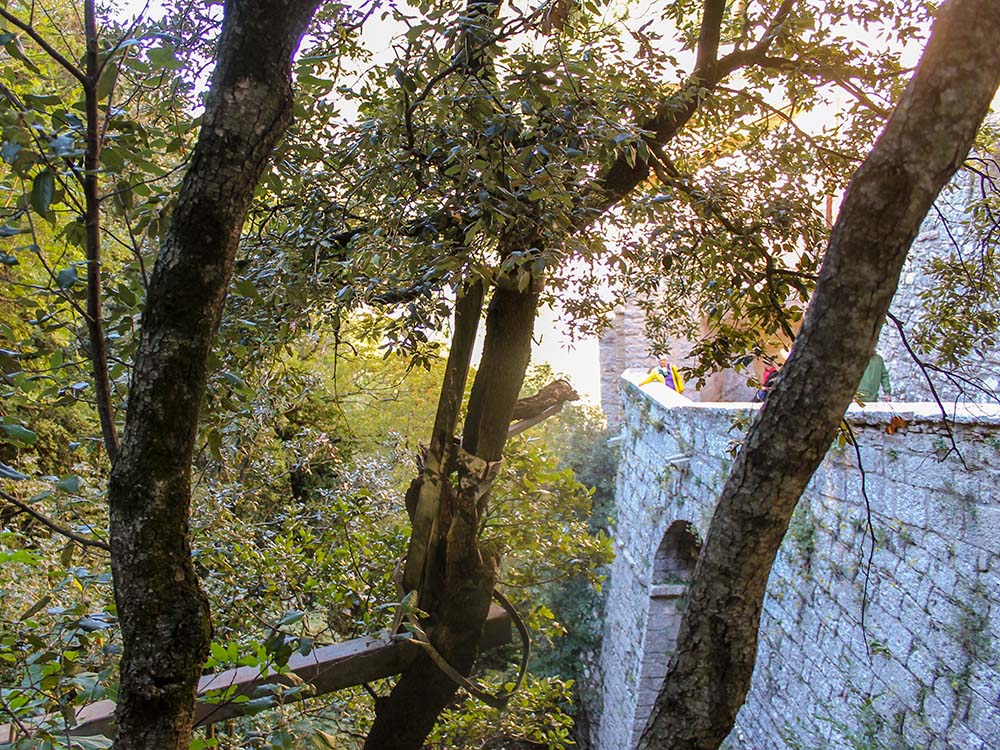
A tree (center) dating back to the time of St. Francis of Assisi more than 800 years ago stands outside Eremo delle Carceri. (NCR photo/Brian Roewe)
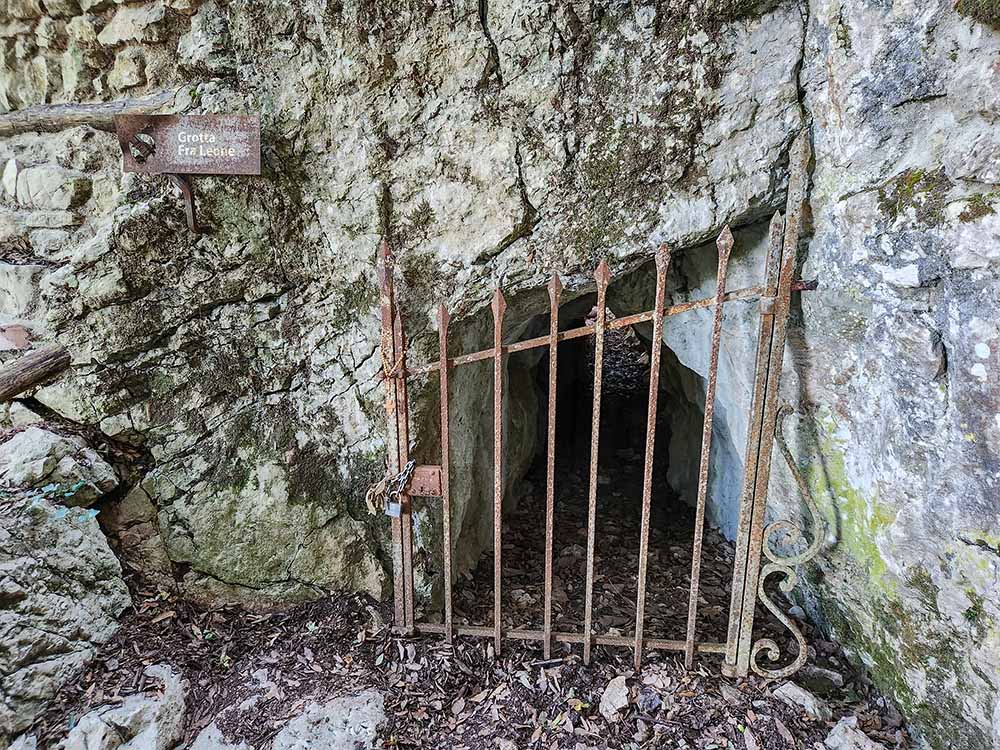
The cave where Brother Leo slept (NCR photo/Brian Roewe)
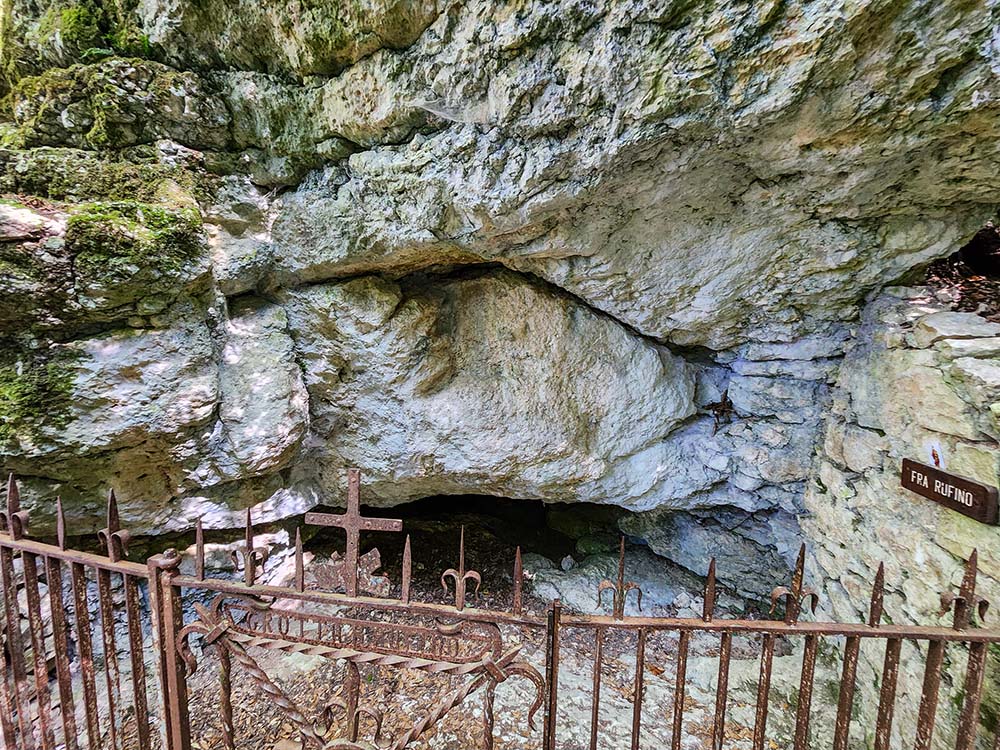
The cave where Brother Rufino slept (NCR photo/Brian Roewe)
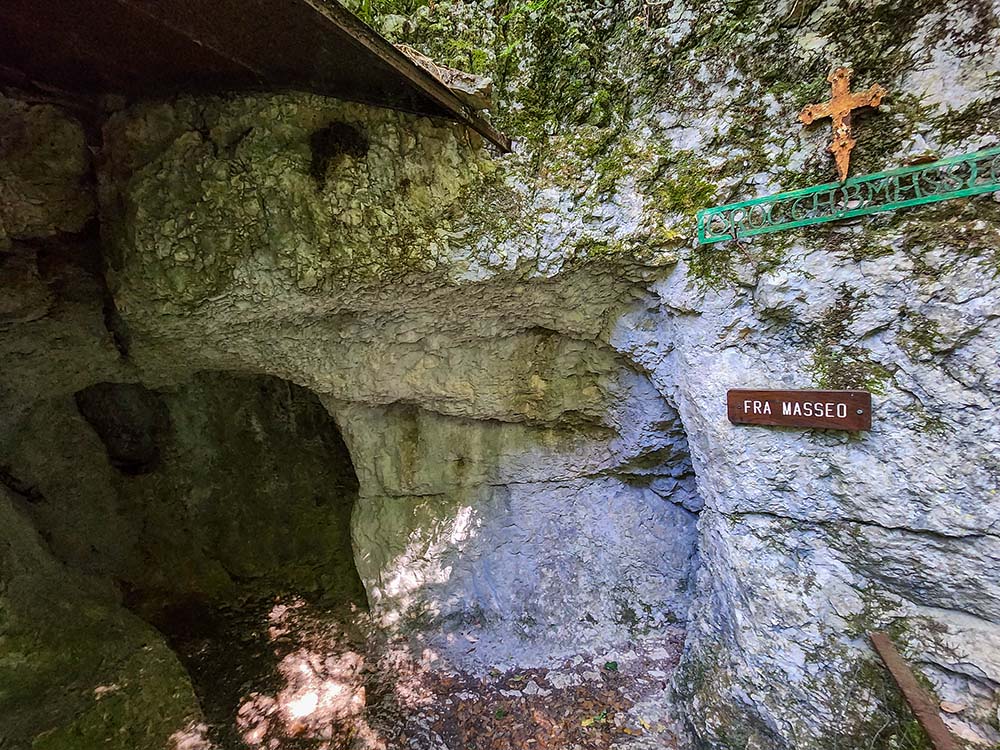
The cave where Brother Masseo slept (NCR photo/Brian Roewe)
A statue depicts St. Francis as he may have lived here, lying on the ground gazing toward the heavens above. An ancient tree marked with a sign — "albero del tempo di San Francesco" — is believed to date back to Francis' time.
Crosses, natural altars and moss-covered stone walls line a walking path to an outdoor chapel. Another trail passes twisting trees to the caves where Brothers Leo, Rufino, Masseo and others slept. The grotto of St. Francis rests inside the sacristy, which was built over the site.
Jacqui Rémond makes a point to visit the hermitage each time she travels to Assisi, most recently in October following the Laudato Si' anniversary conference.
"It always fills up my soul cup," said the Australian integral ecology researcher who in August was named a consultor with the Vatican's Dicastery for Promoting Integral Human Development.
Fran Ludwig, a leader with the Boston chapter of the Laudato Si' Movement, joined a prayer service arranged by Terra Laudato Si' last October on her first visit to Eremo. At one point, she and others contemplated objects found along the trail. Ludwig, a retired science teacher, selected an acorn.
"I do this with kids all the time, but to do it with myself, and especially in this place, where I bet St. Francis probably picked up the same kind of acorn and just wondered at it," she said.
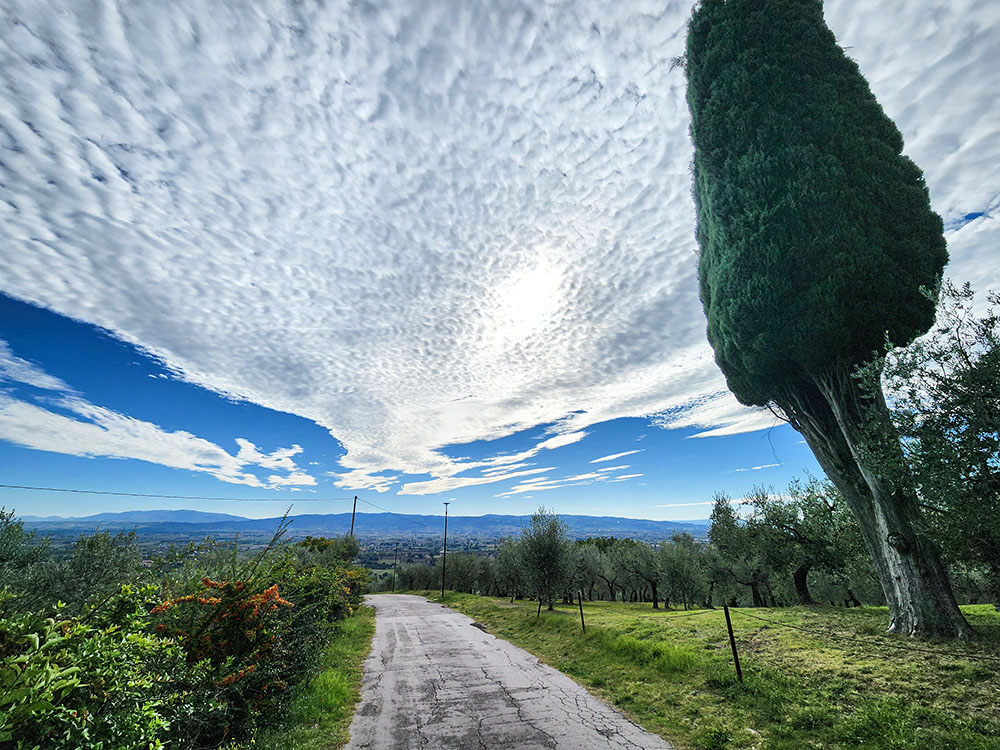
The view outside the Church of San Damiano near Assisi, Italy, on Oct. 4, 2025, the feast day of St. Francis of Assisi. (NCR photo/Brian Roewe)
Back in Assisi, the Church of San Damiano is a 30-minute walk from city center.
Rows and rows of olive trees greet visitors as they approach the main entrance. A sign along the way presents a verse from "The Canticle of the Creatures": "Laudato si' mi Signore, cum tucte Je tue Creature" (Praised be You, my Lord, with all Your creatures).
It was here at San Damiano where St. Francis experienced his conversion, when it is said a voice from a Romanesque crucifix in the dilapidated chapel spoke to him: "Francis, rebuild my church." He did just that by first restoring San Damiano, which later housed St. Clare and her "Order of Poor Ladies."
In the winter of 1225, Francis, frail with the stigmata and near his life's end, returned to San Damiano, where he stayed under the care of Clare's order. In the garden outside the church, he began writing "The Canticle of the Creatures."
Long closed to visitors, the garden has opened up for the first time through prayer services that Terra Laudato Si' conducts on its immaculate grounds.
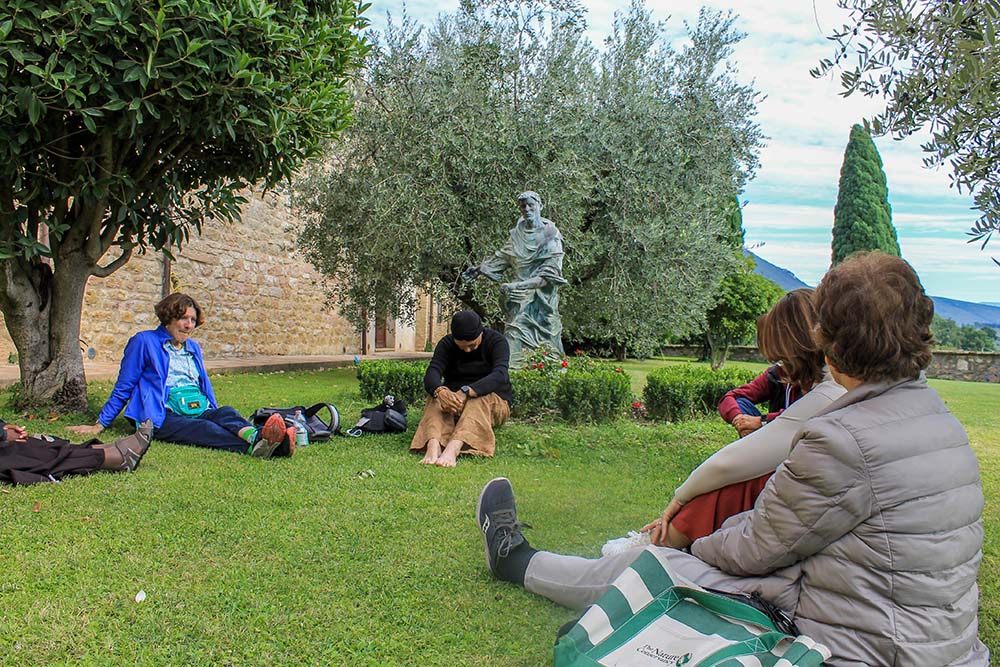
Pilgrims to Assisi, Italy, take part in a prayer service in the garden at the Church of San Damiano on Oct. 4, 2025, the feast of St. Francis. (NCR photo/Brian Roewe)
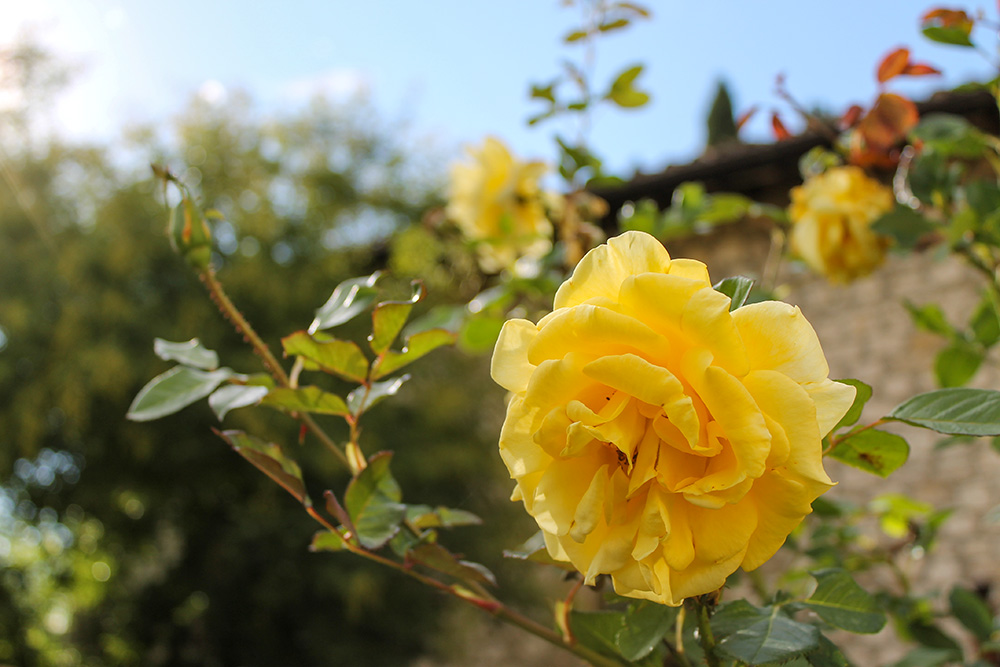
Flowers bloom in the garden of the Church of San Damiano. (NCR photo/Brian Roewe)
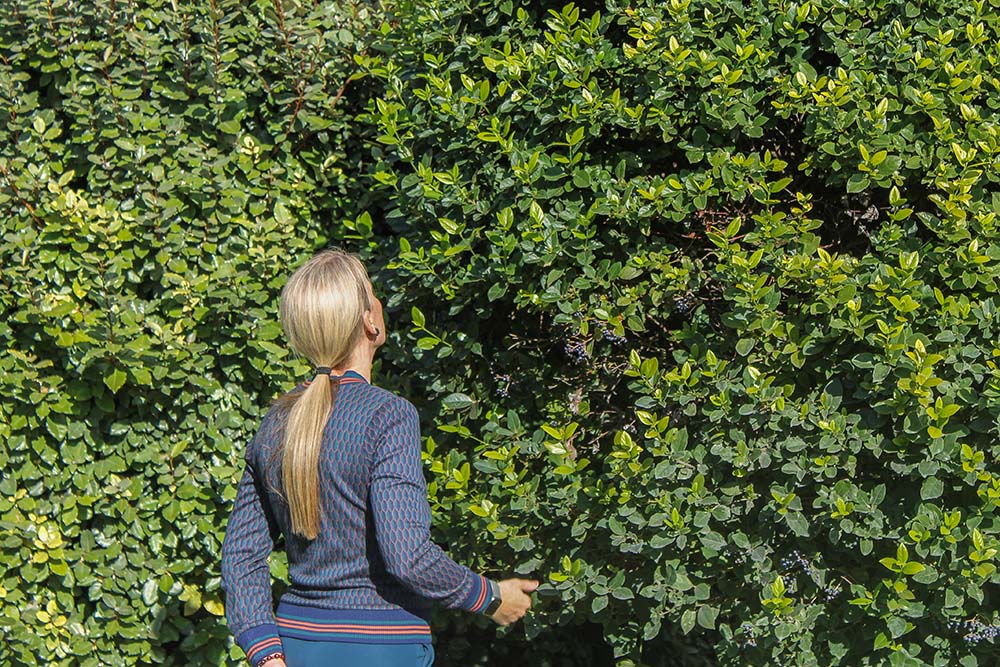
Jacqui Rémond examines the leaves of a bush during a prayer service in the garden at the Church of San Damiano on Oct. 4, 2025, the feast of St. Francis. (NCR photo/Brian Roewe)
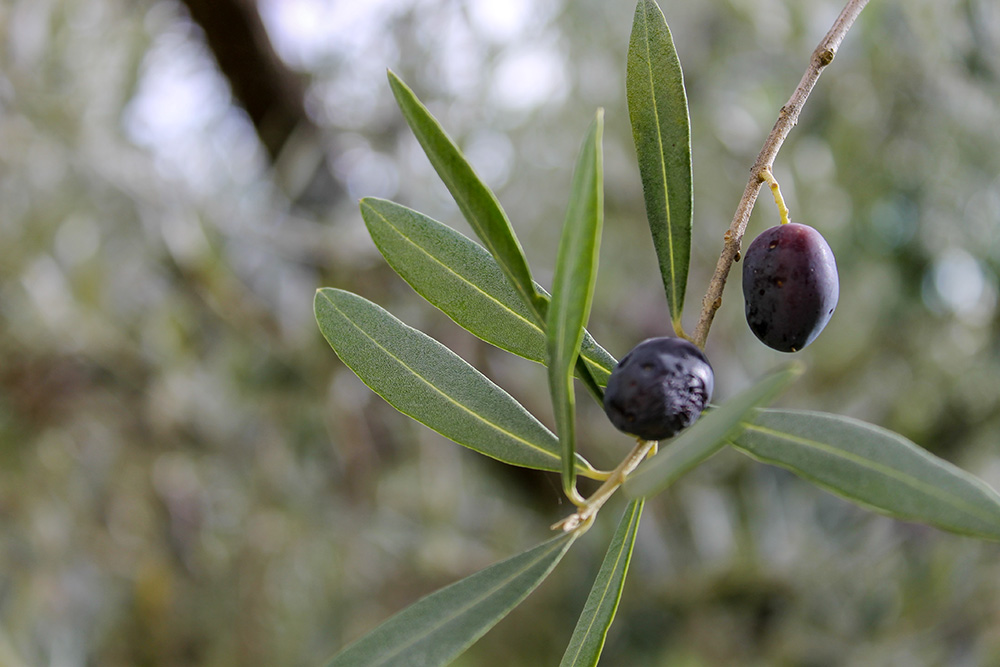
Olives ripen on a tree in the garden at the Church of San Damiano. (NCR photo/Brian Roewe)
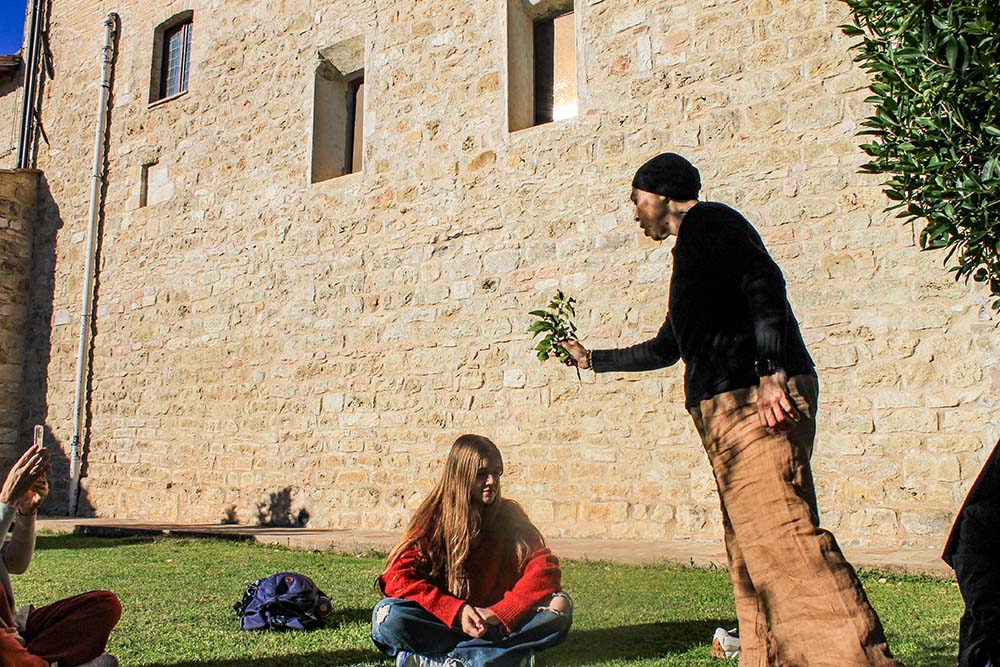
Theresa Ardler takes part in a prayer service in the garden at the Church of San Damiano on Oct. 4, 2025, the feast of St. Francis. (NCR photo/Brian Roewe)
On his feast day in 2025, marking 800 years since that moment, a small group of pilgrims gathered in the garden, the afternoon sun shining brightly through long sheets of clouds. They read Scripture, recited the canticle and wandered the pristine yard, reflecting on God's creation in tree leaves and budding olives and fruit berries.
"It was a moment of connectedness in life and a great joy to share prayer in a very beautiful place," Rémond said.
Ludwig hoped she might encounter a part of St. Francis' spirit still present in its flora.
"I don't know what the garden looked like when [St. Francis] was there, but I'm sure that he was inspired by the same place that we were," she said.
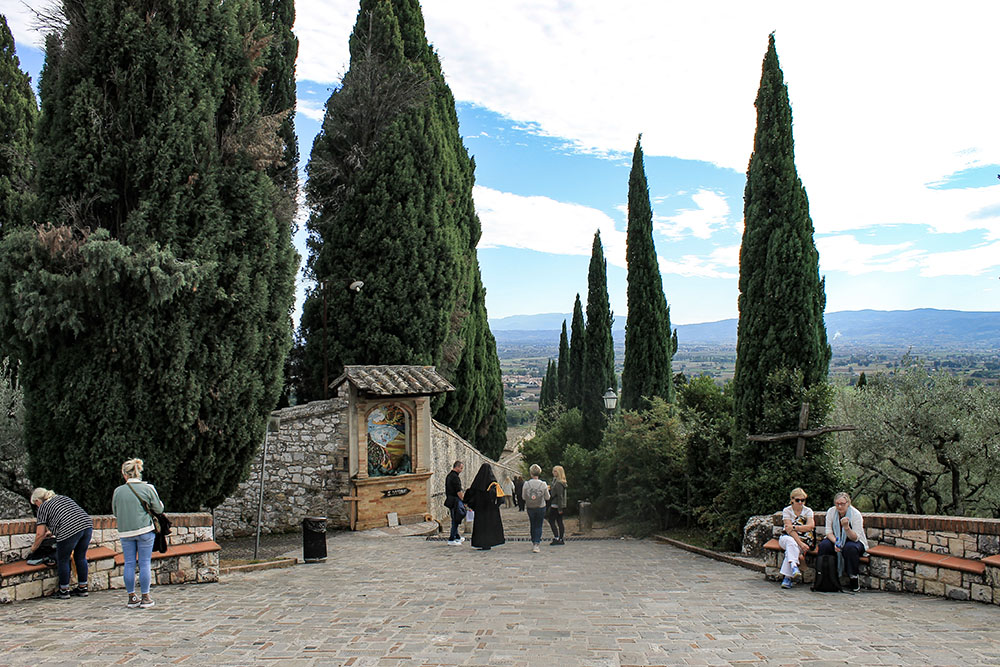
People congregate outside the Church of San Damiano near Assisi, Italy. (NCR photo/Brian Roewe)
The human side of pilgrimage
Next to the garden at San Damiano is a house where volunteers with Terra Laudato Si' live during their time in Assisi.
The volunteer program, begun in April 2025, is at the heart of the initiative, with Caschetto the only full-time staffer.
More than 400 people have signed up so far, representing a wide range of nationalities and ages. Volunteers stay a minimum of one week, working part-time at Assisi's shrines and guiding pilgrimages.
The past 12 months, marking dual octocentennials for the canticle and St. Francis' death, have been especially active. Roughly 60 Terra Laudato Si' volunteers supported friars at the basilica in late winter when St. Francis' body was put on public display for the first time.
Maria Virginia Solis Wahnish and her husband were among those assisting some of the approximately 400,000 pilgrims who passed through the basilica during the four-week period.
"For me it was really special," said the 34-year-old Argentine, now living in Warsaw, Poland. "It was not my first time in Assisi, but it was the first time that I was actually serving in Assisi to all those pilgrims that were coming to the city."
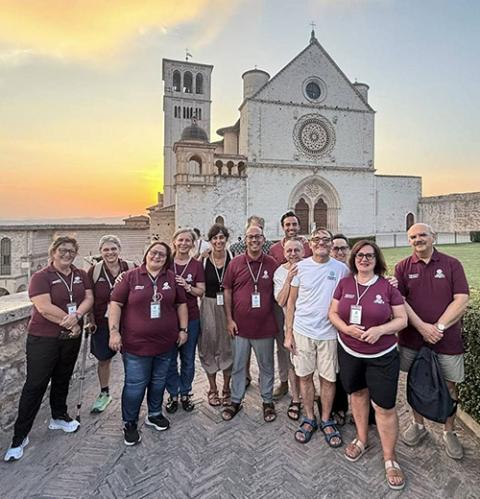
Volunteers with Terra Laudato Si' pose outside the Basilica of St. Francis in August 2026 following a gathering of young Franciscans in Assisi, Italy. (Courtesy of Terra Laudato Si')
Other Terra Laudato Si' events marked the 800-year celebrations. A special three-day pilgrimage spotlighted Francis' relationship to Sister Death. During a Franciscan youth gathering in August, attended by Leo, Terra Laudato Si' held a two-day workshop on St. Francis and creation for hundreds of young people.
Looking ahead, Terra Laudato Si' is developing an audio guide and mapped trails to lead visitors along various Laudato Si' paths. Still, it intends to maintain "the human side" of its pilgrimage encounters.
Organizers hope as more people experience Assisi through the lens of St. Francis' love for nature that the seeds of ecological conversion will be sown, and the ties between a saint 800 years ago and a pope summoning the world today to act on environmental crises will spark a calling in their lives.
To Perry, the former leader of the global Franciscan order, Terra Laudato Si' presents a marriage of Franciscan spirituality with the ecological spaces that fostered it, for Catholics and other pilgrims to confront the dual cries of the Earth and the cries of the poor.
Of St. Francis of Assisi, Perry asked, "What can he reveal to us through his life about what is happening today? And how can that open us up to a new understanding of our relationship, a way of being in this world, a way of living" on this planet and caring for it?
"It's another way of experiencing all that you can of St. Francis."