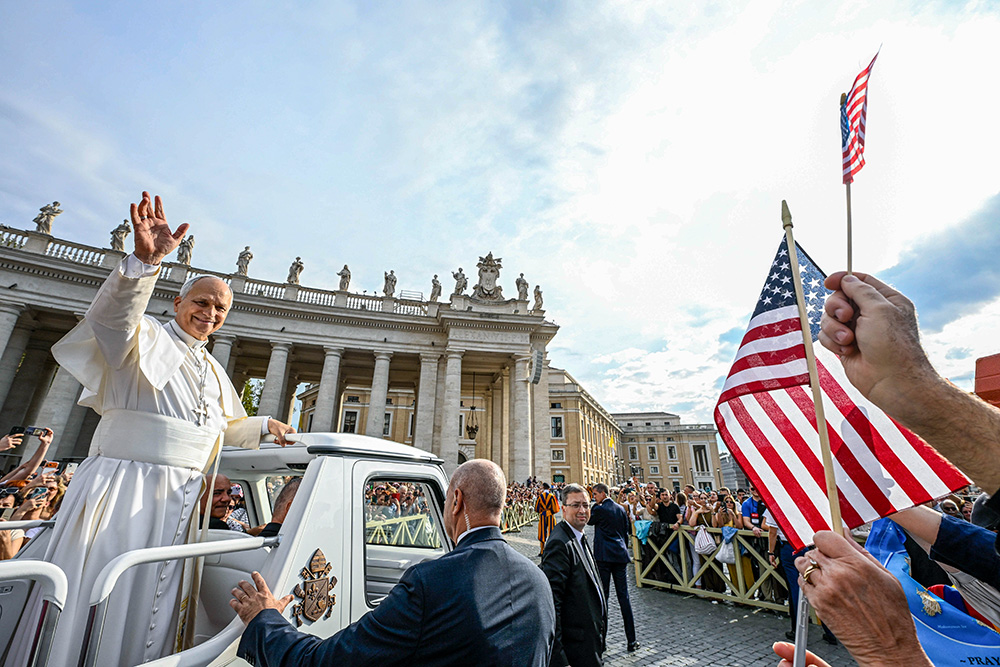
U.S. flags are seen among the crowd as Pope Leo XIV greets visitors and pilgrims from the popemobile while riding around St. Peter’s Square at the Vatican before his weekly general audience Oct. 7, 2026. (CNS/Vatican Media)
by Michael J. O'Loughlin
NCR executive editor
Join the Conversation
Send your thoughts to Letters to the Editor. Learn more
When Pope Leo XIV was asked last month to weigh in on the contentious debate over government regulation of artificial intelligence, he invoked a phrase closely associated with President Donald Trump and one that would surely catch the ears of his fellow Americans.
The risks "should be taken seriously," Leo said, and claims that the technology might be catastrophic were not "fake news."
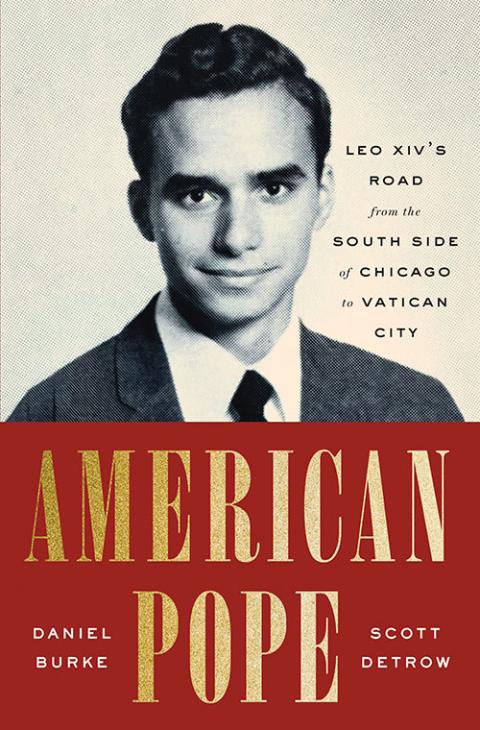
In a new biography of Leo, NPR journalists Daniel Burke and Scott Detrow trace the life of Robert Prevost from growing up outside Chicago to his time leading a diocese in Peru and then his election as pope last year. Speaking to NCR in a recent interview, both Burke and Detrow said that the election of the first American pope turned conventional wisdom on its head, as Leo has emerged as someone willing to challenge U.S. dominance and who uses his cultural understanding of the United States to bring more attention to the church's message.
The pair of journalists were in Rome during Leo's election and the idea for the book, American Pope: Leo XIV's Road from the South Side of Chicago to Vatican City, came from that experience. Detrow said that covering Leo's election was "a deeply emotional moment for me," one that he had to wall off a bit while the special coverage continued.
"The roar at the white smoke and how it built and built and built," Detrow recalled,
"I've never heard a roar like that. It was such a unique, special feeling, and it grew and grew, and it was so powerful."
Burke said the fact that cardinals had elected an American as pope took awhile to sink in.
"I remember Scott and I just kind of looking at each other for hours afterwards in disbelief about the fact that an American had been elected pope," he said. "An American who had a Twitter account apparently in which he tweeted NCR articles and talked directly to the vice president of the United States."
By the time of the conclave, Leo was seen as "the least-American American" cardinal, because of the long stretches of his life lived in Peru and Rome, but the fact that he hails from the United States remains novel for the church and the world. Both Detrow and Burke said Leo has turned conventional wisdom on its head when it comes to how the pope's background might affect his papacy.
"The reason why everyone said there could never be an American pope was there would be this kind of alignment between politics and the papacy, right?" Burke said. "And that would give the United States way too much power on the global stage. That clearly has not happened. Pope Leo is one of President Trump's biggest adversaries on the world stage."
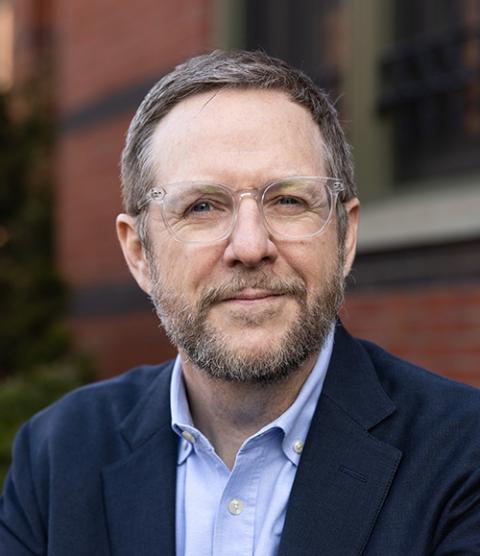
Daniel Burke (Alyssa Schukar)
The book offers hints of Leo's politics, while conceding that his personal views remain somewhat difficult to unveil.
For example, he sent a note to then-Gov. Pat Quinn of Illinois in 2011, using a public portal to thank the Democratic politician for signing a bill that abolished the death penalty. "I know it was a difficult decision, but I applaud your vision and your understanding of the very complex matter," wrote Prevost, who was then serving as prior general of the Augustinians, living in Rome.
In Peru, where engaging in politics could be particularly dangerous, Prevost tried to distance himself from explicit partisanship.
Later, the authors write, Prevost shared posts on social media that were critical of the Trump administration, though he did not add his own political feelings. But "privately he went a little further, making it clear to several close friends over the years that he did not like the president's politics or policies," the book says.
Burke said in the interview that he thinks Leo is unafraid to highlight church teaching, even when it wades into political territory, but said the pope largely stays "above the fray."
"But when reporters ask him about the detention of migrants in Chicago, Pope Leo has spoken out about that," Burke said. "The idea that there would be too much American power with an American pope has not played out at all."
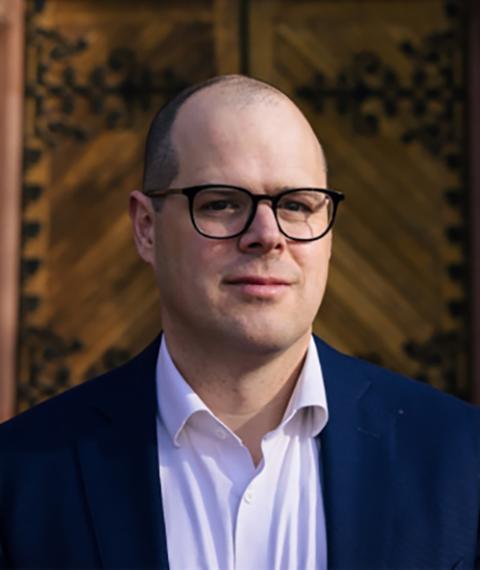
Scott Detrow (Alyssa Schukar)
That Leo is an American might prompt more people to listen to Leo's opinion, especially because he brings such a different approach to global leadership than the U.S. president, Detrow said.
"Being an American at this moment with such a wildly different view of what power is and what responsibility is I think makes a lot more people willing to tune in and listen to him," Detrow said. "Contrast the speeches Leo was giving in Paris with the speech that Trump gave at the U.N. [over] the same couple of weeks. It's just a wildly different view of what leadership means and what power means and what responsibility means."
Both Burke and Detrow say having a pope from the United States means that the leader of the Catholic Church understands the political and cultural nuances when he speaks.
On his return flight to Rome from Paris, Leo was asked by NCR his thoughts about possible threats to humanity from AI and the pope invoked a phrase deeply associated with Trump, saying concerns over potential catastrophe are not "fake news" and "should be taken seriously."
"He is a pretty aware person, so he knows that that phrase will have a special kind of resonance, particularly in the United States," Burke said.
Advertisement
As a former politics reporter, Detrow said he's still getting used to seeing an American pope taking part in press gaggles "and kind of like looking like a senator or a presidential candidate." But he said he believes Leo is using his mastery of English and his own background to help make his points. "I think he's very image conscious and aware of how he says [things] and what he says and [in] what style."
"And when he's speaking in English, he knows that it is going to be on a loop on American news channels in a more direct way," Detrow said.
As for whether Leo will continue to engage in difficult moral issues, Detrow said Leo has been clear that he will speak out about the church's values, even when they challenge political leaders. He cited, for example, comments Leo made in April following his criticism of the U.S. war against Iran, when the pope told reporters that he had "no fear" when it came to "speaking out loudly about the message of the Gospel."
Detrow said of the pope: "he just has no second guessing or no hesitancy when what he's saying is grounded in church teaching."