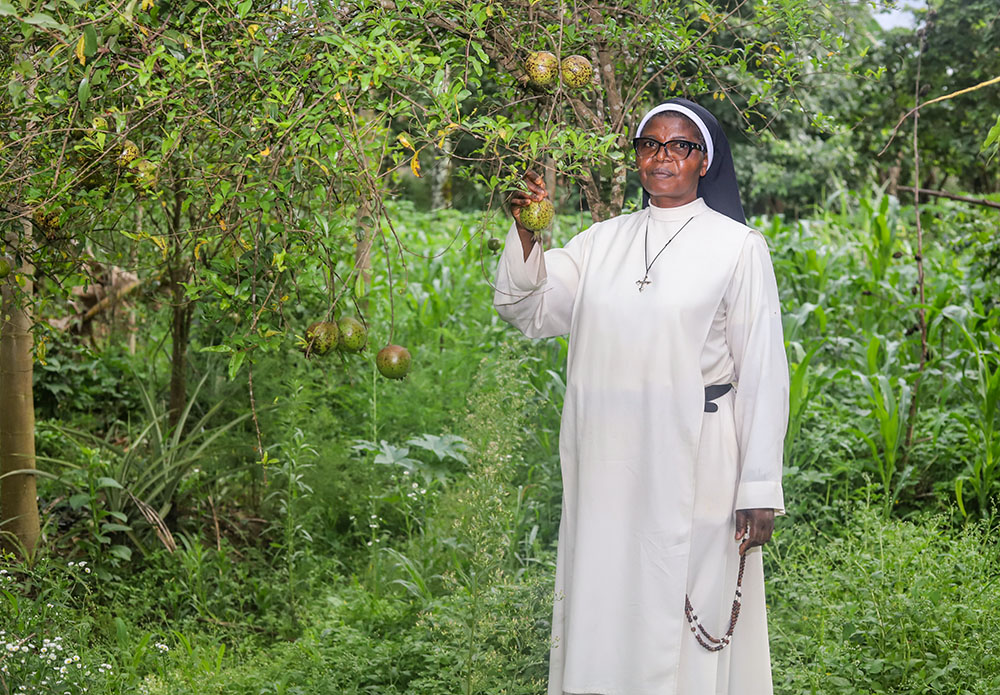
Sr. Fidelia Viban, mother general of the Dominican contemplative nuns at the Monastery of St. Dominic in Bambui, Cameroon, stands on the monastery farm. The sisters grow crops to support their community and help people in need, including families displaced by the Anglophone conflict. (GSR photo/Doreen Ajiambo)

by Doreen Ajiambo
Join the Conversation
Send your thoughts to Letters to the Editor. Learn more
Sr. Geraldine Ghaife stood inside a chicken house at the Monastery of St. Dominic, holding one of the roughly 100 birds she helps raise for meat and eggs.
But the structure was once used for something very different.
It was part of a biogas initiative that helped the Dominican contemplative nuns turn cow dung and food waste into cooking fuel. The gas was piped directly into the monastery kitchen, reducing the sisters' dependence on firewood and saving money they would otherwise have spent buying cooking gas.
At the height of Cameroon's Anglophone conflict, when families fleeing violence sought refuge at the monastery, those savings became particularly important. The sisters suddenly had more people to shelter and more mouths to feed.
Today, both of the monastery's biogas plants have stopped operating, and part of the former biogas space has been converted into a chicken house.
"Now that the biogas system is not working, we are sometimes forced to cook using firewood," said Ghaife, who helped operate the project while also working on the monastery farm. "When it is your turn to cook, you become worried because of all the smoke."
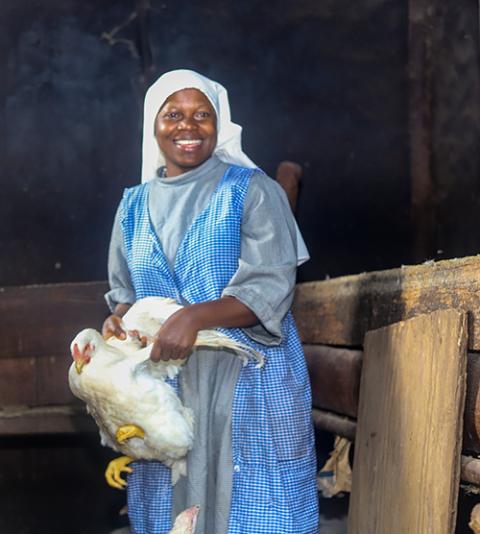
Sr. Geraldine Ghaife holds a chicken inside a structure once used for the sisters' biogas initiative at the Monastery of St. Dominic in Bambui, Cameroon. (GSR photo/Doreen Ajiambo)
The two failed systems are part of a larger challenge facing Catholic sisters in Cameroon's conflict-hit Northwest region. Sr. Fidelia Viban, mother general of the Dominican contemplative nuns, said other communities of sisters have also established biogas projects to reduce firewood use and expenses, but some of those systems have also stopped operating.
Their experience illustrates a challenge that reaches far beyond Cameroon: How can communities fight the effects of climate change when they are simultaneously struggling to survive war — and who helps them sustain the solutions they create?
That question is particularly timely as governments prepare for COP31, the United Nations climate summit scheduled for Nov. 9-20 in Antalya, Turkey. The COP31 presidency has said it wants to mobilize finance, technology and partnerships for local and regional implementation, and develop practical, scalable solutions for vulnerable regions.
A search for solutions amid war
Bambui lies near Bamenda, the capital of Cameroon's mountainous Northwest region, one of the country's two predominantly English-speaking regions.
The Anglophone crisis began in late 2016 with protests; a government crackdown followed. By 2017, the crisis had escalated into an armed separatist conflict that has displaced hundreds of thousands of people, disrupted farming and education and deepened poverty across the Northwest and Southwest regions.
Some of those fleeing violence arrived at St. Dominic.
"When the conflict started, our guesthouse became a place where people were running for refuge," Viban said.
At times, she said, at least 10 people could arrive in a day. The monastery's guesthouse and conference center became a shelter, while the sisters expanded their farming to feed both themselves and displaced families.
"We did not have enough food ourselves, but what we got from our garden, we shared with them," Viban said. "When it was not enough, we stretched out our hands and asked others to help."
More people also meant more fuel for cooking.
Gas was expensive, while dependence on firewood conflicted with the sisters' efforts to conserve the environment.
A Catholic from Bamenda who now lives in the United States introduced the sisters to biogas during one of his visits home. In 2021, as the monastery struggled to feed and shelter people displaced by the conflict, the sisters launched the project, financing it themselves with help from their local church. The community eventually operated two biodigesters.
Cow dung and food waste were fed into an underground tank, producing gas that was piped directly into the monastery kitchen.
"We didn't have to buy gas, and we never ran out of it," Ghaife said.
For the sisters, the project was deliberately both environmental and economic: reduce firewood consumption and organic waste while saving money that could be used for other needs.
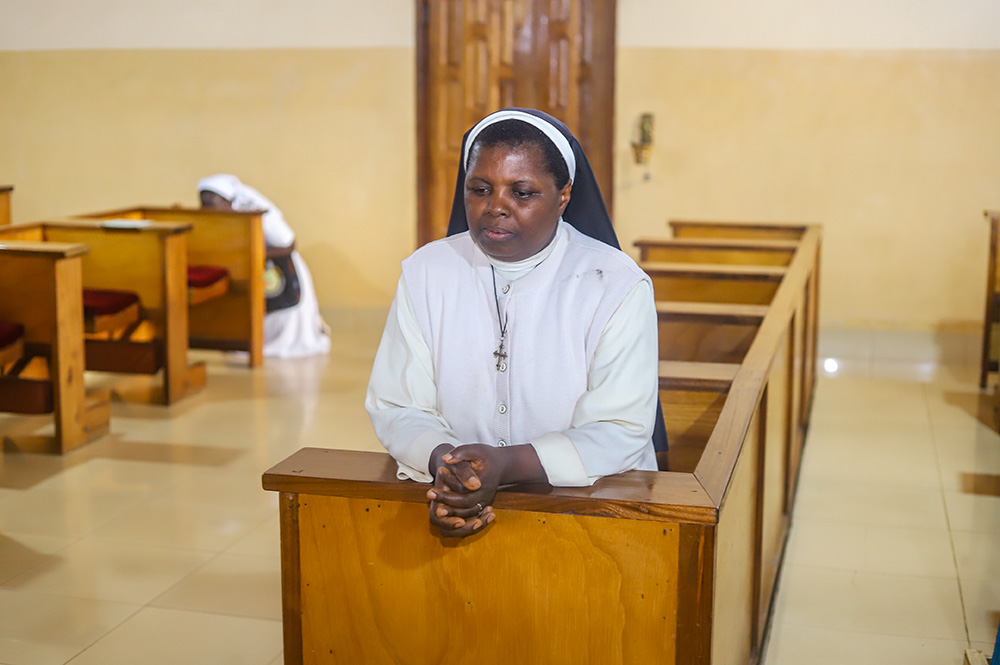
Sr. Ernestine Mbumenyuy of the Dominican contemplative nuns is pictured inside the chapel at the Monastery of St. Dominic in Bambui, Cameroon. (GSR photo/Doreen Ajiambo)
Climate action becomes another casualty
By 2025, however, financial pressures were mounting.
Maintaining the cows that supplied dung to the biodigesters required money. Meanwhile, the monastery was supporting people affected by the conflict and struggling with its own agricultural production.
Sr. Ernestine Mbumenyuy said increasingly unpredictable rains were making farming and finding sufficient fodder more difficult. She also recalled crop diseases and pest outbreaks damaging harvests.
Patrick Muna, an independent climate analyst involved in climate-smart agriculture, reforestation and renewable energy projects in Cameroon, said farmers in the region are experiencing rising temperatures and increasingly unpredictable rainfall that disrupt planting seasons and agricultural production.
But climate pressure does not occur in isolation, he said. Years of conflict have displaced communities, disrupted farming and environmental programs and increased pressure on forests as families depend on firewood and charcoal.
For the sisters, those overlapping pressures eventually became unsustainable.
When their cows became sick, veterinary treatment added another expense. The sisters ultimately sold the animals in 2025. Without the cows, they lost the dependable supply of dung feeding the biodigesters.
Both plants eventually stopped operating.
Advertisement
What survived
Yet the sisters' biogas initiative did not disappear completely.
Mary Kinyuy is evidence of what survived.
One night in November 2020, Kinyuy said, armed separatists came to her home and took her husband away, accusing him of being a government spy.
She has never seen him again.
Afraid for herself and her five children, she fled to the sisters, "the place where I felt safest," she said.
Kinyuy, now 38, remained with the sisters until 2024. Besides being fed and sheltered, she learned farming, environmental conservation and how cow dung and organic waste could be turned into cooking gas.
Today, she farms and sells eggs to support her children.
Unlike the monastery's two biodigesters, Kinyuy's smaller household system is still working. She and her husband learned about biogas from the sisters and later installed a system at home that serves only their kitchen and runs on food waste and dung from their cows. Because they still own livestock, they have both a steady supply of dung and income to help cover maintenance costs.
For Kinyuy, that means spending less on cooking fuel and reducing her dependence on firewood.
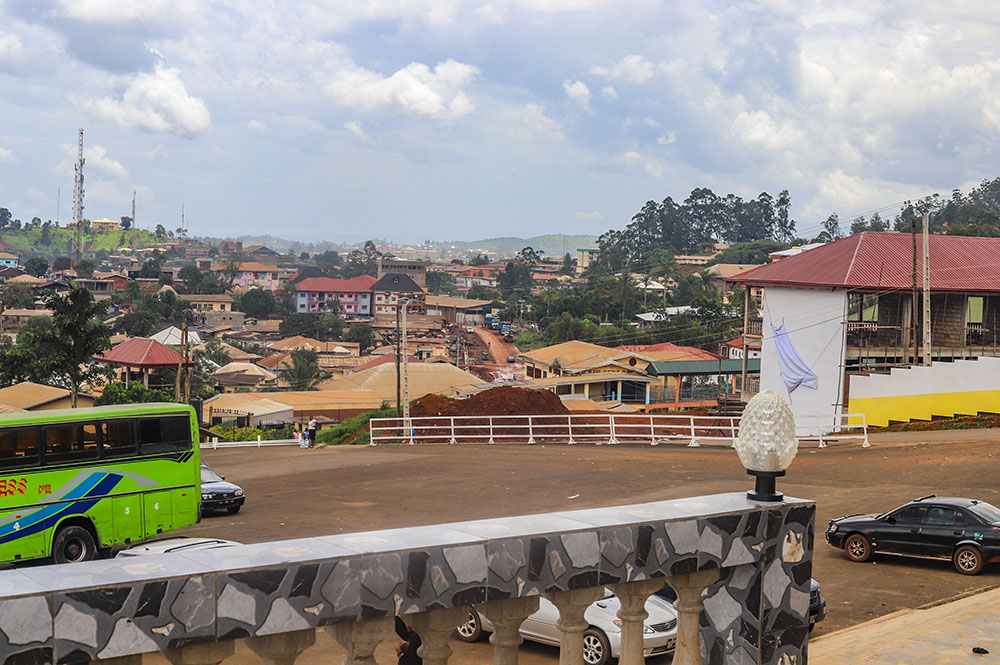
A view of Bamenda, the capital of Cameroon's Northwest region, one of the country's two predominantly English-speaking regions (GSR photo/Doreen Ajiambo)
"It is clean, and there is no smoke," she said. "I think I also conserve the environment as well. That is what the sisters taught us."
The institution that taught Kinyuy about biogas could no longer afford to sustain its systems, while the knowledge it passed on continues to produce cooking gas in her home.
A lesson for COP31
That experience gives the sisters' story particular relevance as governments prepare for COP31.
For Muna, conflict-affected communities such as those around Bamenda illustrate why financing must reach beyond governments and major organizations.
He said direct access to finance remains extremely difficult for small communities, churches and local organizations, even when they are already developing solutions themselves.
The Dominican sisters are an example: They did not wait for international climate financing. They used their own money and help from their local church to establish their systems.
The abandoned biodigesters therefore pose a question for negotiators gathering thousands of miles away in Antalya: What happens after a vulnerable community has built its own environmental solution but can no longer afford to keep it working?
The experience also shows why climate action in conflict zones cannot be separated neatly from humanitarian needs: Providing for displaced families, combined with negative effects of the climate, led to financial pressures for the monastery, ultimately undermining the solutions they had already mastered.
For communities like Bambui, fighting climate change is therefore also about surviving conflict.
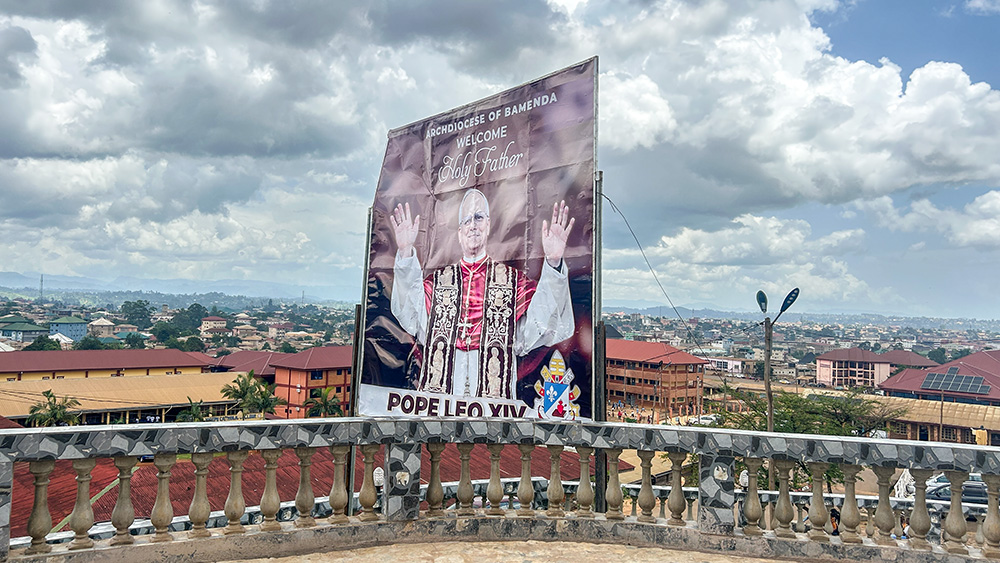
A billboard welcoming Pope Leo XIV overlooks Bamenda in Cameroon's Northwest Region during his April 2026 visit, when he appealed for peace and reconciliation. (GSR photo/Doreen Ajiambo)
'Peace, peace, peace'
At St. Dominic, Ghaife now tends chickens in part of the space once associated with the biogas project.
She still hopes the systems can be revived.
"It was helping us in so many ways," she said. "Everything was being put to use rather than going to waste."
The sisters continue farming and teaching people about environmental conservation. Beyond the monastery, Kinyuy continues using the knowledge she acquired while displaced to provide for her five children.
For Viban, caring for the environment is part of the sisters' religious vocation.
"When we pray and when we work, we are sharing in God's creation," she said.
But after years of watching families flee violence into the monastery, she believes protecting the environment and building resilience will remain difficult without something more fundamental.
"What I feel the world needs most at this moment," she said, "is peace, peace, peace."