(Pixabay/m4gie)

by Jeromiah Taylor
Join the Conversation
Send your thoughts to Letters to the Editor. Learn more
Given the ever-proliferating literature on the matter, you could be forgiven for thinking that young men are in crisis, and you wouldn't be entirely wrong. As Claire Cain Miller put it for The New York Times, the crisis is not "just a feeling" — young men are objectively struggling academically, economically and psychologically. Though the jury is out on the extent to which boys struggle because they're boys, and whether narratives of male struggle are helping or harming, the rapidly multiplying cultural pathologies afflicting young men indicate that something is, indeed, wrong.
Surprisingly, one of the most thoughtful attempts in understanding some of these challenges comes from the Vatican, whose International Theological Commission in March published a document that expertly diagnoses the polycrises of our time.
First, to keep up with recent developments among young men necessitates a new vocabulary, including the "manosphere" (online echochamber for male grievances), "theobros" (conservative influencers who espouse partisan theologies) and groypers (followers of far-right Catholic influencer Nick Fuentes).
It is tempting to write off these phenomena as existing purely online, but they're a symptom of real alienation and come along with increased political radicalization and have real world consequences. Many of these views are bouncing around the White House, and even Vice President JD Vance has made overtures to some of these communities.
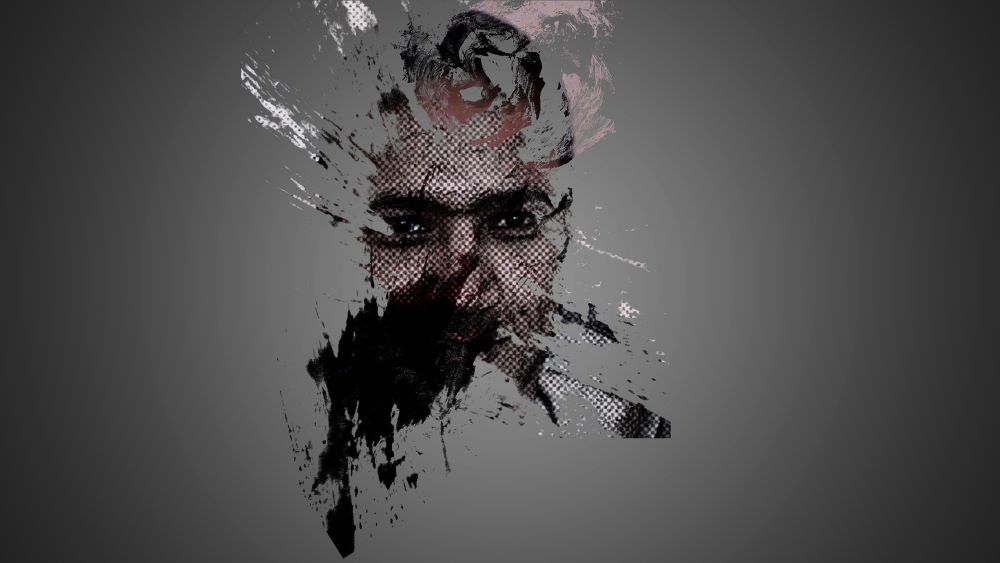
Of particular concern, especially as it relates to creation and respect for the human body, is looksmaxxing, the growing subculture of young men who take extreme measures like bone smashing and cosmetic surgeries to appear more attractive to women.
The crises facing young men may appear novel, but their source is uniform and ancient: a hatred for limits.
For its part, the Vatican's recent document, Quo Vadis, Humanitas? (Where are you going, humanity?), has been somewhat anemically received, yet it has much to offer young men who are grasping for purpose in the face of social immobility, loneliness and shifting mores. Especially young men who may revere the church but who don't seem to understand many of its basic teachings. Written to mark the 60th anniversary of Gaudium et Spes, the document reproposes Catholic anthropology to a new generation. The tragedy is that young men living on a diet of digital influencer media are unlikely to peruse the inaccessible 48-page text. But they should.
Although Quo Vadis responds to technological developments, it really revolves around the human person, especially the body. It critiques posthumanism and transhumanism and explicates a theology of vocation and identity.
The emphasis of the body is of particular import to young men, especially as they profess increasing affiliation with the church. A generation of young men who struggle to emulate aspirational standards of appearance, often resorting to artificial modification of the body, are in dire need of the church's affirmation that they are just fine the way they are.
A generation of young men who struggle to emulate aspirational standards of appearance, often resorting to artificial modification of the body, are in dire need of the church's affirmation that they are just fine the way they are.
The preoccupation with self-optimization prevalent with young men — often framed in theological terms like "ascending" — is flatly condemned by the church in the document's outline of transhumanism, which it defines as the belief that humans, "can and should use the resources of science and technology to overcome the physical and biological limitations of the human condition."
Ironically, the Vatican counters the idea of "ascent" promoted by influencers like Braden Peters — a Catholic also known as Clavicular who helps followers "ascend" via rigorous physical and even medical regimes — with a homophone of its own: "assent." To take "responsibility for one's life," the commission writes, is to recognize that the self is an undeserved gift that must be "accepted and desired as a good for oneself (assent)."
We are to accept our bodies as they are, bearing the image of God, and treat them with requisite dignity. However, human dignity is subject to human freedom, and it is up to each of us whether we will "obscure" or fulfill that image in ourselves, the document says.
It's easy to see how young men obsessed with physical appearance and performance might think of themselves as actively fulfilling their dignity or their potential. But in the anthropology of Quo Vadis true assent requires the acceptance of our limitations as part of our gifted nature, and true ascent is possible only through Christ who, in the words of St. Paul, "has set us free for freedom."
Advertisement
Viewing our bodies as "biological material to be modified," is not a contained phenomenon, but an entry point to a broader crisis of humanity. The paradigm set forth in Quo Vadis suggests that it's no accident that a widespread desire for bodily transformation among young men coincides with deaths of despair and political radicalization.
The refusal to accept the "polar tensions" of the human condition — whereof we're made of dust and enlivened with the spirit — is the very substance of original sin, argues the Vatican document. From that poisoned well flows all disorder. When our relationship with our bodies is ruptured, so are our relationships with one another, with creation and with God. We succumb to the "affirmation of one's own identity in polemical opposition to others."
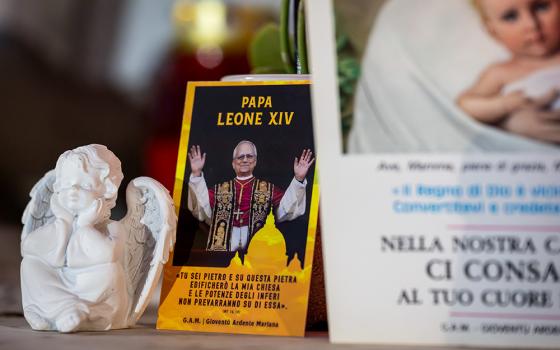
The stakes are high for young men, their societies and even for the church. In a climate where a virulently antisemitic influencer like Fuentes holds more sway over some young Catholic men than does Pope Leo XIV, Catholics must meet the signs of the times by engaging young men with the church's perennial truths. The only infallible way to do this is by pointing to the person of Jesus Christ — a God who assented to limitation and gave himself for all; for it is through that person, as Leo recently preached, that the church attracts.