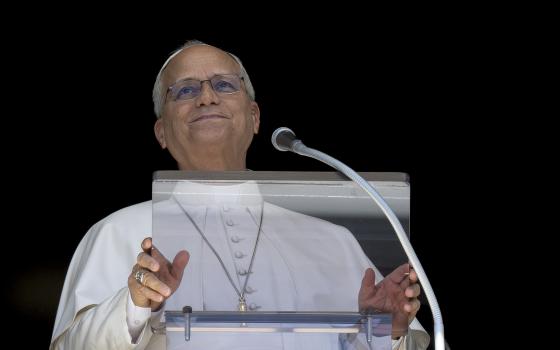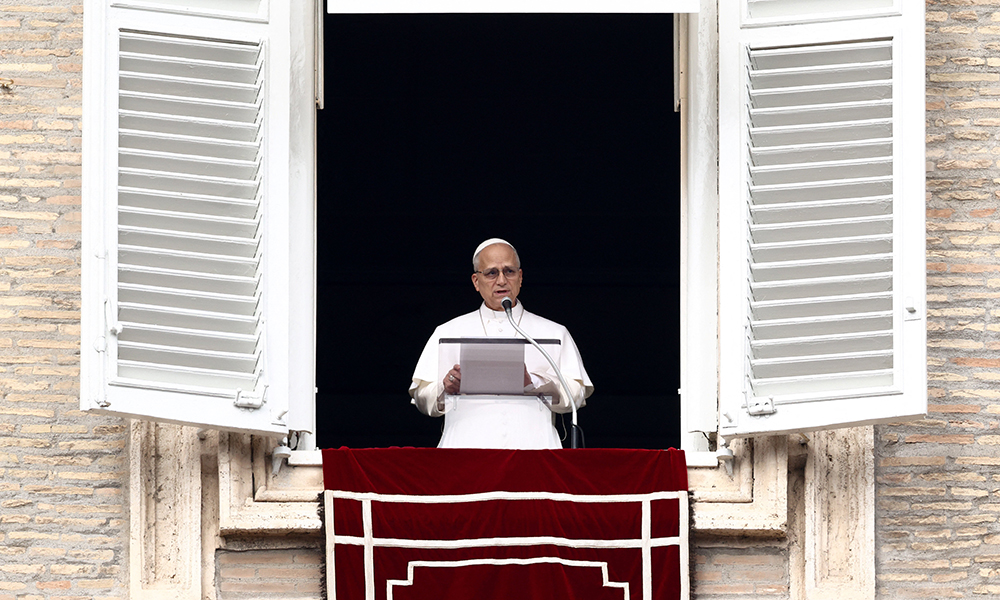
Pope Leo XIV leads the Angelus prayer from the window of the Apostolic Palace at the Vatican, March 1, 2026. (OSV News/Reuters/Guglielmo Mangiapane)

by John Grosso
Join the Conversation
Send your thoughts to Letters to the Editor. Learn more
The day after the United States and Israel jointly attacked Iran, provoking a new war in the Middle East, Pope Leo XIV called for a return to diplomacy and urged all nations involved to earnestly strive for peace.
Catholics on social media, however, could not be blamed if they thought the leader of their church had just issued a papal bull condemning President Donald Trump.
Christopher Hale, who runs the political commentary blog "Letters from Leo," said on Feb. 28 that if the pope planned to say what a source had revealed that he might the following day, it could be one of his "most forceful and direct public confrontations with President Trump since his election."
While the pope's comments after the Sunday Angelus March 1 hit above the standard Vatican fare of voicing concern over global crises, he notably did not mention the United States or Israel, or the leader of any country, by name. Hale, however, later wrote that the source said the pope had viewed the strikes as both immoral and illegal, words the pope did not use in his address. Hale said that the pope's comments "made that conviction public — and unmistakable."
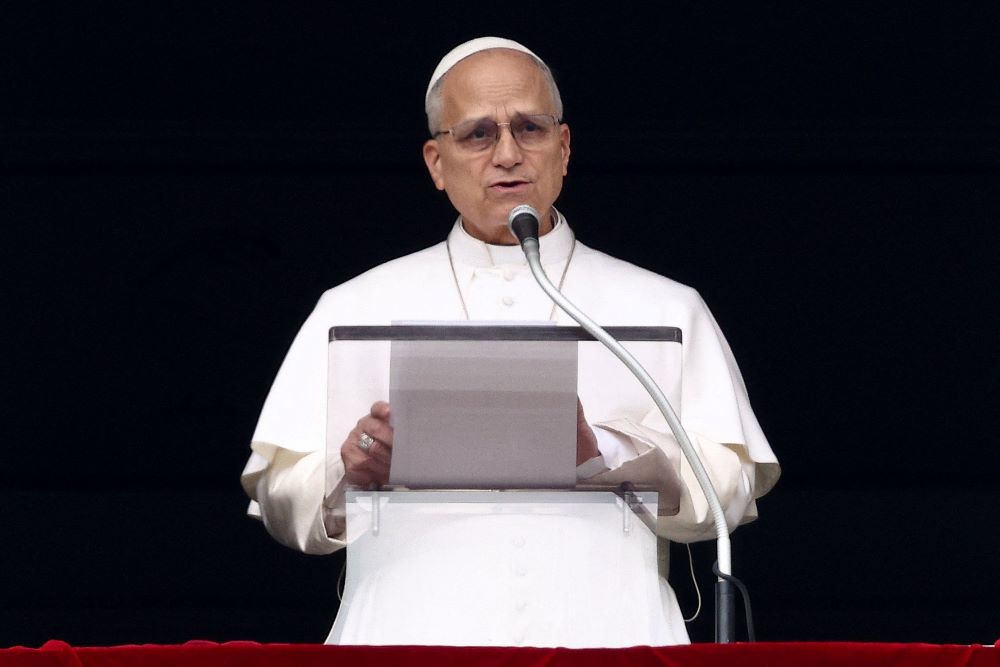
Pope Leo XIV leads the Angelus prayer from the window of the Apostolic Palace at the Vatican, March 1, 2026. (OSV News/Reuters/Guglielmo Mangiapane)
Online, a chorus of commentators on both sides of the ecclessial and political aisle took the pope's words, both real and alleged, and ran.
"Pope Leo SLAMS Trump's illegal war against Iran," wrote Occupy Democrats on X, which has more than 730,000 followers.
Similarly, the Daily Beast, which claims to reach more than 1 million readers daily, ran an article on March 4 insisting that "Pope Leo XIV Can't Stop Trashing Trump's Deadly War."
The site said that the pope had spoken out three times "against Donald Trump's war in Iran."
In contrast with the chorus of online commentators pitting the pontiff against the American president stand the pope's actual remarks.
In his Sunday address Leo called on "all the parties involved to assume the moral responsibility of halting the spiral of violence before it becomes an unbridgeable chasm."
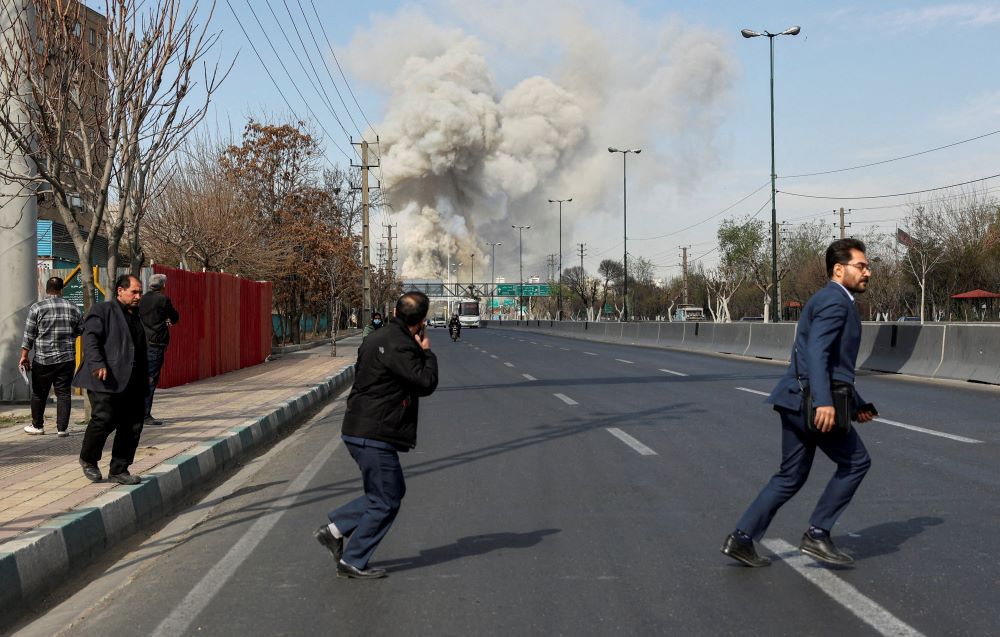
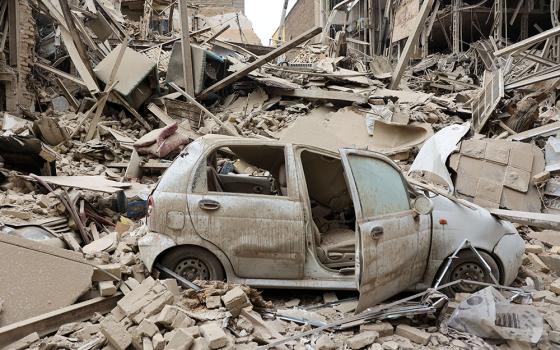
People run as smoke rises following an explosion in Tehran, Iran, March 5, 2026, following a strike on a police station, amid the U.S. and Israel-Iran war. (OSV News/WANA via Reuters/Majid Asgaripour)
Those comments remain a far cry from Hale's later claim that the pope "demanded that the Trump-Vance White House end its war in Iran."
The posts from Hale, Occupy and the Daily Beast had received hundreds of thousands of views — enough to provoke significant reaction from social media Catholics on the right.
Judging by their reactions, it seemed that some on the Catholic right were not particularly happy with the pontiff's intervention or the left's framing of it.
"Pope Leo XIV Weighs in on Military Strikes on Iran — Makes Fool of Himself," read one headline from The Gateway Pundit, an ultra-right wing commentary site with almost a million followers on X.
"BEWARE: Pope Leo is a very evil and dangerous man doing some of the darkest work of Satan in these last of the last days," wrote an X account entitled "Operation Heal America." The account has nearly 200,000 followers and is verified as an official organization by X.
"Wasson Watch Co," another account officially verified by X, chastised the pope for allegedly focusing too heavily on the United States without sufficiently castigating the Iranian regime for their violent crackdown on protestors or ongoing nuclear threats.
Social media users responded to the posts bemoaning the pope's pacifism as weak, woke and leftist.
Advertisement
Leo did call for peace on three separate occasions since Feb. 28, the day of the initial U.S.-Israeli attack. He said he was following the situation in Iran March 1 and then called generally for peace the next two times. Each intervention was measured and concise, avoiding the firebrand rhetoric that either side of the aisle claimed the pontiff had used.
That did not deter Hale, who wrote in an article, "Three appeals in three days. That is not a coincidence. That is a pope who has decided that silence is no longer an option."
Yet on his biggest stage yet since the outbreak of the war, Leo did opt for silence.
The pope made no mention of the Middle East or Iran after his Wednesday general audience on March 4, a venue in which popes, including Leo himself have made pointed appeals for peace and directly commented on global affairs. Aside from a previously scheduled (but timely) video wherein his prayer intention of the month was for "disarmament and peace," Leo has not publicly spoken on the war since.
Instead, the Vatican's state media channels published an in-house interview with Cardinal Pietro Parolin, Vatican secretary of state, who stressed the need for multilateralism without citing any political leaders or nations by name.
The decision from the Vatican read more as a way to get something on the record while biding its time rather than speaking forcefully and risk burning bridges. Notably, the pullback occurred after Israel began its ground invasion of Lebanon, which has a significant Catholic population and was visited by Leo last December.
Similarly, Hale wrote on X that there has been "no harsher critic to U.S. military action in Iran than Pope Leo XIV" in a post that has garnered more than 850,000 views. However the video posted in the post, supposedly meant to back up that claim, showed the pope addressing the ambassadors to the Holy See in a January meeting.
And a quick web search will easily lead one to much harsher critics of U.S. action in Iran.
Spanish Prime Minister Pedro Sanchez explicitly condemned the United States' track record in the Middle East and called on the international community to "demand with full resolve that the United States, Iran, and Israel take decisive action to stop before it is too late."
And French President Emmanuel Macron said the U.S.-Israeli strikes were "outside of international law" and that Paris "cannot approve of them."
With the war just over five days old, there is still plenty of time for reaction and commentary from Leo. If history is any indication, however, his interventions will likely contain a brand of nuance that could be unfamiliar to social media pundits.