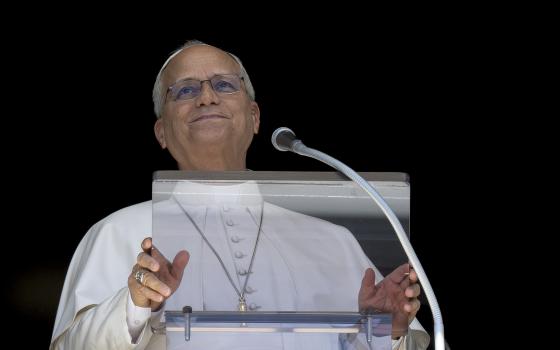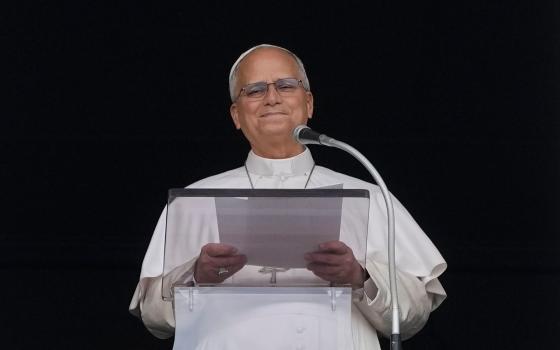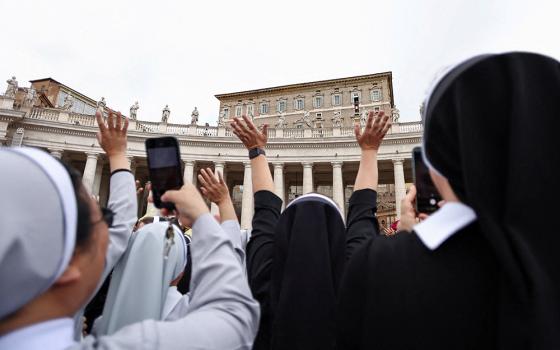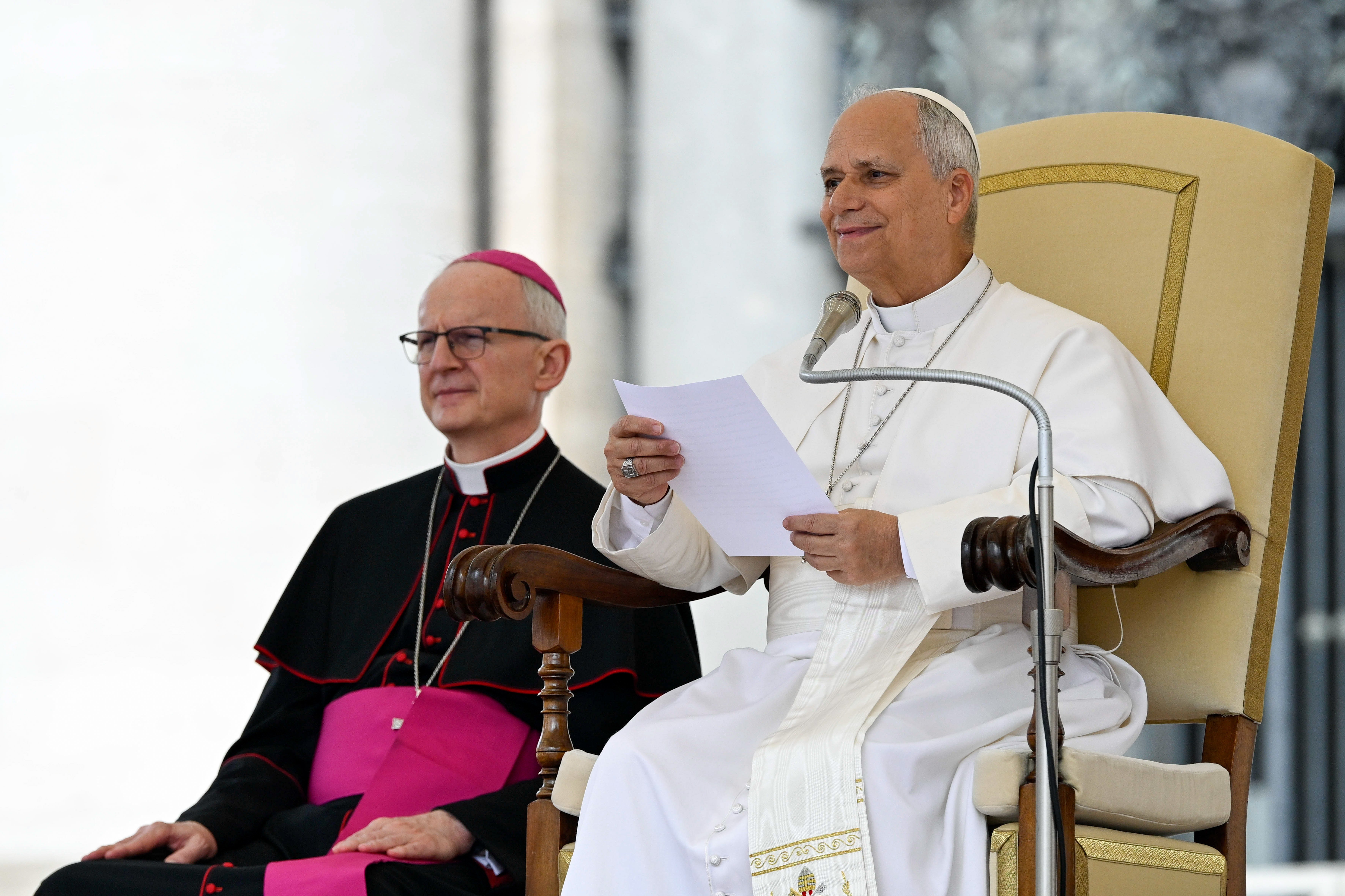
Pope Leo XIV talks to visitors and pilgrims during his weekly general audience in St. Peter's Square at the Vatican June 3, 2026. Before the audience, the pontiff met with Catholic university leaders and told them that they have a responsibility to instill in their students a passion "not only for intellectual truth, but the truth that is Christ himself." (CNS/Vatican Media)

OSV News
Join the Conversation
Send your thoughts to Letters to the Editor. Learn more
Pope Leo XIV told Catholic university leaders on June 3 that they have a responsibility to instill in their students a passion for "not only intellectual truth, but the truth that is Christ himself."
Speaking with university presidents, rectors, senior administrators and faculty leaders from U.S. colleges who are currently taking part in the 2026 Association of Catholic Colleges and Universities Rome Seminar, the pope underlined that the importance of forming students in "the sound doctrine entrusted to the Church that will serve as a true and lasting foundation not only for their lives, but the future of the nation."
"Unless Catholic education instills in students a true passion for the truth — and not only intellectual truth, but the truth that is Christ himself — we can hardly expect people to be willing to put forth the effort required to recognize truth and adapt one's life accordingly," Leo said, citing the Gospel of John.
The Association of Catholic Colleges and Universities represents more than 200 Catholic institutions of higher education, the majority of accredited Catholic colleges and universities in the United States, as well as more than 20 international universities. Its board includes representatives from institutions such as the University of Dayton, St. John's University, the University of Portland and the University of the Incarnate Word, among others.
The pope called on the university administrators to allow their time in Rome to deepen their own faith, saying he prayed their hearts would be "all the more captivated by the beauty of truth and the grandeur of humanity, created by God and redeemed in Christ."
"Your authenticity as true disciples of Christ will certainly assist you in transmitting the living Gospel in such a way that those entrusted to you can truly encounter the Lord and discover in the Catholic faith the unifying vision that truth alone can provide," he said.
Drawing on his recently published encyclical, "Magnifica Humanitas: On Safeguarding the Human Person in the Time of Artificial Intelligence," Leo identified two pressing challenges facing Catholic education today.
Advertisement
The first, he said, is the growing fragmentation of knowledge. While many students become experts in narrow fields, they often "struggle to find direction in their lives, partly due to an inability to connect information with deeper knowledge or maintain a sense of purpose," he said, quoting from the encyclical.
Catholic universities, he added, are uniquely positioned to address this gap by guiding students not only toward "a global vision of reality that is capable of uniting not only the various fields of knowledge, but also the multiple aspects of life and the inner longings of the human heart."
The second challenge he raised was how artificial intelligence is making it increasingly difficult for educators to assess student work and ensure genuine intellectual formation. The pope called on Catholic educators to adapt their methods creatively so that young people continue to develop their God-given capacities to reason, think critically and commit knowledge to memory.
"In this sense, we must be willing to invest generously in the education of future generations," he said.
"Yours is the noble task of guiding that desire for knowledge so that they may also learn to seek and love the truth, to reflect on the meaning of life and to recognize the dignity of every person," Leo told the Catholic university leaders.