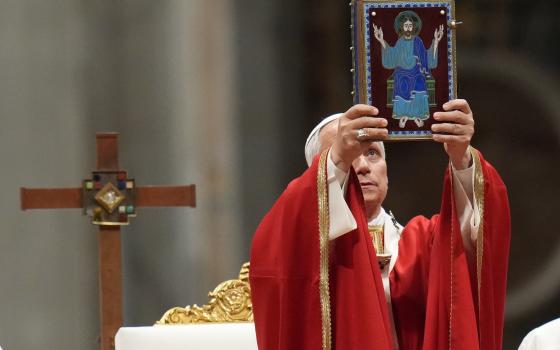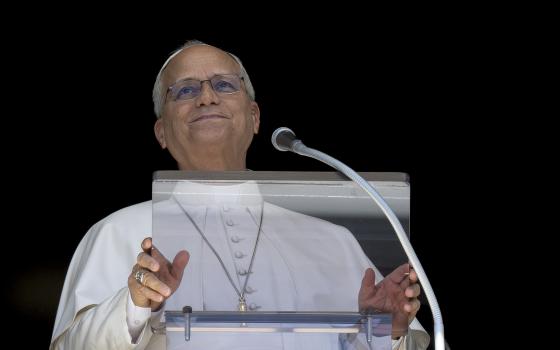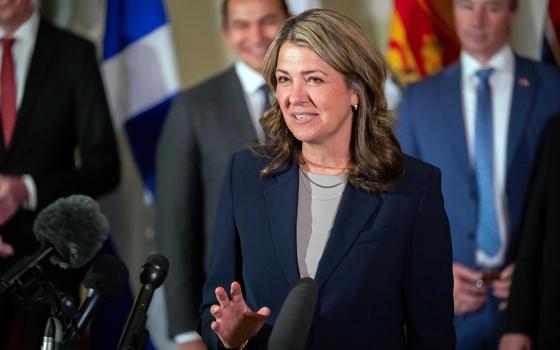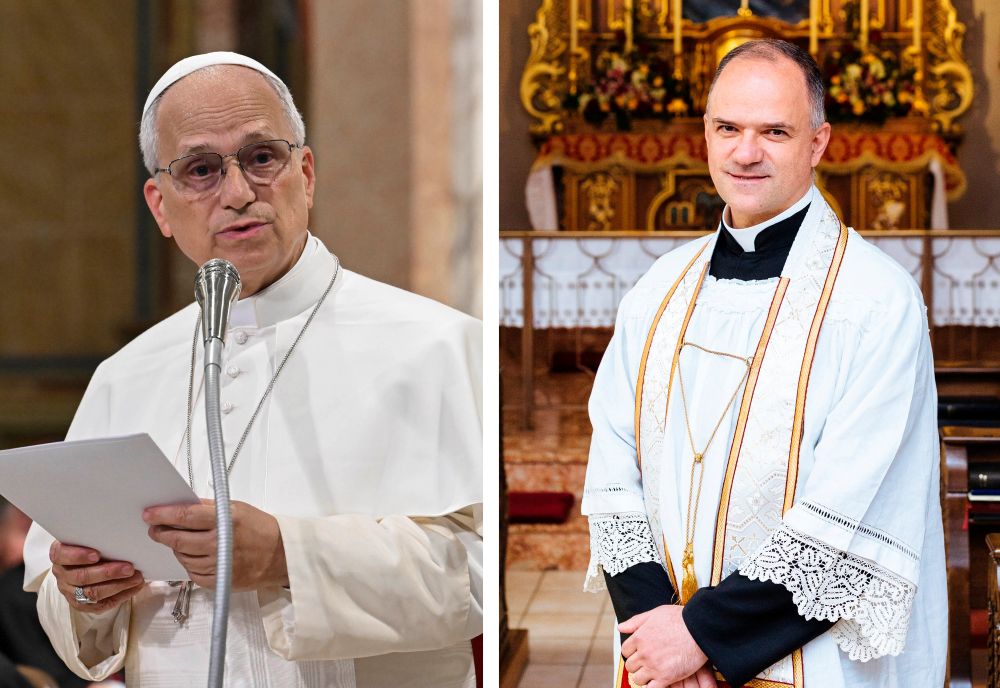
In a combination photo Pope Leo XIV is pictured speaking in northern Italy, June 20, 2026, and Fr. Davide Pagliarani, superior general of the traditionalist Society of St. Pius X, is pictured in 2018 in Econe, Switzerland. (OSV News/Vatican Media/Mario Tomassetti and CPP/KNA/Jean-Matthieu Gautier)
Join the Conversation
Send your thoughts to Letters to the Editor. Learn more
A day before the traditionalist Society of St. Pius X is expected to provoke a modern-day schism by consecrating new bishops in defiance of Rome, Pope Leo XIV issued his first public appeal to the ultraconservative Catholic group: "Please turn back!"
In a letter published by the Vatican on June 30 — the eve of illicit bishop consecrations for the society, known as the SSPX — Leo urged its superior "to consider carefully the spiritual good of the faithful, because the schismatic act you are about to undertake would deprive them of the licit and, in some cases, even valid reception of the Sacraments, which they love and seek for their sanctification."
"With a sorrowful yet hopeful heart, I feel it is my duty, through the authority received from Christ, to ask you to desist from your intended act," the pope wrote in the letter addressed to the head of the society, Fr. Davide Pagliarani.
The letter is the first public communication between Leo and the SSPX, who have repeatedly issued unanswered requests to meet with the pope.
The traditionalist society, which celebrates the pre-Vatican II Mass and openly rejects several of the church's reforms developed during the Second Vatican Council, announced in February its intent to consecrate new bishops on July 1 without approval from the pope. The move was seen as a threat intended to pressure the Vatican into approving new bishops so that new priests could be ordained into the society.
The SSPX claims to have 751 priests worldwide, with its largest concentrations in France and the United States. The society maintains that the consecrations are necessary for the good of the faithful and do not amount to schism by arguing that the bishops would not be ordained with the intent of breaking from the church or claiming jurisdiction over any territory. That logic, however, rests on an understanding of episcopal authority at odds with the Second Vatican Council's dogmatic constitution on the church, Lumen Gentium, which states that the functions of a bishop "can be exercised only in hierarchical communion with the head and the members of the college."
The impending consecrations echo the society's 1988 illicit consecrations, after which John Paul II declared the SSPX founder, Archbishop Marcel Lefebvre, and the bishops he consecrated to be excommunicated. Pope Benedict XVI later lifted the excommunications of the bishops as part of an effort to reconcile the group with Rome.
Despite sharper Vatican warnings and a meeting in Rome between Pagliarani and the head of the Vatican's doctrine office, Cardinal Víctor Manuel Fernández, neither side has balked before the looming schism, and the consecrations remain set to take place at the society's international seminary in Écône, Switzerland. Organizers expect some 15,000 people to attend.
The Vatican has publicly stated the consecrations would constitute a schismatic act, but Leo's letter is the first time the pope himself has cast the consequences for the SSPX in those terms; in his only public comments on the matter he told journalists on June 16, "If they make that choice, I am sorry, but we must move forward."
"The Church is open to a path of dialogue and understanding that the Holy Spirit can make possible and fruitful," Leo wrote in his letter to the society's superior. "I pray for you, because to tear the seamless garment of Christ is a sin of extreme gravity. May the Lord enlighten your consciences and awaken your hearts."
In their February meeting, Fernández offered Pagliarani to open a path of dialogue between the Vatican and the SSPX on the condition that the society suspend the illicit bishop consecrations. The SSPX, which exists in a state of irregular communion with the church where it can offer valid sacraments to the faithful in some cases, quickly swatted away that olive branch by stating that seeking full communion with the church "is impracticable due to doctrinal divergences."
Ahead of the June 26-27 meeting of the world's cardinals at the Vatican, the SSPX published an open letter to the pope and College of Cardinals that insisted on its adherence to the Catholic Church but reaffirmed its intent to press ahead with the illicit consecrations.
One Vatican watcher, Hendro Musterman, spoke to a cardinal on the sidelines of the consistory and asked if the topic of the SSPX was making waves in the conversations there. The cardinal replied: "We don't talk about it — even at the coffee machine among ourselves."
The National Catholic Reporter's Rome Bureau is made possible in part by the generosity of Joan and Bob McGrath.
Advertisement