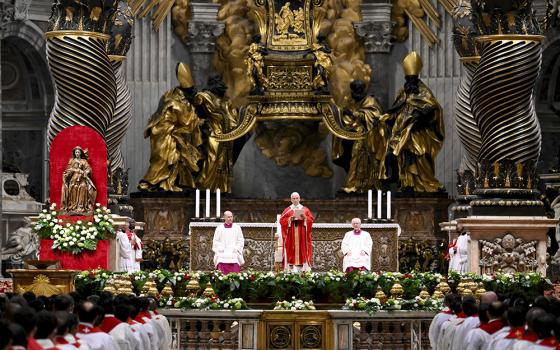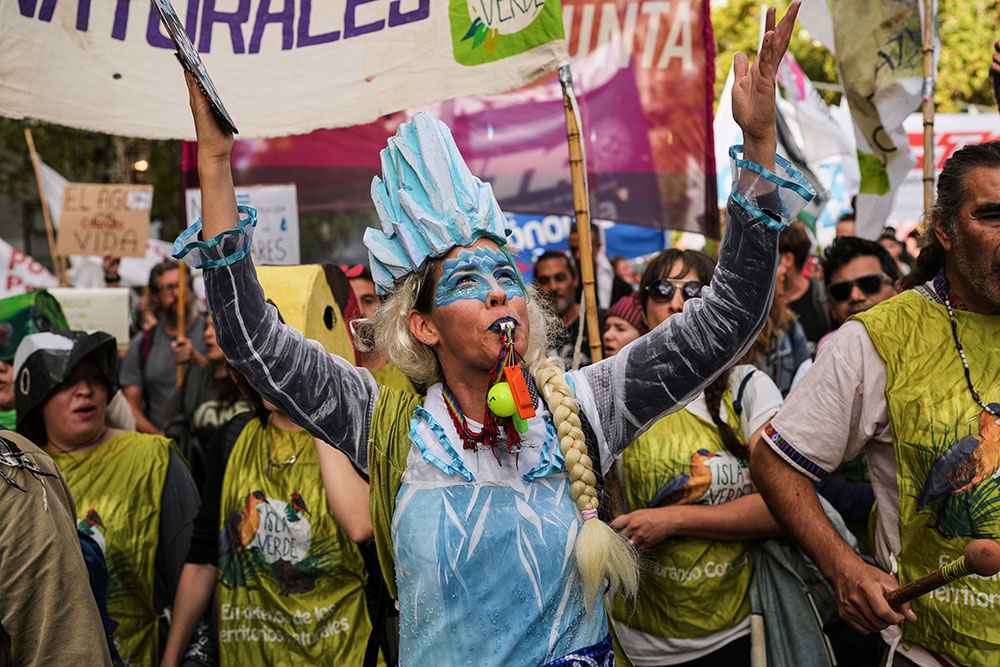
Demonstrators protest outside the Argentine National Congress building in Buenos Aires as lawmakers debate the Javier Milei government's proposal to reform Argentina's glacier protection law April 8, 2026. (AP/Rodrigo Abd)

by Eduardo Campos Lima
Join the Conversation
Send your thoughts to Letters to the Editor. Learn more
A reform to Argentina's glacier protection law that is backed by President Javier Milei's coalition has been met with massive popular opposition, including from Catholic bishops within the expansive Patagonia region, which is home to hundreds of enormous yet shrinking ice formations.
Environmentalists, Indigenous groups and church organizations, along with a group of Patagonia bishops, have filed an injunction request, arguing that the reform loosens government oversight of projects in glacier areas and puts water sources at risk.
The petition has drawn sizable support among Argentines, with more than 850,000 signatories. The judiciary is still analyzing the case, and no deadline has been set for a ruling.
The reform, put into effect in April, changed fundamental aspects of the 2010 glacier law, which prohibited mining and other economic activities involving the exploitation of natural resources in glacier areas.
On June 1, a federal court of appeals in Patagonia dismissed a petition filed by lawmakers in the area that is home to a famous Perito Moreno Glacier. The lawmakers' petition claimed the reform was unconstitutional.
Under the proposed law, provinces now have the autonomy to decide which glacial or periglacial areas should be protected. The reform also makes it easier for mining and oil companies to obtain approval for their projects from environmental authorities.
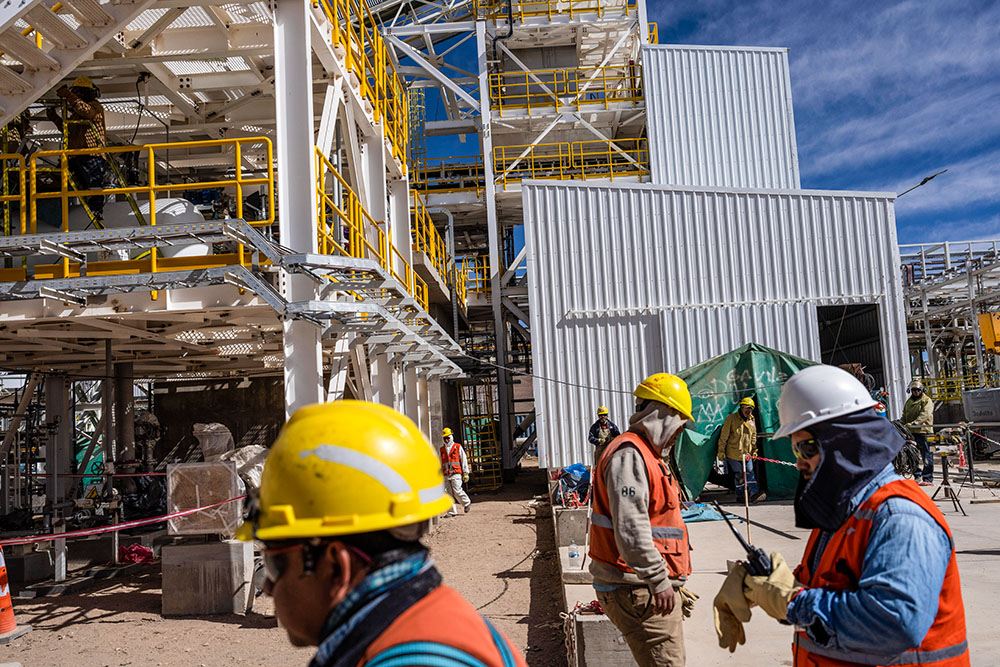
Workers walk through the construction of the Cauchari-Olaroz Exar lithium mine in Jujuy province, Argentina, April 22, 2023. Argentina's current president, Javier Milei, took office later that year. (AP/Rodrigo Abd)
Milei, a libertarian who has called climate change "a socialist lie," said the reform would "allow mining in areas where there's nothing to protect."
The Patagonia region that would be impacted by this law is more than 260,000 square miles across Argentina and Chile. The vast region is sparsely populated by humans, including several Indigenous tribes who have lived there for centuries, and home to diverse ecosystems, plants and animals.
The Patagonian ice fields, within the Andes mountains, include thousands of glaciers, among them Pio XI in Chile, named after Pope Pius XI, and the Perito Moreno Glacier inside Los Glaciares National Park, a UNESCO World Heritage Site.
Many of Patagonia's glaciers have experienced substantial ice loss and are melting at some of the highest rates on the planet, according to glaciologists and climate scientists, due to global warming primarily driven by burning fossil fuels.
The reform of the glacier protection law was approved by the Argentine Senate in February and then sent to the Chamber of Deputies (the lower house of Congress), which was expected to convene a public hearing in order to give citizens and organizations an opportunity to express their views.
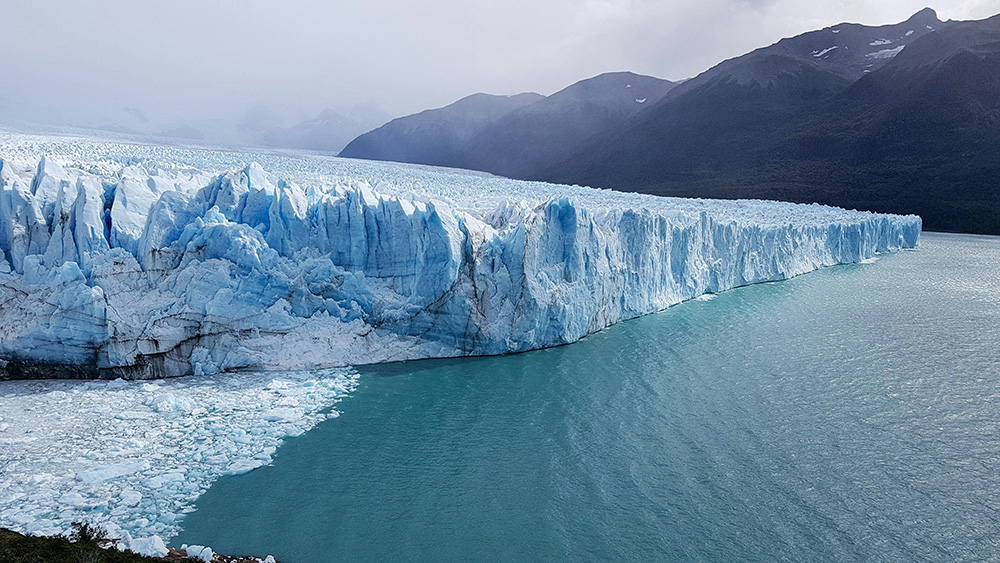
A view of Perito Moreno Glacier in Argentina's Los Glaciares National Park, a UNESCO World Heritage Site (Unsplash/Pedro Lima)
"There was an unprecedented number of people registering to take part in the meeting — more than 100,000 citizens," Bishop Roberto "Chobi" Álvarez of the Rawson Diocese, in the Patagonian province of Chubut, told EarthBeat.
The Chamber of Deputies, however, restricted participation to a minimal number of individuals and organizations, something critics claimed was irregular. The chamber ultimately approved the reform April 8.
The following day, La Pampa province Gov. Sergio Ziliotto — along with the local university and two civic organizations — filed an injunction request arguing the reform is unconstitutional. The petitioners requested the complete annulment of the measure.
Enrique Viale, president of the Argentine Association of Environmental Lawyers, told EarthBeat, "Given that we knew we were going to legally challenge the reform, we called on as many people as possible to join what we describe as 'the largest collective legal action for water in history.' "
The movement collected 850,000 signatures through support of several nongovernmental organizations, with the Indigenous Mapuche people and Catholic activists playing a prominent role.
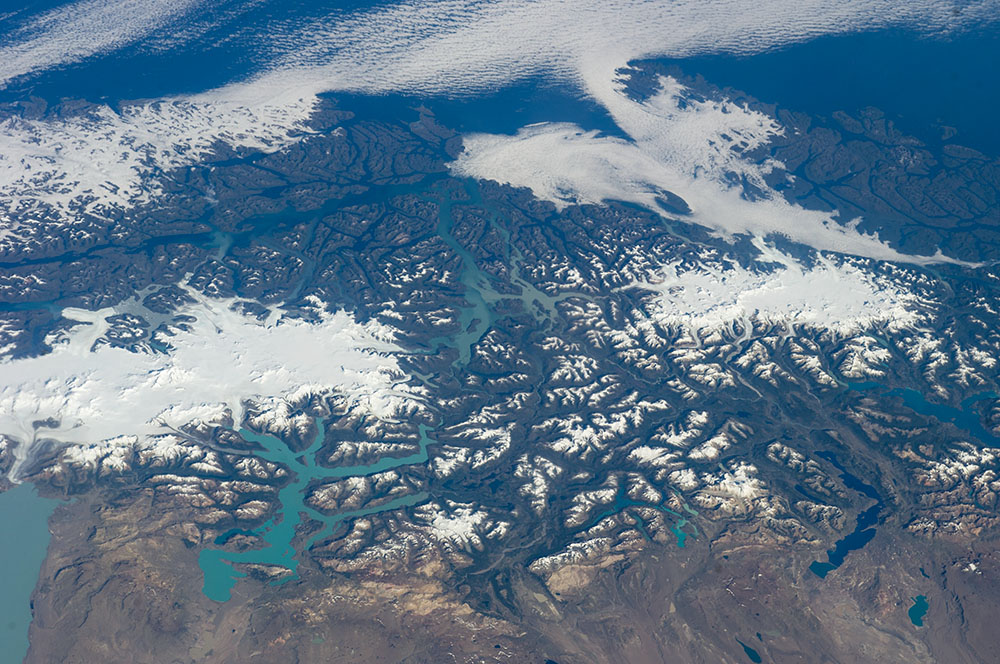
The Southern Patagonian Ice Field, left, and the smaller Northern Patagonian Ice Field, right, are seen in a 2014 view from the International Space Station. (Wikimedia Commons/NASA)
Before the bill passed the Chamber of Deputies, a group of nine Catholic bishops from Patagonia issued a letter March 30 sharply criticizing the reform.
They condemned the fact that lawmakers had curtailed public participation. The bishops pointed out that several environmental decisions concerning Patagonia had been made with the same lack of democratic process in the past.
"Here — in small population centers — they also exert economic, labor-related and even emotional pressure; they resort to promises and handouts," the letter said.
The bishops accused the authorities of creating the environmental and social problems the country has been facing, adding that authorities "have already poisoned the debate" and should not "poison the air [and rivers] as well."
Álvarez, one of the bishops who signed the document, told EarthBeat that Chubut's provincial constitution forbids open-pit mining and the use of cyanide in such operations.
"Our province is very engaged in environmental protection. But neighboring Río Negro province is not. Gas and oil pipelines have recently been built there," he said.
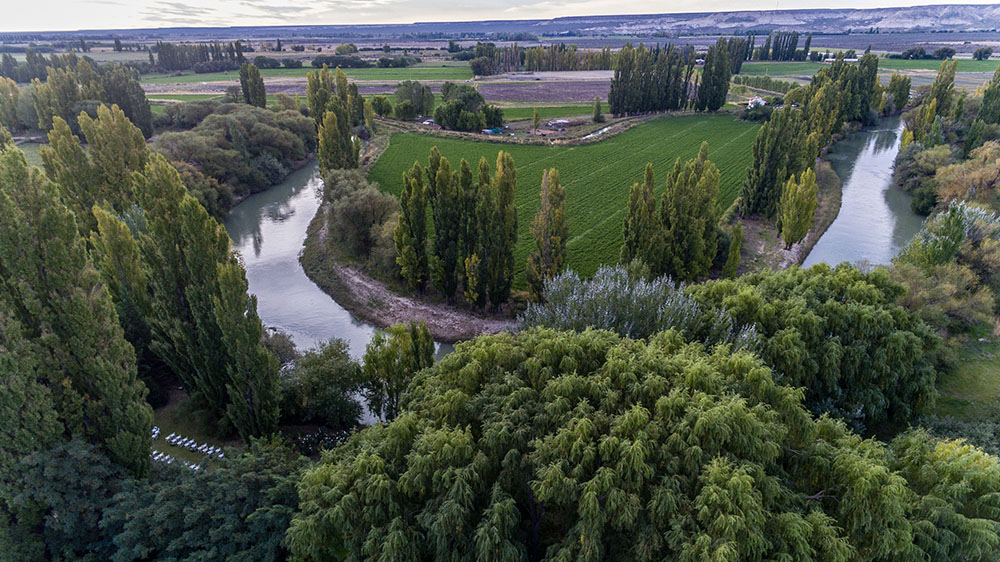
A view of the Chubut River in Gaiman, a town in the Chubut Province of Patagonia, Argentina (Dreamstime/Walter Macedo)
In northern Chubut, the river of the same name provides water to a dry region, making it possible to grow cereals and raise cattle.
"Indigenous groups depend on it to survive. Impacts on glaciers in Río Negro's Andes would affect that region," Álvarez added.
Neuquén Bishop Fernando Croxatto said several rivers in his region originate in glaciers in the Andes, but no study has been conducted to determine how they would be impacted.
"We who live in regions shaped by extractivism clearly see that there is no real oversight of activities that may cause contamination," he said.
According to Croxatto, several Indigenous communities live in the Andean part of Neuquén and have historically opposed mining projects.
Claudia Huircan, a Catholic environmental activist and member of the Mapuche people, emphasized the reform was approved irregularly because Indigenous communities were not consulted during the process.
"We were invited by Pope Francis to always think about the common home we will leave to future generations," said Huircan, a member of the Churches and Mining Network, which brings together Christian communities across Latin America affected by extractivism.
Advertisement
Huircan lives in Río Negro province, "where gold and silver mining is advancing, along with the extraction of uranium and lithium."
Nestor Ruiz, an anthropologist and environmental expert who frequently advises the Argentine church's national indigenous pastoral team, told EarthBeat the mining lobby is extremely powerful at the moment.
"The provincial governments are weak and the presidency supports mining. The risk concerns not only this reform, but also potential changes to forest protection legislation," Ruiz said.
Political scientist Verónica Azpiroz, a Mapuche activist, told EarthBeat that Indigenous groups have much to teach when it comes to environmental issues.
"Indigenous peoples can show ways of living in harmony with the land without harming or exploiting it, and can demonstrate responsibility in caring for our common home," she said.
The struggle for water and glaciers, she added, "brings together other ways of feeling and thinking about life, the ixofij mogen [biodiversity], in which what matters most is not human beings, but life as a whole on a planetary scale."