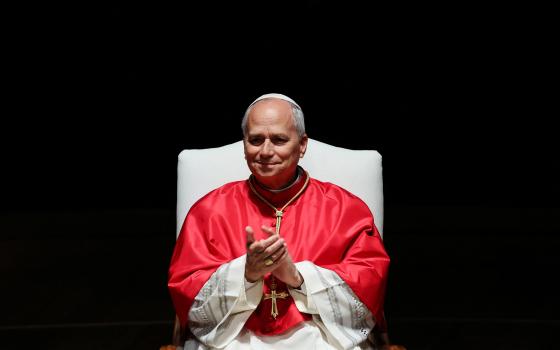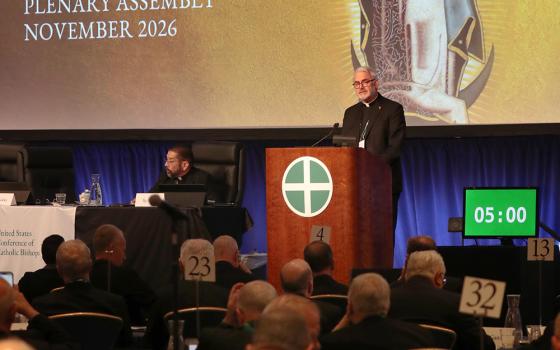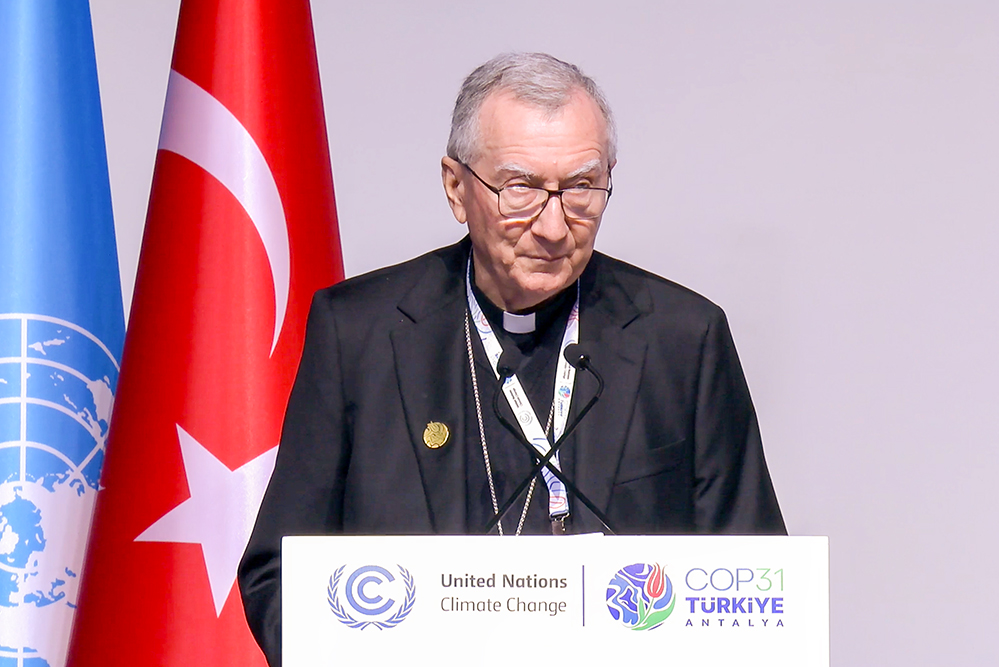
Cardinal Pietro Parolin, Vatican secretary of state, delivers the first speech during the resumed high-level segment of the climate summit, known as COP31, Nov. 17, 2026, in Antalya, Turkey. (NCR screenshot/UNFCCC)

Join the Conversation
Send your thoughts to Letters to the Editor. Learn more
Threats to humanity and nature from climate change are worsening while global attention to the crisis is waning, Cardinal Pietro Parolin warned in remarks at the United Nations climate change summit in Turkey.
Parolin, the Vatican secretary of state and top diplomat, delivered the first speech during the resumed high-level segment of the summit, known as COP31, Nov. 17 in Antalya, Turkey.
Speaking on behalf of Pope Leo XIV, Parolin told the 92,000 delegates and participants that their discussions around climate change are not technical or procedural matters alone, "but concern people's lives and their God-given dignity, as well as the future of humanity." He emphasized Leo's call to remember "the human face of climate change" in his message last year to COP30 in Brazil.
"This human-centered approach becomes even more necessary when considering that the climate crisis is getting worse, and it disproportionately affects the poorest and future generations, who are least responsible for causing it," Parolin said.
He continued: "It is also concerning that the climate crisis is being overshadowed by geopolitical tensions driven by narrow self-interest and shortsightedness, which foster conflict and fragmentation. There is an urgent need for countries to collaborate on shared priorities through a cohesive and forward-looking multilateralism."
COP31 is playing out amid the war between Russia and Ukraine, and the United States and Israel's war with Iran. Those conflicts have upended global energy markets and contributed to higher living costs that have triggered social and political upheaval in several countries.
The rapid rise of artificial intelligence, too, has taken prominence on the world stage — spurring Leo's first papal encyclical — as countries and communities try to decipher its greatest benefits for humanity while attempting to avert catastrophic outcomes.
Meanwhile, nations are not reducing heat-trapping greenhouse gas emissions, released primarily from burning coal, oil and gas, rapidly enough to avoid more destructive climate scenarios.
Emissions from the U.S., the leading historical source, spiked due in part to a redoubling on fossil fuel expansion by the Trump administration. Additionally, emissions from the country's largest data centers already equal those of some countries, according to a Harvard study reported on by The New York Times.
Scientists have concluded global temperatures will reach 1.5 degrees Celsius (2.7 degrees Fahrenheit) — the central temperature limit under the 2015 Paris Agreement on climate — by the end of this decade, and that efforts must now focus on limiting the overshoot and bringing temperatures back down.
Parolin said climate change is not just an environmental challenge but "is also a socioeconomic crisis and fundamentally an anthropological crisis."
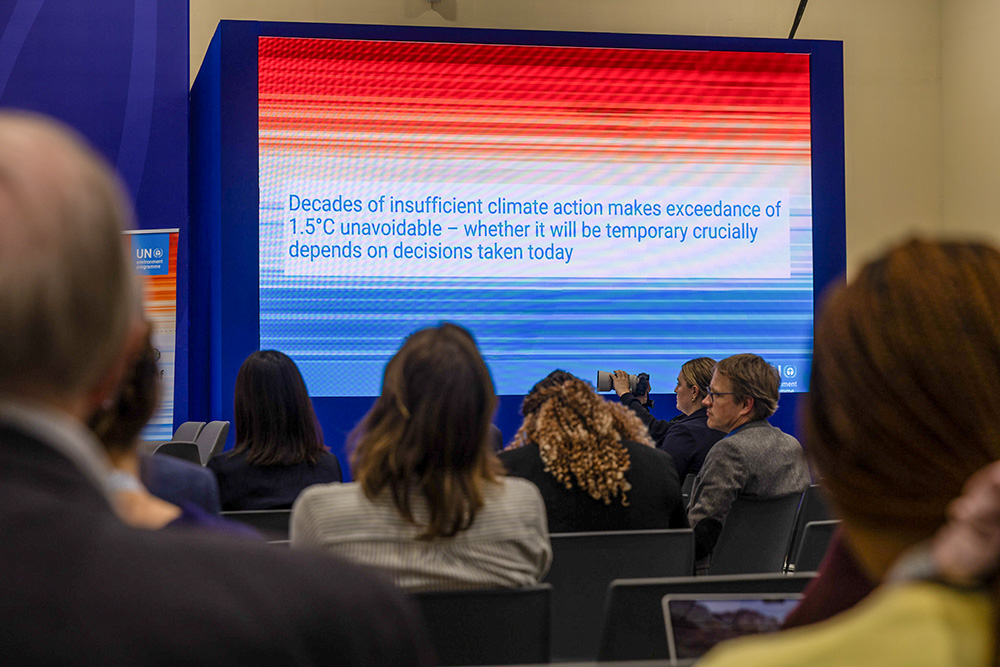
A report from the United Nations Environment Program showed global emissions are off track to limit average temperature rise to 1.5 degrees Celsius, a key goal of the Paris Agreement. The report was presented Nov. 17, 2026, at the COP31 U.N. climate change summit in Antalya, Turkey. (UN Climate Change/Kiara Worth)
In urging countries to increase actions around mitigation, adaptation "and, above all, societal transformation," Parolin said those efforts must be grounded in solidarity, promoting the common good and safeguarding creation.
"Human beings are not allowed to treat creation despotically or irresponsibly," he said.
"The climate crisis is an important opportunity to steer the change of era we are experiencing towards a world in which we rediscover our infinite dignity and the responsibility that comes with it towards our fellow human beings and of all creation," the secretary of state said.
The Vatican has emphasized the role of education in climate solutions. It included educational initiatives as part of its national climate pledge under the Paris Agreement, which also committed the world's smallest nation-state to cut emissions within the Vatican's boundaries 28% by 2035.
"Education must be able to combine social justice and environmental justice, promote sobriety and sustainable lifestyles, and form consciences capable of choosing not merely what is convenient but what is just," Parolin said.
Advertisement
Later in the day, the cardinal celebrated Mass at St. Nikolaus Church in Antalya, for Catholics attending the U.N. climate summit.
In 2022, the Holy See formally signed onto the Paris accord. As an official party to the U.N. climate treaty, it holds equal status as other countries and nation-states in the proceedings and can engage in the negotiating process.
The 11-person Holy See delegation at COP31, led by Parolin, has seen its role as bringing moral and ethical perspectives into the negotiations, based largely on Pope Francis' 2015 encyclical, "Laudato Si', on Care for Our Common Home." The delegation has emphasized raising the voices and experiences of vulnerable communities who bear the worst impacts of more extreme storms, droughts and wildfires due to climate change.
The Vatican and Catholic organizations have repeatedly stated it is immoral and an injustice that communities and countries who have contributed the least to heat-trapping greenhouse gas emissions suffer the most from their impacts. They have called on wealthy nations to repay their "ecological debt" to the Global South by providing financing and resources to assist in reducing emissions and building resilience to climate impacts.
Caritas Internationalis, the church's global humanitarian arm, and other Catholic development groups work with the Holy See delegation to raise the real-world experiences of the world's poorest communities into international policy discussions.
On Friday, the delegation met with members of the Network of Catholic Climate and Environmental Actors, a coalition of Catholic development and environmental organizations. They discussed some of the major themes of COP31, including a transition away from fossil fuels, a just transition to renewable energy, climate finance, and ways to engage society in climate action.
Rodne Galicha, a coordinator with the network and executive director of Living Laudato Si' Philippines, told EarthBeat/NCR the Holy See's moral voice holds great value in the international climate deliberations.
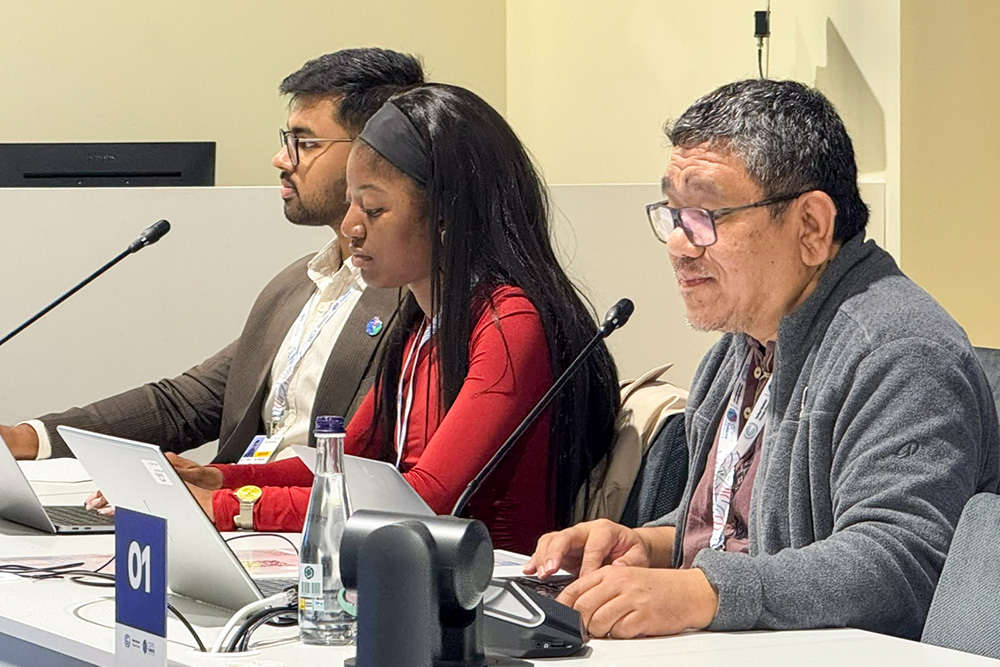
Rodne Galicha (right), executive director of Living Laudato Si' Philippines, takes part in a meeting with the Network of Catholic Climate and Environmental Actors Nov. 11, 2026, at the COP31 United Nations climate change summit. (Courtesy of Rodne Galicha)
"Its contribution is not measured by the size of its territory or its emissions, but by its capacity to speak to conscience, uphold human dignity, defend the most vulnerable, and call nations to greater responsibility and solidarity," he said.
At a side event Nov. 11 hosted by Catholic groups on just transition, Msgr. Massimo Catterin, a member of the Holy See delegation, said that the transition from a fossil fuels-based economy should be "understood as a process that prioritizes people and their God-given dignity, as opposed to a focus solely on emissions targets or related economic and technological considerations."
The transition must encompass more than replacing a polluting energy source with a cleaner alternative, he said, but also reduce — not raise — inequalities; take into account social, cultural and environmental factors; and protect the rights and freedoms of those most impacted by the tectonic shift in energy and economies.
"A just transition is about more than changing the way we produce and consume energy; it is about rethinking the way we live together and care for one another — especially the poorest — while safeguarding God's creation, which he has entrusted to us to cultivate and protect," Catterin said.