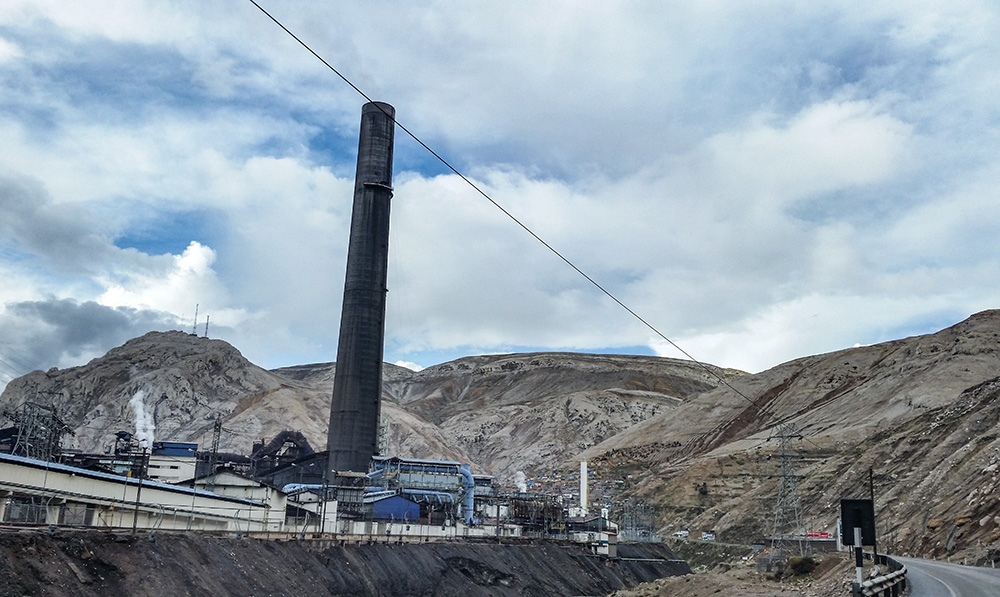
The mining facility in La Oroya, Peru, is photographed in 2014. (Wikimedia Commons/Heiner Amado Cadillo)

Join the Conversation
Send your thoughts to Letters to the Editor. Learn more
Cardinal Pedro Barreto Jimeno was at the Vatican when he received the call from St. Louis, an ocean and continent away.
In a few days, the Peruvian church leader would depart Rome, where he was attending a meeting of cardinals in late June, for the United States where he was set to testify in a trial on behalf of 1,373 Peruvians who alleged lead poisoning as children and toxic contamination of their home of La Oroya by Missouri-based Doe Run Resources Corporation and its parent company the Renco Group.
During the phone call, Barreto learned his testimony was no longer needed.
Lawyers for the Peruvian plaintiffs reached a $150 million global settlement June 22 — a day before the trial was set to begin — with Doe Run and the Renco Group, bringing an end to a 19-year lawsuit supported along the way by the Catholic Church in both Peru and the United States.
"Without Cardinal Barreto and the Catholic Church, there simply would have been no case brought," said Jerry Schlichter, lead attorney in the case for the St. Louis-based firm Schlichter Bogard.
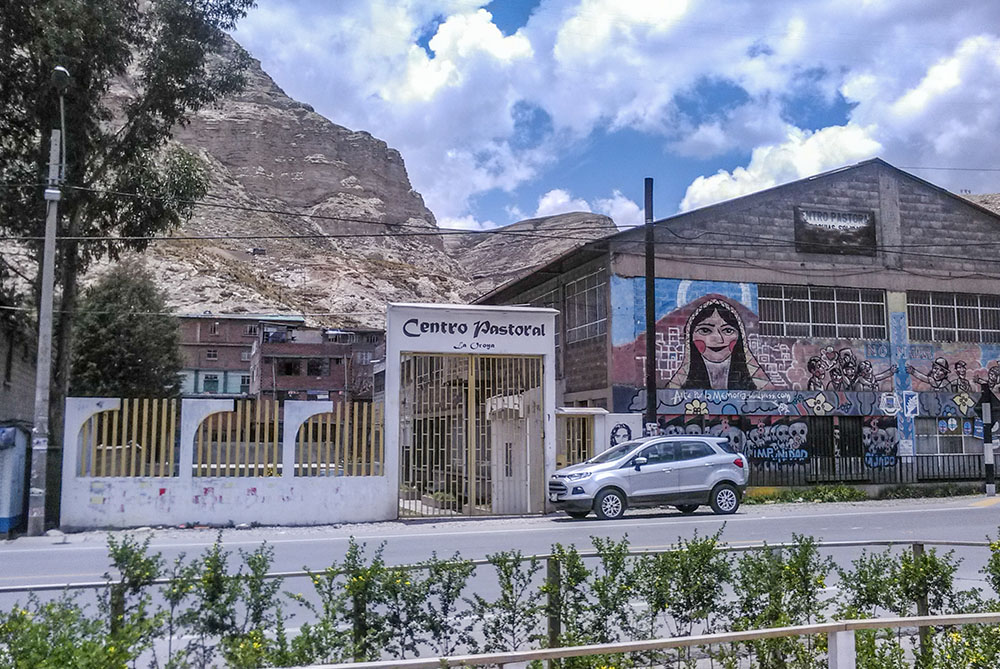
The Catholic Church's Pastoral Center in La Oroya, Peru, is seen in 2017. (Wikimedia Commons/Jhonwikip)
Barreto, speaking to National Catholic Reporter through a translator, said the settlement signals "a historic precedent that is being set, showing that North American companies are obligated to take responsibility in the actions and the damages that they commit in other territories other than their own."
"These children are going to receive a sort of justice, not just for themselves but also for hopefully La Oroya in the future," the cardinal said.
The settlement of the case, which had garnered global attention, did not include an admittance of wrongdoing by Doe Run. In a statement, Doe Run called the agreement "the right decision for our company and our people."
"While we would have liked to have had our day in court, we elected to put this behind us and focus on what matters — running our business, serving our customers, and investing in new technologies for the future," said Matt Wohl, Doe Run CEO and president.
Smelter takes health toll
In 2004, Barreto was appointed archbishop of Huancayo in Peru's central highlands roughly 200 miles inland of the capital city of Lima. Its boundaries include La Oroya, an impoverished community of 30,000 people more than 2 miles high in a part of the Andes Mountains rich in lead, copper, gold and other precious metals.
Shortly after his installation, Barreto met with a Presbyterian minister who raised concerns about health issues in La Oroya — among the world's most polluted places — stemming from a multi-metal smelting complex that for decades was pumping toxic emissions into the air and nearby Mantaro River, at times around the clock.
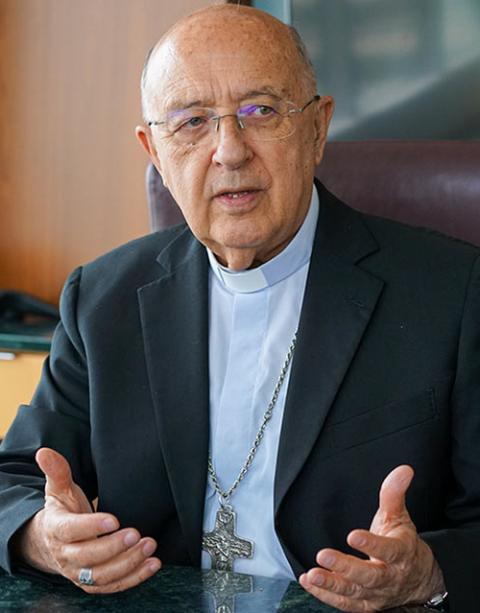
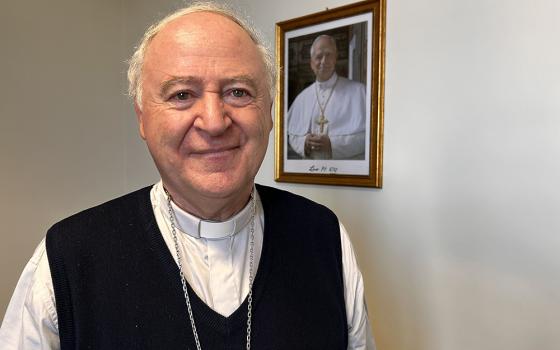
Cardinal Pedro Barreto Jimeno, retired archbishop of Huancayo, Peru (Courtesy of St. Louis University/Kasi Williamson)
Long the town's economic engine, the smelter was constructed in 1922 by U.S.-based Cerro de Pasco Copper Corporation until the Peruvian government took over operations from 1974 to 1997. Doe Run acquired the mining facility through a subsidiary in 1997, at which point production ramped up. The subsidiary, Doe Run Peru, declared bankruptcy in 2009 and ceased operations. In 2022, a group of workers took control of the mineral complex.
When Barreto visited the mountain town early in his time as archbishop, he saw the ecological and health impacts firsthand. He heard stories of children who developed cancer and neurological issues, and of older people with extreme levels of lead in their blood who did not want the same fate for their grandchildren and future generations.
A heavy metal and neurotoxin, lead poses serious health risks for people of all ages but especially children, due to their smaller size and higher absorption rates. There is no safe level of lead exposure, which in children has been tied to acute lead encephalopathy and brain damage, leading to lower IQs, shorter attention spans and behavioral issues. Later in life it can increase blood pressure and the potential for heart disease, kidney damage and cancer.
Hearing the stories and seeing the impacts of lead and toxic pollution, Barreto and other religious leaders felt compelled by faith to intervene.
"Not only did we need hope, but hope put into action," he said.
Testing for lead in La Oroya
Eventually, Barreto contacted fellow Jesuits at St. Louis University, located in the same Missouri city as Doe Run's headquarters. They connected him with Fernando Serrano, an assistant professor of environmental and occupational health in the university's School of Public Health who had studied lead poisoning in children.
In August 2005, Serrano led a team of more than 50 researchers and physicians from both the U.S. and Peru to study the extent of toxic contamination in La Oroya, checking the presence of 14 toxic heavy metals produced by the Doe Run smelter, including lead, cadmium and arsenic.
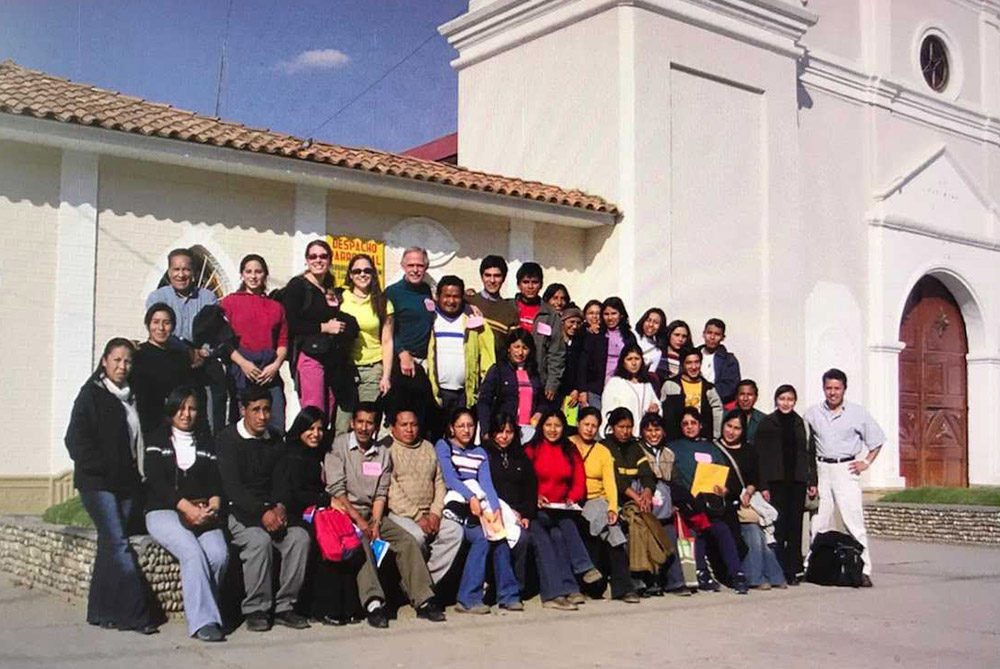
Members of the research team with St. Louis University pose for a group photo in La Oroya, Peru, in August 2005. (Courtesy of Fernando Serrano)
Serrano still recalls seeing the air quality deteriorate as he approached the city. Once there, he felt the extent of the pollution in congestion in his eyes and throat.
"Being there, breathing that air, I already knew that we were bound to find just very high levels of these toxic metals, but still, of course, we needed to do this study," he said.
The St. Louis University team went door to door collecting blood and urine samples from residents young and old. In all, they gathered more than 200 samples, which were then analyzed by the U.S. Centers for Disease Control and Prevention.
While many people welcomed the researchers, some did not. Flyers accused them of being "vampires" taking the blood of children, and hecklers hurled eggs. There were also death threats.
The study found 97% of children under 6 and 98% of children ages 7-12 had elevated blood lead levels, with children in the urban area closest to the smelter having levels near or approaching the threshold of a medical emergency. The findings affirmed those of past lead studies, including one conducted by the Peruvian health ministry. The St. Louis University study also found La Oroya residents registering higher levels of cadmium and arsenic, both associated with respiratory disease and cancer.
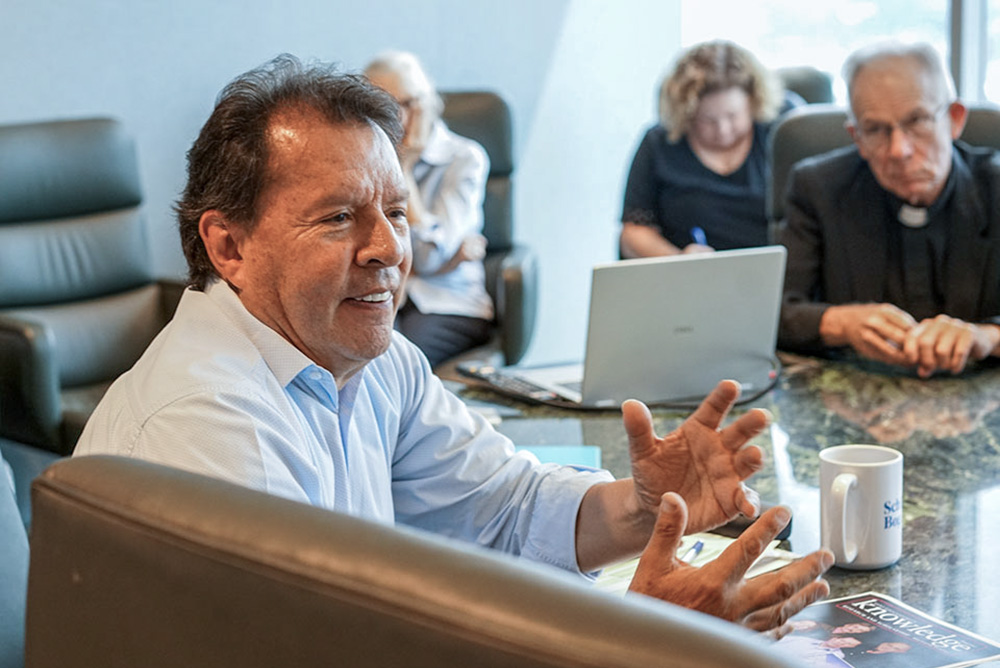
Fernando Serrano called the $150 million settlement "a significant step towards full justice" for the people of La Oroya, Peru. (Courtesy of St. Louis University/Kasi Williamson)
Serrano returned to Peru that December to deliver the report's findings to people in La Oroya and hand-delivered a copy to the national health ministry. In the 20 years since, he has made nearly a dozen trips to La Oroya to continue supporting the people in their pursuit of justice.
"I have been really blessed with the opportunity to do this for a community that needed our help," he said.
'How faith moves mountains'
The St. Louis University study helped form the basis of the lawsuit that Schlichter Bogard filed in 2007 in U.S. District Court in St. Louis initially on behalf of 17 children. Later case consolidations grew plaintiffs to more than 1,300.
"Without those [findings], we would not have had the scientific foundation to prove what we would need to prove" regarding the extreme levels of lead exposure, Schlichter told EarthBeat.
Serrano, who was also set to testify, called the settlement "a significant step towards full justice."
Along with Doe Run and the Renco Group, the plaintiffs also sued its owner, billionaire Ira Rennert.
Doe Run repeatedly attempted to have the case dismissed or relocated to Peru. Former Missouri Gov. Mike Parson tried to intervene on the company's behalf, as did the Trump administration, which in June argued the case should be dismissed due to "important foreign relations and international comity issues."
Advertisement
In its statement, Doe Run said that the Peruvian government bore the greatest responsibility for cleaning up pollution tied to the smelter. It added that the company invested more than $300 million to improve health, infrastructure and environmental conditions in La Oroya, including conducting its own blood lead surveys.
A year after the Doe Run lawsuit was filed, La Oroya residents and environmental law groups filed a petition against the Peruvian government at the Inter-American Commission on Human Rights. In 2024, that commission ruled the government violated the community's right to a healthy environment by allowing the smelter to pollute and contaminate the area, including by issuing Doe Run multiple exemptions to environmental laws and extensions to install pollution controls.
Barreto, who also faced death threats, said he met with both Peruvian government representatives and Doe Run executives to express concern over the pollution and health crisis in La Oroya. In those meetings, he said, he was often told the problem was addressed or too complicated to solve.
"All of these different officials kept telling [me] about how impossible it was to come up with a solution to such a complex problem," he said.
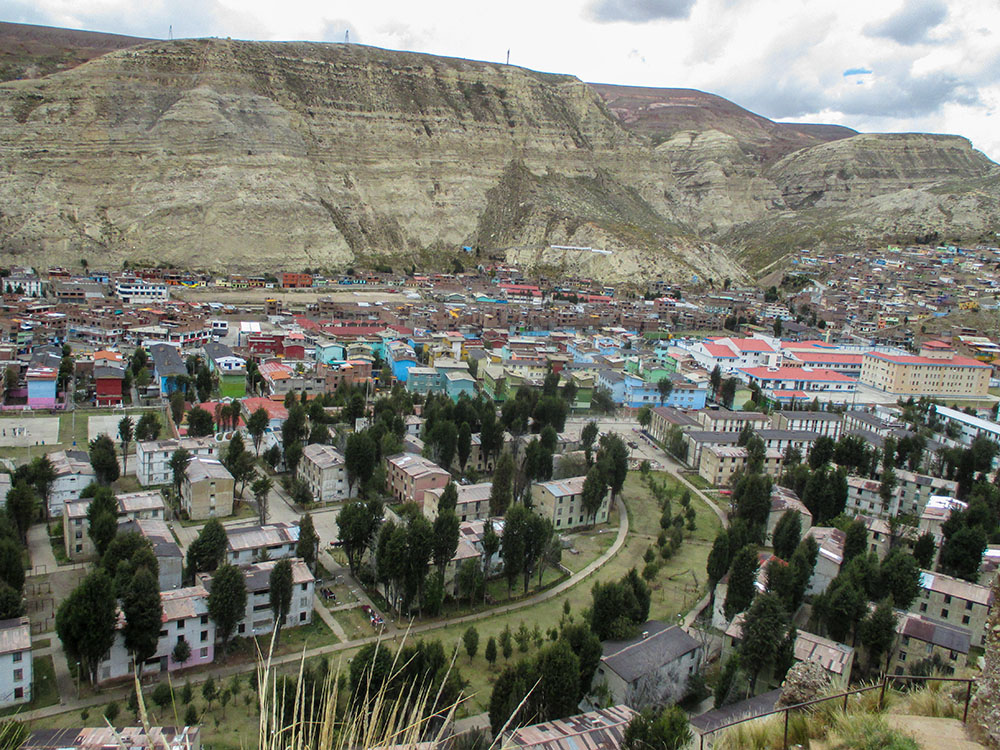
A view of La Oroya, Peru, is seen in 2014. (Wikimedia Commons/Jhonwikip)
In July 2012, both Barreto and Serrano testified alongside La Oroya activists and supporters at a hearing of the House Committee on Foreign Affairs.
The $150 million settlement came a day before the start of the first of four trials against Doe Run in the cases represented by Schlichter Bogard. A separate lawsuit, with 1,900 plaintiffs presently, remains in court, with the next hearing set for July 28.
Despite his testimony no longer being needed, Barreto still traveled to St. Louis and met with Serrano, lawyers and others in the area to thank them for their two decades of support of the people of La Oroya.
A central figure in the Vatican's 2019 Amazon synod and leader in the church on environmental and Indigenous matters, Barreto told EarthBeat that both Pope Francis and Pope Leo XIV — the latter the former bishop of Chiclayo, Peru — were aware of the struggle in La Oroya. The cardinal added that Leo will "become very happy" to learn of the settlement and with it, "the dignity of these children that has been recovered."
"It shows how faith can move mountains, as Jesus once described," Barreto said. "But also with scientific knowledge and evidence, we are able to do a lot more and use our faith for good."