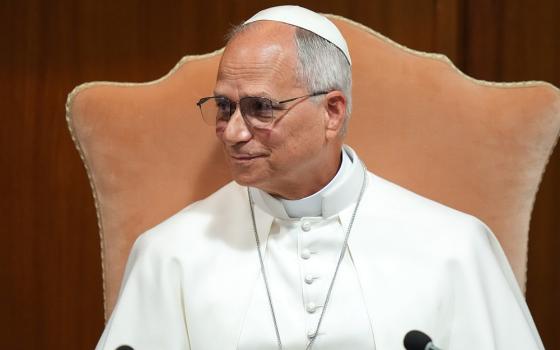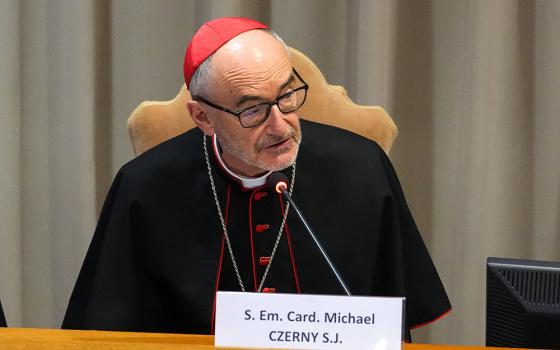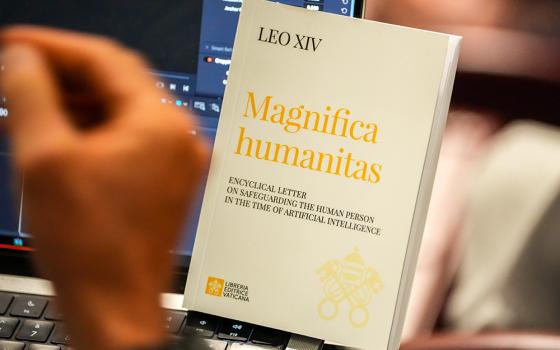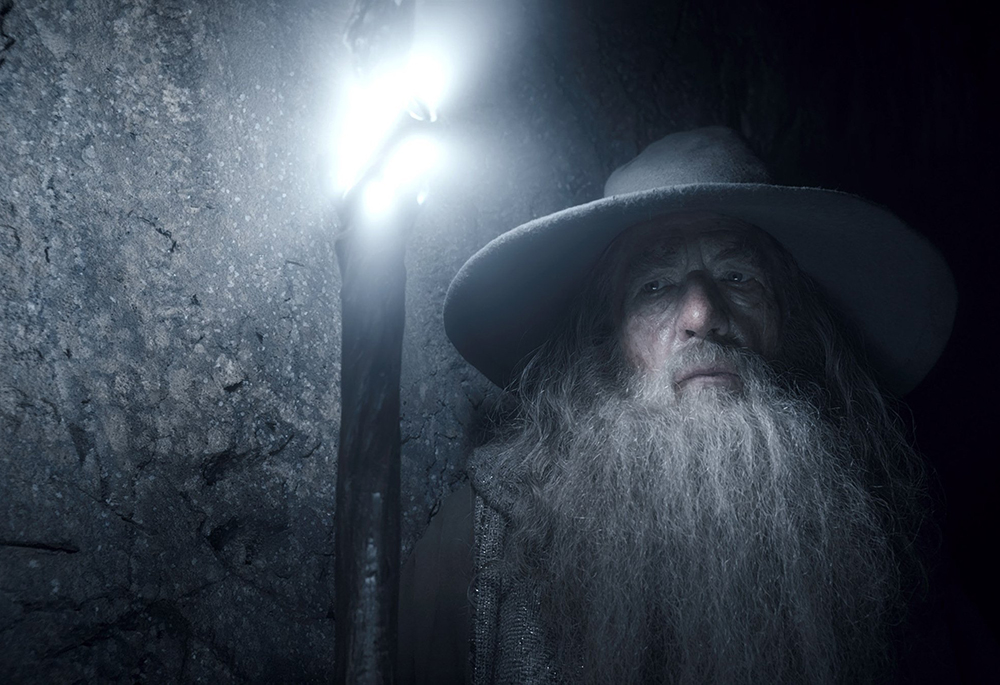
Ian McKellen stars as Gandalf in a scene from the movie "The Hobbit: The Desolation of Smaug," an adaptation of the book by J.R.R. Tolkien. Pope Leo turns to the words of Gandalf, written by Tolkien, in the newly released encyclical Magnifica Humanitas. (CNS/courtesy of Warner Bros. Pictures)

by Eric Clayton
Join the Conversation
Send your thoughts to Letters to the Editor. Learn more
When Gandalf the wizard appears on the doorstep of the humble heroes of J.R.R. Tolkien's The Hobbit and The Lord of the Rings, he does so with an unexpected invitation: Leave behind the comfortable life you know and step into the unknown. Frodo is wary; Bilbo before him is downright resistant. But the fates of many rested on the willingness of the two to play their own singular parts.
So when, against all odds, Gandalf appears in the pages of a papal encyclical with a similar call to us, we would do well to be listening.
In the newly released Magnifica Humanitas, Pope Leo XIV takes on the digital revolution of the day, challenging people of goodwill to prioritize the dignity of human beings when utilizing the powers of artificial intelligence. The pope writes on themes of war and peace; economic rights and the distribution of power; on histories marred by slavery and on futures that look bleaker every passing day.
Against such a backdrop, we may throw up our hands in despair. What can one person possibly do to affect meaningful change?
Here, Pope Leo turns to the words of Gandalf and his renowned Catholic creator: "It is not our part to master all the tides of the world, but to do what is in us for the succour of those years wherein we are set, uprooting the evil in the fields that we know, so that those who live after may have clean earth to till."
Advertisement
Although this is the first time Tolkien has shown up in a papal encyclical, Pope Francis once quoted a letter written by the author in a homily. "I put before you the one great thing to love on earth: the Blessed Sacrament," Francis quoted then. "There you will find romance, glory, honor, fidelity, and the true way of all your loves on earth."
The Blessed Sacrament? Something so small and unassuming, seemingly trivial by the world’s standards? And yet for those who answer Christ’s call, it amounts to everything.
In Magnifica Humanitas, Pope Leo similarly emphasizes the importance of small things:
The civilization of love will not arise from a single or spectacular gesture, but from the sum total of small and steadfast acts of fidelity that serve as a bulwark against dehumanization. For this reason, it is worthwhile pausing to reflect on some aspects of how we, each in our own way, can cooperate in building the civilization of love.
As we witness the rise of AI and the spread of violence and hatred across the globe, we can draw wisdom from both a fictional wizard and a very real pope. We may be as small and unassuming as the hobbits of Middle Earth, but we too have the mandate of acting towards the future of the common good.
"Pope Leo turns to the words of Gandalf and his renowned Catholic creator: 'It is not our part to master all the tides of the world, but to do what is in us for the succour of those years wherein we are set, uprooting the evil in the fields that we know, so that those who live after may have clean earth to till.' "
—Eric Clayton
"I wish it need not have happened in my time," Frodo once said, and who among us hasn't felt the same?
"So do all who live to see such times," Gandalf commiserated. "But that is not for them to decide. All we have to decide is what to do with the time that is given us."
May we wisely use the time given us, so that those who live after may have clean earth to till.