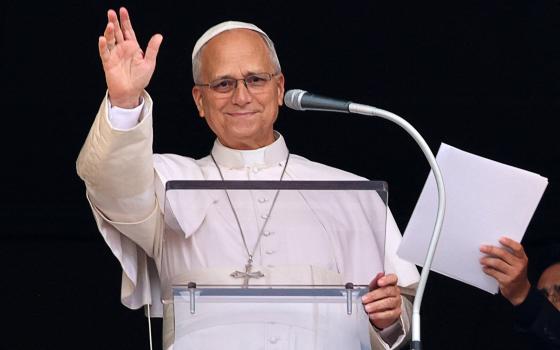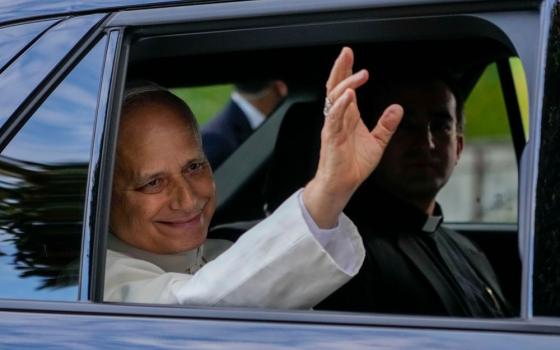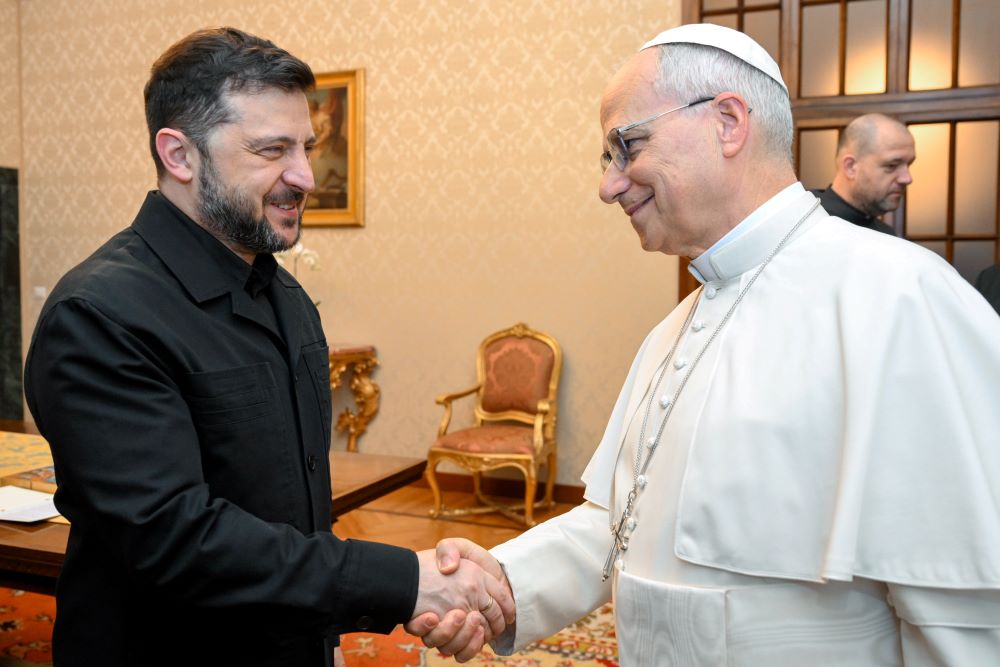
Ukrainian President Volodymyr Zelenskyy greets Pope Leo XIV during a meeting at the papal residence in Castel Gandolfo Dec. 9, 2025. The two spoke by phone April 3. (CNS/Vatican Media)

Join the Conversation
Send your thoughts to Letters to the Editor. Learn more
On top of his already-packed Holy Week agenda, Pope Leo XIV spoke by phone with the leaders of Israel and Ukraine to press for renewed diplomatic efforts and humanitarian protections as neither conflict shows clear signs of coming to a close.
In the pope's conversation with Israeli President Isaac Herzog on Good Friday (April 3), "the need to reopen all possible channels of diplomatic dialogue was reiterated, in order to put an end to the serious ongoing conflict, with a view to achieving a just and lasting peace throughout the Middle East," the Vatican said in a statement following the call. "The conversation also focused on the importance of protecting the civilian population and promoting respect for international and humanitarian law."
In a post on X, Herzog said the two discussed the war and Iran and that he recalled the "Iranian missile attacks on Jerusalem that fell in the area of sites holy to Christians, Muslims, and Jews."
Shrapnel landed atop the Church of the Holy Sepulcher, the site believed to be where Jesus was buried, as well as the nearby holy site known by Muslims as the Al-Aqsa compound and to Jews as Temple Mount, after Israel shot down a missile on March 16.
The pope and the president's call marked the Easter Triduum, the most solemn period on the Christian calendar, and the start of Passover, a major Jewish holiday celebrating the Exodus from Egypt.
Herzog said he also spoke to the pope about the situation in Lebanon, "including the importance of the safety and security of Christian communities on both sides of the border."
Neither the Vatican nor Israeli readouts mentioned Gaza or of the recent tensions following a Palm Sunday incident in which Jerusalem-based Cardinal Pierbattista Pizzaballa was denied entry to the Church of the Holy Sepulcher by Israeli police.
That incident led to a March 30 meeting between Israel's ambassador to the Holy See and senior Vatican officials, during which the Vatican said "regret was expressed over what happened, clarifications were provided, and note was taken of the agreement reached between the Latin Patriarchate of Jerusalem and the local authorities regarding participation in the liturgies of the Easter Triduum at the Basilica of the Holy Sepulchre in Jerusalem."
Advertisement
Leo's conversation with Herzog came as he ramps up his anti-war rhetoric in recent days. On Palm Sunday, the pope said that God "does not listen to the prayers of those who wage war," and on Holy Thursday he denounced the "imperialist occupation of the world" which he said Jesus subverts by rejecting the logic of power and domination.
Leo also spent part of his Good Friday considering the now more than four-year war in Ukraine.
Ukrainian President Volodymyr Zelenskyy said on X that he discussed "the negotiation process and our work with the American team" in his phone conversation with Leo. "I also expressed gratitude for the assistance in returning our abducted children and for all the humanitarian aid the Vatican has provided to our people, particularly during this difficult winter."
Ukraine has been hit by intensified Russian drone strikes after Zelenskyy proposed an Easter truce with Russia in an effort to advance diplomacy.
"Not a single hour of peace for our people, and this is Russia’s response to our proposal for an Easter ceasefire," Zelenskyy said after his call with Leo, with whom he has met three times.
The Vatican said in a statement that the two leaders "discussed the humanitarian situation, emphasizing the urgency of ensuring that the necessary aid reaches the people suffering from the conflict" as well as "efforts aimed at promoting humanitarian initiatives, especially regarding the release of prisoners."
Leo's conversations with the leaders come just days before his first Easter Sunday message as pope — a traditional venue for popes to issue appeals for peace and where he is expected to speak again on the wars in Ukraine and the Middle East.
The National Catholic Reporter's Rome Bureau is made possible in part by the generosity of Joan and Bob McGrath.