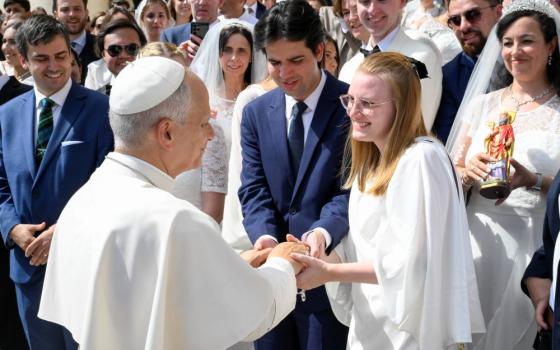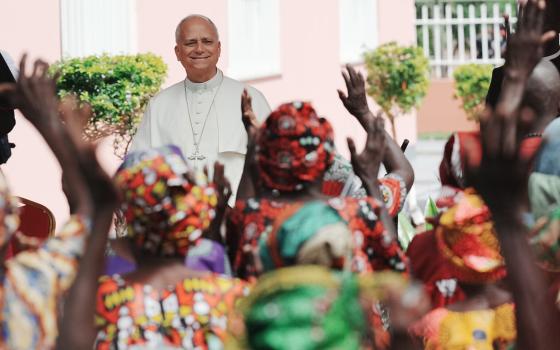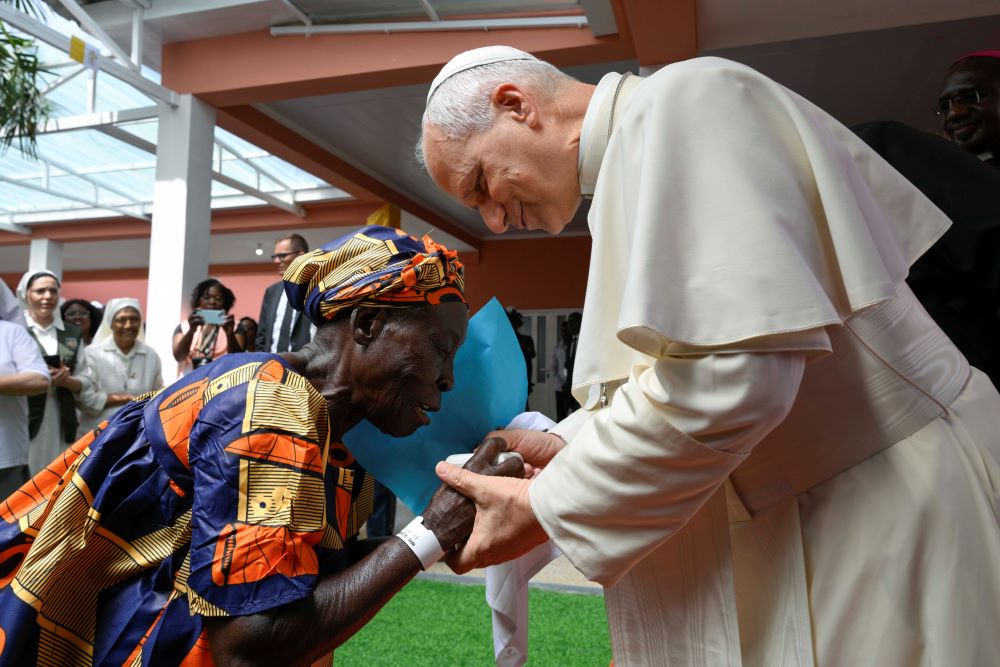
Pope Leo XIV greets an elderly woman during his visit to a nursing home in Saurimo, Angola, on April 20, 2026. (OSV News/Vatican Media/Simone Risoluti)

Join the Conversation
Send your thoughts to Letters to the Editor. Learn more
Jesuit Fr. Peter Henriot famously described the Catholic Church's social teaching as the institution's "best-kept secret."
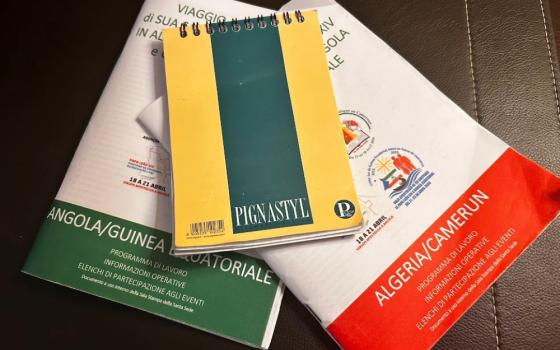
As Pope Leo XIV whizzed through North and Central Africa the last several days, it looks as though the pope who took his name in honor of the father of the church's social doctrine is letting the cat out of the bag.
Throughout his 11-day tour of the African continent, the pope has bluntly called out neocolonialism, extractivist practices, corruption and repressive governance with rhetoric that has punched above Leo's more tepid tone from the Vatican.
But it was in Equatorial Guinea, a majority-Catholic nation ruled by the same president since 1982, that Leo most clearly grounded those critiques in theology.
"The church's social teaching offers guidance to all who seek to address the new things that destabilize our planet and human coexistence, while prioritizing, above all else, the Kingdom of God and his justice," Leo told political leaders shortly after arriving on April 21 in Malabo, the former Equatorial Guinean capital which sits on an island apart from the vast majority of its territory.
"This is a fundamental dimension of the church's mission: to contribute to the formation of consciences through the proclamation of the Gospel, the provision of moral criteria and authentic ethical principles — all while respecting individual freedom and the autonomy of nations and their governments," he said. "Ultimately, the aim of the Social Doctrine is to equip people to face ever-evolving problems; for every generation is unique, bringing with it new challenges, new dreams and new questions."
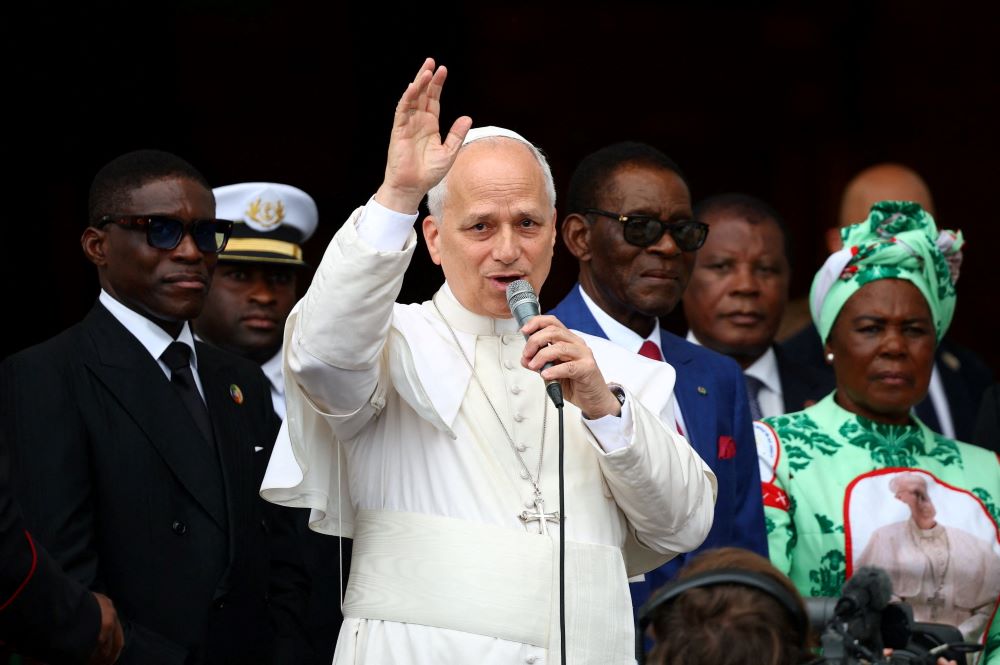
Pope Leo XIV blesses the faithful as he arrives to celebrate Mass at the Basilica of the Immaculate Conception in Mongomo, Equatorial Guinea, April 22, 2026. (OSV News/Reuters/Guglielmo Mangiapane)
Equatorial Guinea's new generations, however, have struggled to make their voices heard: President Teodoro Obiang Nguema Mbasogo is Africa's longest-serving president; his son, dubbed "little Teodoro," is vice president. At 83 years old, Obiang walked well while receiving Leo at the airport, using a cane to stand and his hand slightly trembling at his side.
Whereas Leo's addresses to political authorities have been rather forceful for the previous three legs of his four-nation tour of Africa — in Algeria, Cameroon and Angola — the pope told leaders in Equatorial Guinea, the country with the highest proportion of Catholics on his trip (*75% per Vatican statistics), that the name of God "must not be profaned by the will to dominate, by arrogance or by discrimination; above all, it must never be invoked to justify choices and actions of death."
The pope also offered a reflection on St. Augustine's concept of the city of God — the heavenly reality sought by Christians which contrasts with the earthly "lust for power and worldly glory that leads to destruction" — calling out in a nation where oil exports make up 90% of government revenue how "the proliferation of armed conflicts is often driven by the exploitation of oil and mineral deposits, occurring with no regard for international law or the self-determination of peoples."
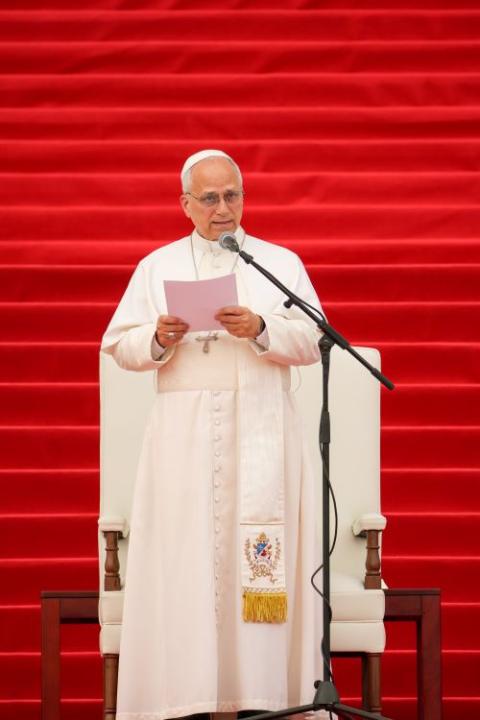
Pope Leo XIV speaks during a meeting with the world of culture at the Pope Leo XIV campus of the National University of Equatorial Guinea in Malabo, Equatorial Guinea, April 21, 2026. (CNS/Lola Gomez)
Leo's pivot from theological reflection to a moral diagnosis of concrete political realities is emblematic of the bridge he has sought to build between Catholic teaching and lived experience.
That message has only been amplified when delivered from the impoverished, authoritarian countries where Leo is effectively turning the attention of the global church toward the realities shaping much of the African continent. Several people told NCR that they were grateful Leo shied away from hot-button issues roiling the church elsewhere, citing topics such as homosexuality and debates over the Latin Mass.
In Angola, the hierarchy hoped the pope's trip through Africa "will get the attention of the universal church" toward issues affecting the continent, said Bishop Maurício Agostinho Camuto of Caxito, secretary general of the bishops' conference of Angola and São Tomé.
After Leo condemned the death and destruction brought about by extractivism in Angola, a nation rich in oil and minerals, including diamonds, but still reeling from widespread poverty, Camuto said "it is good the pope spoke about that."
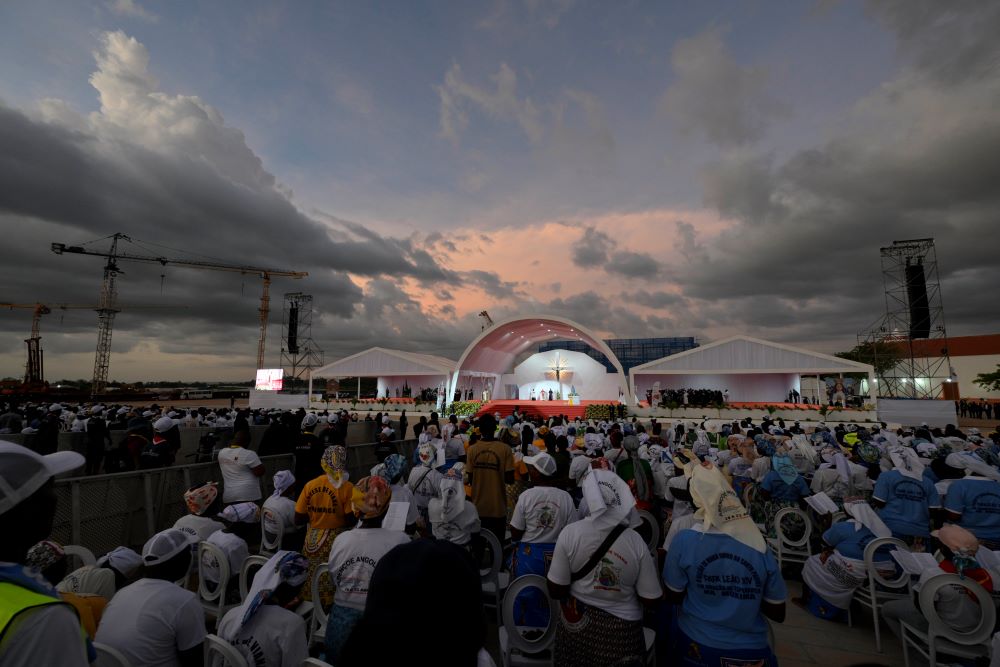
Pope Leo XIV leads the rosary at the Sanctuary of Our Lady of Muxima in Muxima, Angola, on April 19, 2026. The church was a hub of the Portuguese slave trade. (OSV News/Vatican Media/Simone Risoluti)
"The social issues, of poverty, of unemployment, of justice, the issues we can feel everyday, whenever we visit a community we find these concrete situations, that's what concerns us," he said while awaiting the pope's visit to a parish in the Angolan capital. "All the rest, homosexual marriage, that's not a priority for us."
In Douala, Cameroon, on April 17, the pope dedicated a lengthy homily to the topic of hunger, reflecting on the physical hunger brought about by poverty and the spiritual hunger only satisfied by Christ.
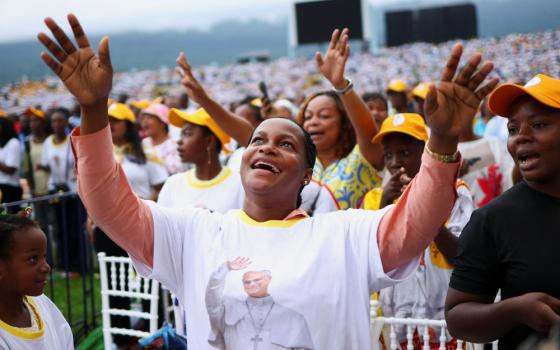
"Be the first faces and hands that bring the bread of life to your neighbors, providing them with the food of wisdom and deliverance from all that does not nourish them," Leo told Cameroon's young people in a crowd of over 120,000 gathered for Mass outside the city's massive soccer stadium.
Advertisement
Serge Oswald, who attended the pope's Mass in Yaoundé, Cameroon, with his four children, said the church in Africa is different from the church in the West, since "here, it deals extensively with social issues: education, and health."
"People here are hungry, and children aren't going to school, so that's what we're concerned about in our countries, and that's what we expect from our church," he said. "We don't want to talk about issues related to homosexuality, or arguments over how Mass should be celebrated."
"If you're hungry, you don't go to church to hear about those kinds of topics — topics that only interest Westerners. That doesn't concern us," he said.
For his part, Leo has been reticent to publicly take a stand on some hot button church matters, such as the inclusion of LGBTQ+ Catholics and women's ordination. In Africa, however, the pope has stood alongside authoritarian figures and stuck his neck out on the issues most pertinent to many living in the Global South.
For a pope who has made unity the hallmark of his first year, Leo has been reluctant to draw lines in the sand over controversial issues in the church. Yet throughout Africa, he's started showing that there is at least one perhaps controversial issue he intends not to shy away from: Those who fail to embrace the church's social teaching are in need of conversion.
* Percentage of Catholics in Angola corrected from 58% to 75%.
The National Catholic Reporter's Rome Bureau is made possible in part by the generosity of Joan and Bob McGrath.